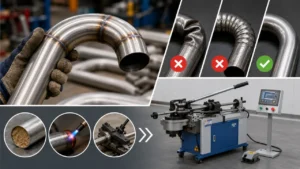
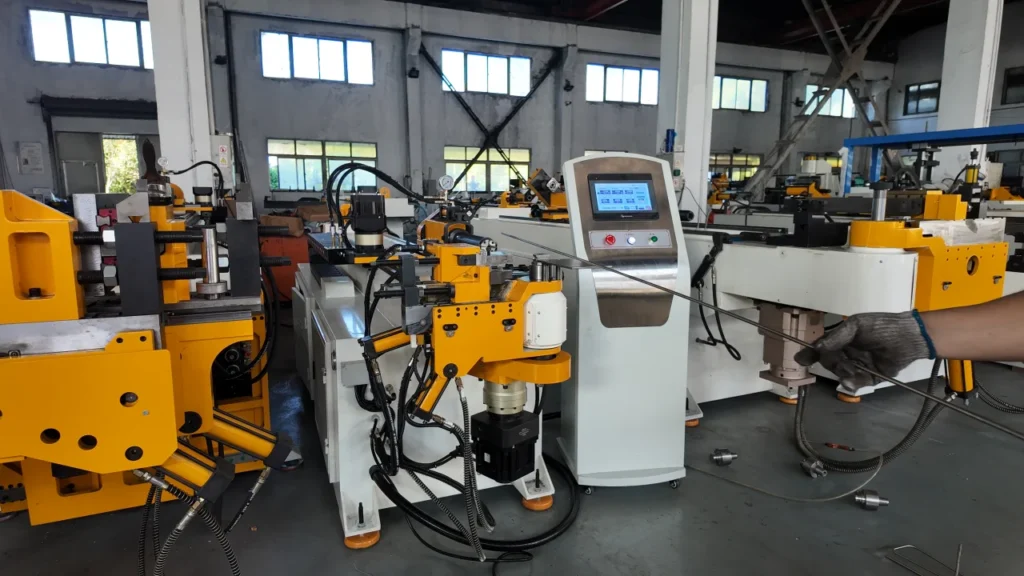
Tube deformation during bending causes real problems in production. You may have seen oval cross-sections, thin walls, wrinkled inner radii, or parts that spring back out of tolerance. These defects waste material, slow down your line, and frustrate your customers. The good news is that deformation is not random. It follows clear physical rules.
This guide explains why tubes deform during bending, what the four common deformation types are, and how to prevent them. By the end, you will know exactly how to control quality on your own parts. For anyone in tube processing, understanding tube deformation is the foundation of consistent production quality. This tube deformation guide turns theory into practical steps you can use on the shop floor.
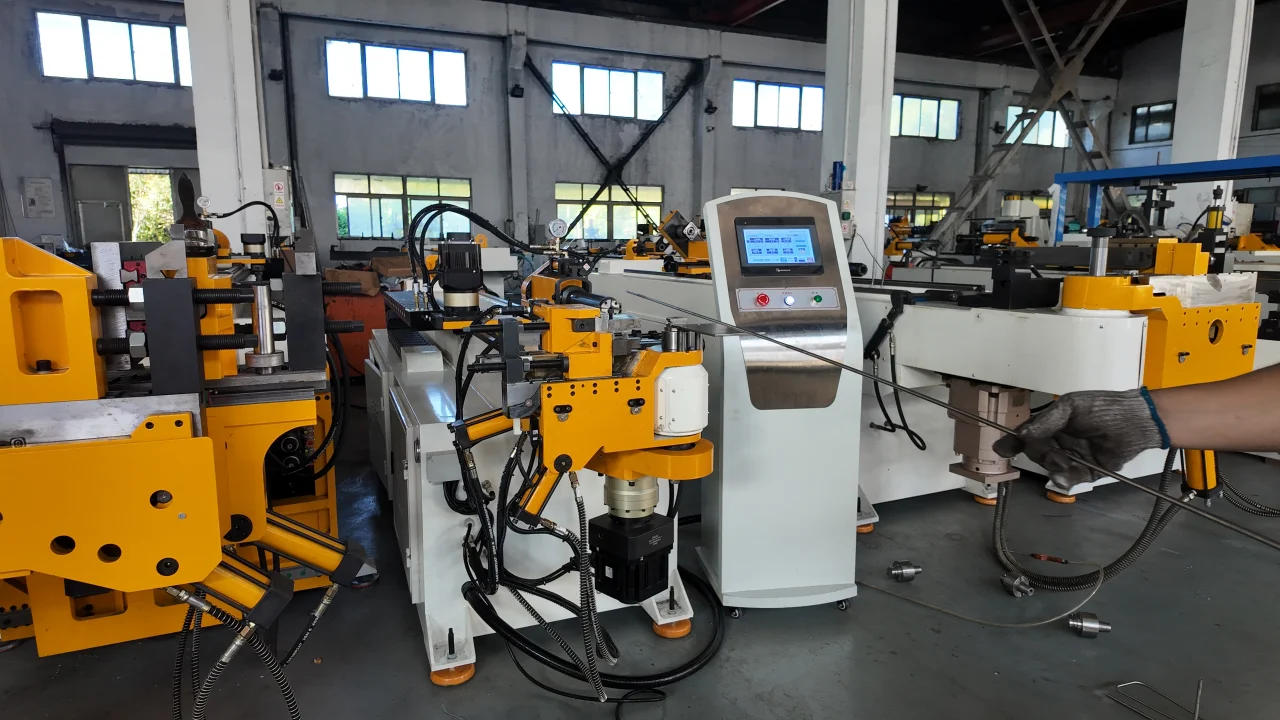
Why Does a Tube Deform During Bending?
Every bend creates competing stresses inside the tube. Understanding these stresses is the first step to controlling tube deformation. Once you see the forces at work, the defects on your parts start to make sense.
The Neutral Axis and Competing Stresses
When a tube bends, an imaginary line called the neutral axis runs through the center of the wall. Material on the outside of the bend stretches. Material on the inside compresses. These two forces pull against each other, and the tube must accommodate both. This is the root cause of every deformation you see. The tube is always trying to balance tension on one side with compression on the other. When that balance fails, the tube deforms. In fact, most tube deformation problems start right here at the stress balance point.
Elastic vs. Plastic Deformation
Bending involves two types of deformation. Elastic deformation is temporary; the tube returns to its shape when the force is removed. Plastic deformation is permanent; the tube keeps the bend. Springback happens when the elastic part recovers after the bend. This is why a 90-degree program often delivers 88 degrees. Controlling tube deformation means managing both elastic recovery and plastic flow. You need to understand both to hold tight tolerances.
Four Common Types of Tube Deformation
Four deformation types cause most quality problems in tube processing. Each has a distinct cause, effect, and solution. Work through them one by one with your own parts in mind.
Wall Thinning
The outer wall of the bend stretches under tension. With thin material, this stretch can reduce the wall below tolerance. Wall thinning weakens the part and can cause failure under pressure. A mandrel inside the tube redistributes the strain and limits thinning. For critical parts, this is the first deformation to control. You should measure wall thickness after your first sample to catch thinning early. Wall thinning is the most common tube deformation type in thin-wall production. For more on thin-wall defects, read Hines’ guide to preventing thin-wall tube defects.
Ovality (Cross-Section Flattening)
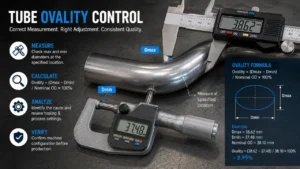
When a tube bends, the cross-section tends to flatten into an oval. The degree of ovality depends on the bend radius, wall thickness, and tooling. Oval parts fail to seal, misalign in assemblies, and reduce pressure ratings. A mandrel holds the tube open from the inside, keeping the cross-section round. If your parts must seal or align, ovality control is essential.
Wrinkling and Collapse
The inner wall of the bend compresses during bending. Without support, it can wrinkle or even collapse. Thin-wall tubes and tight radii are especially prone to this defect. A wiper die and mandrel work together to stabilize the inner radius. Preventing wrinkling is often the deciding factor for thin-wall bending. You can see wrinkles clearly on the inner radius, and they are almost impossible to remove later.
Springback
Springback is the elastic recovery that happens after the bend. Every material springs back differently, and the amount depends on material, wall thickness, and bend angle. Springback shifts the final angle away from the programmed value. Compensation, where the program is adjusted by the measured difference, brings the part back to tolerance. See TBC Manufacturing’s notes on tube structure effects for more background.
Defect Map: Four Common Tube Deformation Types
| Deformation | Cause | Effect | Control |
|---|---|---|---|
| Wall Thinning | Outer wall stretched under tension | Weak wall, pressure failure | Mandrel redistributes strain |
| Ovality | Cross-section flattens during bend | Poor sealing, misalignment | Mandrel holds tube open |
| Wrinkling / Collapse | Inner wall compressed without support | Visible defects, failed parts | Wiper die + mandrel support |
| Springback | Elastic recovery after bending | Angle out of tolerance | Program compensation |
This defect map is the quick reference you need when tube deformation shows up on a new part. Check the symptom, find the cause, and apply the control method.
How Bending Parameters Affect Deformation
Three parameters decide how much your tube will deform. Understanding them helps you design parts and choose the right process. These are the numbers you should check before you bend.
Bend Radius to Diameter Ratio (R/D)
The bend radius compared to the tube diameter, written as R/D, is the first indicator. A small R/D means a tight bend, which puts more stress on the tube. As a rule of thumb, tight radii below about 2D create much higher deformation risk. Larger radii are easier to bend and deform less. If your design allows it, a larger bend radius reduces quality risk from the start. This one design choice can save you a lot of trouble later. See GlobalSpec’s tube bending design guide for design considerations.
Wall Thickness to Diameter Ratio (t/D)
The wall thickness compared to the tube diameter, written as t/D, predicts wrinkling and collapse risk. A thin wall relative to the diameter has little support against compression. As a rule of thumb, low t/D values need more internal support. Thicker walls handle bending more easily. This is why thin-wall tubes almost always need a mandrel. When you evaluate a new part, check the t/D ratio before you choose the process.
Material Behavior
Material matters as much as geometry. Stainless steel is strong and work-hardens quickly, which makes it demanding to bend. Carbon steel is more forgiving and bends at higher speeds. Aluminum can show surface marks and needs careful tooling. Copper has good elongation and bends easily. Each material has its own deformation behavior, and your process must match it. Your material choice sets the difficulty of the job from the start.
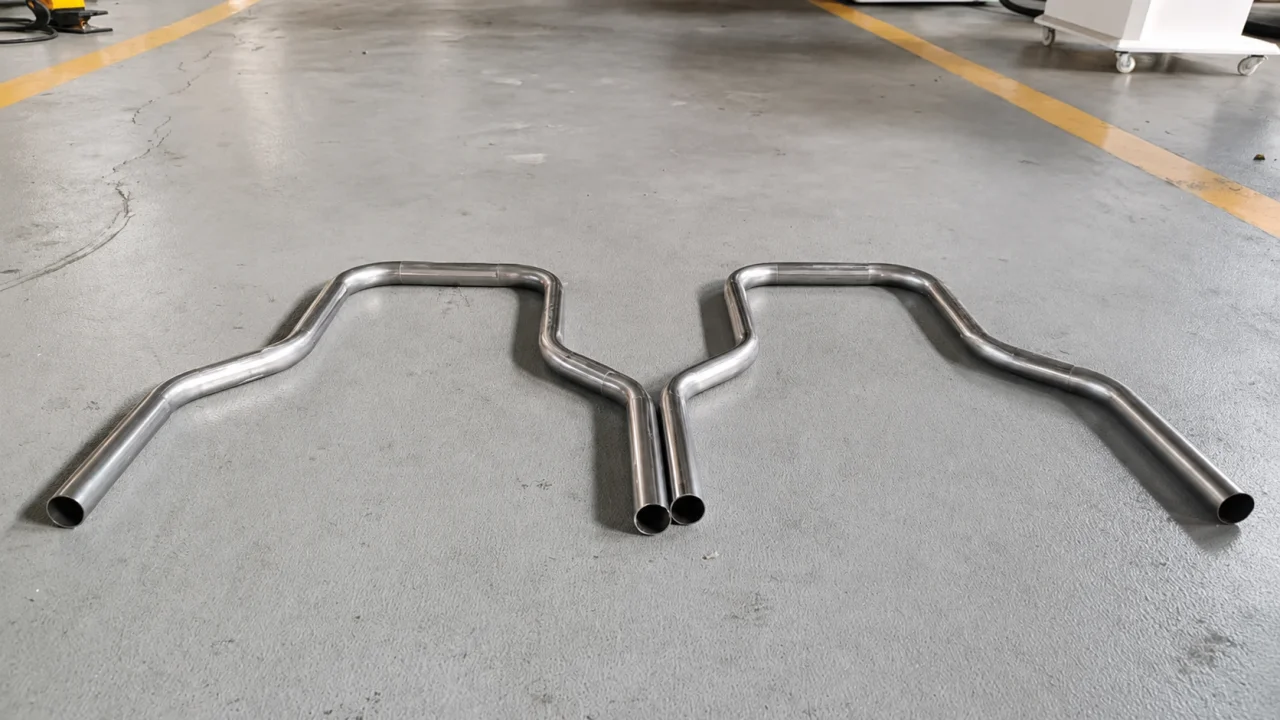
When Do You Need a Mandrel?
A mandrel is the most effective tool for preventing tube deformation. Knowing when you need one saves both cost and quality. Based on our production experience, here is practical guidance you can apply directly.
Material-Based Guidance
Stainless steel generally requires a mandrel regardless of tube size. Its strength and work-hardening make internal support essential for quality. Carbon steel is different. The decision depends on your product requirements. When quality demands are high, use a mandrel. When they are low, a mandrel may not be necessary. This material-based approach is the fastest way to narrow the decision. It reflects how we actually quote and set up production jobs.
Wall Thickness and Bend Radius as Decision Inputs
Wall thickness is the second input. Thin-wall tubes need a mandrel in all cases, because the wall cannot support itself under compression. Thick walls give you more freedom. Bend radius also matters. When the radius is above about 2D and the product does not require a full profile, bending without a mandrel can work for carbon steel. For example, a 20 mm tube with 2 mm wall, or a 50 mm tube with 5 mm wall, can often bend without a mandrel when requirements are modest. These examples come from actual production experience.
A Practical Decision Summary
Here is the decision logic in brief:
- Stainless steel: use a mandrel, regardless of size.
- Thin-wall tubes: use a mandrel in all cases.
- Carbon steel with high quality demands: use a mandrel.
- Carbon steel with low demands, radius above 2D, and thick wall: mandrel optional.
This summary comes from real production experience, and it covers the majority of bending jobs. When in doubt, run a sample and measure the result. A sample tells you the truth faster than any rule.
How to Prevent Tube Deformation
Preventing deformation takes more than one tool. It requires the right equipment, matched tooling, and disciplined process control. These three layers work together to protect quality. Each layer answers a different part of the tube deformation problem.
Equipment: Mandrel-Supported CNC Bending
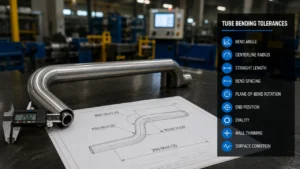
The machine must hold the tube precisely while the mandrel supports it from inside. CNC bending machines with servo control hold the bending angle within ±0.1 degrees, which keeps the process repeatable. A mandrel-equipped CNC machine is the standard solution for deformation-critical parts. The machine gives you the control; the mandrel gives you the support. Together they prevent the deformation that manual machines cannot control. Explore the CNC pipe bending machine collection.
Tooling: Mandrel, Wiper Die, and Pressure Die
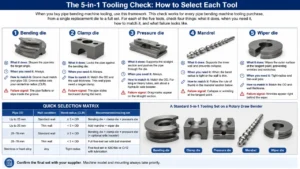
Tooling is where deformation is won or lost. The mandrel supports the inner wall, the wiper die prevents wrinkling, and the pressure die controls wall movement. All three must match your tube dimensions and work together. Tooling built to your product size gives the best result. Suppliers who manufacture their own tooling can match it precisely to your parts. Ask your supplier how their tooling is made and whether it is matched to your tube. Our design and engineering service supports custom tooling.
Process: Parameters, Batch Control, and Verification
Process control keeps the gains from equipment and tooling. Use tube from the same manufacturer and batch for consistent material behavior. Keep bend speed, clamp force, and lubrication stable. Verify with a sample bend and first article inspection before full production. This verification loop catches deformation early and protects the whole run. In production, process control is what turns capability into consistent output. Our sample service lets you verify your parts first.
Frequently Asked Questions About Tube Deformation
What is tube deformation during bending?
Tube deformation during bending is the unwanted change in the tube’s shape caused by bending forces. It includes wall thinning, ovality, wrinkling, and springback. These changes happen because the outer wall stretches while the inner wall compresses during the bend.
Why does a tube deform during bending?
A tube deforms because bending creates competing stresses. The outer wall is stretched under tension, and the inner wall is compressed. The neutral axis divides these two zones. When the wall cannot handle the stress, deformation appears as thinning, flattening, or wrinkling.
What is ovality in tube bending?
Ovality is the flattening of the tube cross-section during bending. Instead of staying round, the cross-section becomes oval. Ovality causes poor sealing, misalignment, and lower pressure ratings. A mandrel inside the tube helps keep the cross-section round.
What causes wall thinning in tube bending?
Wall thinning happens when the outer wall stretches under tension during the bend. Thin material is more vulnerable, and tight radii increase the stretch. Thinning weakens the part. A mandrel redistributes the strain and limits the thinning.
How do you prevent tube deformation during bending?
Prevent deformation with three steps: use a mandrel-supported CNC machine, match the tooling to your tube, and control the process. Use the right mandrel for your material and wall thickness. Keep material batches consistent and verify with samples before production.
When do you need a mandrel in tube bending?
Stainless steel generally needs a mandrel regardless of size. Thin-wall tubes need one in all cases. Carbon steel with high quality demands also needs a mandrel. When quality demands are low, the radius is above 2D, and the wall is thick, a mandrel may be optional.
What is springback in tube bending and how do you compensate for it?
Springback is the elastic recovery of the tube after bending, which changes the final angle. Compensation measures the actual bend and adjusts the programmed angle. For example, a 90-degree target that measures 88 degrees needs a 2-degree compensation. You can also review our general FAQ for more guidance.
Conclusion
Tube deformation is not a mystery. It follows physical rules you can understand and control. You now know why tubes deform, what the four common deformation types are, and how bending parameters affect them. You also know when to use a mandrel and how to prevent deformation with the right equipment, tooling, and process. Apply these principles, and your parts will hold their shape and pass inspection. Keep this guide close when you plan your next bending job. Understanding tube deformation is the first step toward mastering it.
At Zhangjiagang Zhuoran Machinery, we build CNC pipe bending machines with mandrel as standard. Our machines hold bending accuracy around ±0.1 degrees and handle tube diameters from 5 mm to 168 mm. We manufacture our own mandrel, wiper die, and pressure die tooling, matched to your product dimensions. Our machines feature 3D simulation and interference detection. We are built to ISO 9001 quality standards and CE compliance requirements, and our equipment is exported to more than 80 countries. Explore how our equipment serves different applications.
Ready to control deformation on your parts? Send us your tube OD, wall thickness, bend radius, and material. Our engineers will recommend the right mandrel, tooling, and process for your application. Whatever your tube deformation challenge, the solution starts with the right setup.