
The 60mm Tube End Forming Machine Trusted by Automotive Parts Manufacturers
Our Most Popular Model — Precision Hydraulic End Forming for Exhaust, Brake, and Fuel Line Tubes
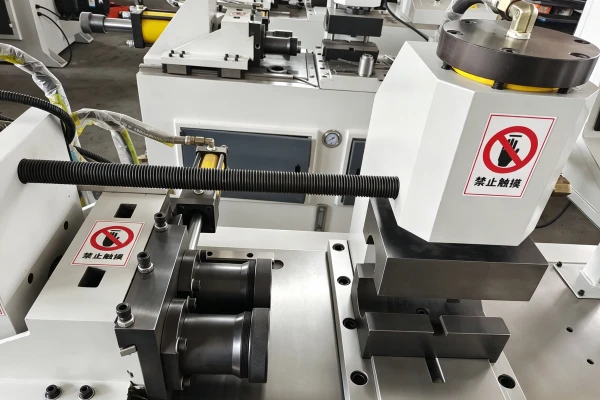
TM60NC-3 60mm Multi-Station Tube End Forming Machine
Build multi-step tube ends on one hydraulic platform for parts up to 60 mm OD.
– Three stations support progressive end-forming sequences
– Processes tubes up to 60 mm OD and 2 mm wall
– 125 mm standard working stroke
– 5.5 kW installed power
Capacity for Mid-Size Tube Ends
The TM60NC-3 multi-station tube end forming machine uses microcomputer control and hydraulic drive. The operator can choose manual mode during setup or semi-automatic mode for a production cycle. A linear guide carries the forming movement, and the foot switch combines start and emergency-stop functions.
Model Comparison:
| Specification | TM60NC-3 |
| Maximum tube capacity | Φ60 mm × 2 mm wall |
| Maximum working stroke | 125 mm |
| Hydraulic pressure | 12 MPa |
| Working speed | 100 mm in 3-4 seconds |
| Total power | 5.5 kW |
| Machine dimensions | 2450 × 850 × 1400 mm |
| Machine weight | 800 kg |
| Station configuration | Three stations |
| Operating modes | Manual and semi-automatic |
TM60NC Tube End Forming Machine Details
The TM60NC-3 is a 60mm tube end forming machine that has become our best-selling model — and for good reason. Φ60mm hits the sweet spot for automotive tube processing: it comfortably handles exhaust system tubing (typically Φ38-60mm), brake line connectors, and fuel system pipes across passenger vehicle and light commercial vehicle applications.View the complete tube end forming machine range to compare forming capacity, working stroke, and station configuration.
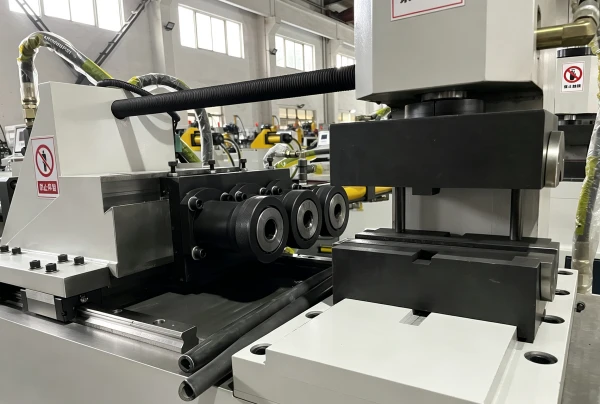
The hydraulic drive system operates at 12 MPa, driven by a 5.5 KW motor with Taiwan-sourced valves controlling both the main forming ram and the clamping cylinder. A precision linear guide rail — not a budget sliding mechanism — carries the forming head, ensuring that your 10,000th part matches your first. The 3-station configuration lets you load dies for three different operations (say, reducing + beading + flaring) and switch between them via the NC control panel without stopping to change tooling.
Key takeaway: If your shop runs automotive tube parts — exhaust, brake, fuel, or AC lines — the TM60NC-3 is the workhorse that fits your diameter range and your production volume.
Four Features for Planned Forming Sequences
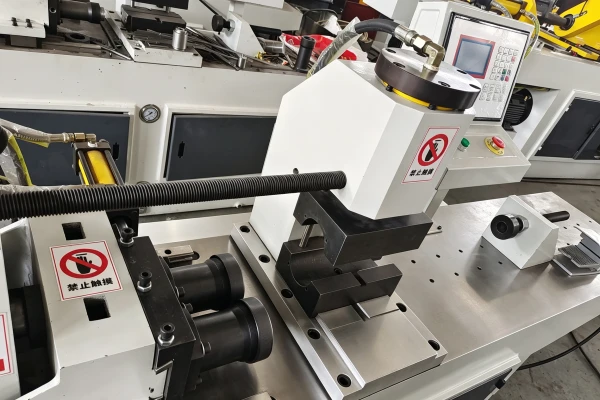
125 mm Standard Stroke
The longer stroke gives tooling designers room for tube-end profiles that extend beyond short connection features.
Manual Setup Mode
Operators can position tooling and inspect initial movement before approving the semi-automatic production sequence.
800 kg Machine Frame
The specified machine mass supports a stable production base without requiring the footprint of the larger-capacity models.
Replaceable Forming Tooling
Your team can change the die set when production moves to a tube with a different approved end profile.
Advantages – TM60NC Multi-Station Tube End Former
Combine Three Forming Operations
Parts that need several end features can create extra handling between machines. The TM60NC-3 multi-station tube end forming machine places three tooling positions on one hydraulic platform.
Your engineering team can assign the forming sequence after reviewing material flow and finished dimensions.
This setup suits progressive operations where one large forming action could distort the tube or produce an unacceptable surface.
Fit More Parts Within 60 mm
The Φ60 × 2 mm capacity covers a wider tube range than the TM40NC small-diameter tube end forming machine.
This multi-station tube end forming machine gives you room to quote mid-size components while retaining a three-station process.
Machine selection still depends on material, wall thickness, end shape, and forming length. A 60 mm diameter in a softer material does not create the same forming load as the same size in a harder grade.
Build a Repeatable Operator Routine
Your operator can use manual mode during die setup, inspect the first formed end, and then switch to semi-automatic operation for the approved batch. The foot switch keeps start and emergency-stop control near the working position.
This multi-station tube end forming machine also uses a microcomputer controller to manage the selected operating sequence. Zhuoran can include installation and operator training in the delivery plan.
Applications
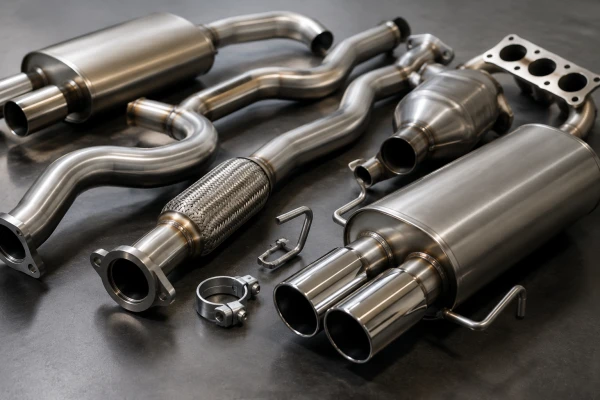
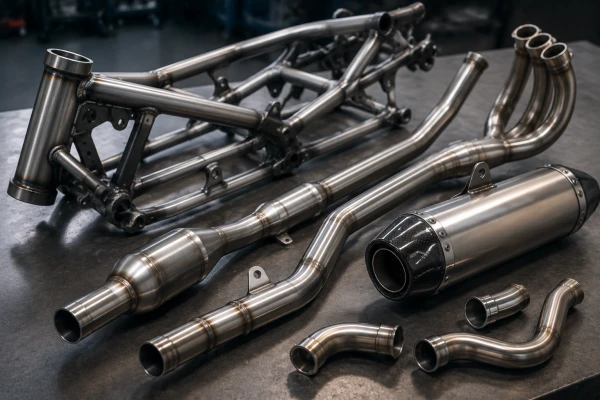
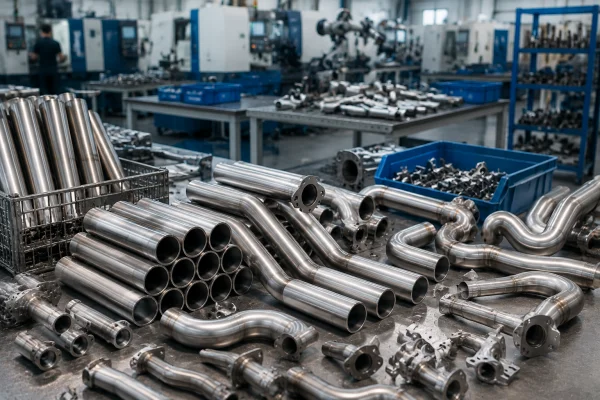
Automotive Exhaust Components
Automotive exhaust tubes often use reduced, expanded, or shaped ends for joining sections and preparing assemblies.
The TM60NC supports custom die profiles within its Φ60 × 2 mm capacity. Three stations can divide the required profile into a staged process after engineering review.
Explore Zhuoran’s automotive tube-processing applications and submit the actual material and end drawing for confirmation.
Motorcycle Exhaust and Frame Tubes
Motorcycle manufacturers work with tube components that must fit within limited assemblies.
The TM60NC provides a 125 mm working stroke for custom end profiles and a three-station layout for progressive shaping.
Your tooling design should match the tube grade, wall thickness, and connection geometry. See related motorcycle tube-processing applications before requesting a forming test.
Contract Tube Manufacturing
Contract manufacturers need equipment that can change between approved tube-end jobs.
The TM60NC supports replaceable tooling, manual setup, and semi-automatic production.
You can prepare a separate die set and process plan for each part number within the machine capacity. Send a representative tube sample through Zhuoran’s sample-forming service before approving the final configuration.
Get Your Custom Machine Quotation Now
Send your tube drawing, material, Φ60 mm-or-smaller dimensions, forming length, and production target. Zhuoran will review the station plan and tooling before issuing the TM60NC-3 proposal.
Is the TM60NC-3 suitable for a 60 mm tube?
The supplied specification lists a maximum tube capacity of Φ60 mm OD with a 2 mm wall. Suitability also depends on material grade, end geometry, and required forming length. Zhuoran must review all four factors before confirming the model. Parts near the stated limit should undergo a drawing review and sample test before production tooling is approved.
What can the three stations do?
Each station can hold tooling for one stage in the planned end-forming sequence. A part may use fewer than three stations or use all three, depending on the final profile. The supplied document does not assign fixed operations to specific stations. Zhuoran will determine the sequence from your drawing, material, and sample rather than promising a standard process for every component.
Can the TM60NC-3 form non-round profiles?
The product file lists square, angled, V-shaped, offset, open-elbow, flat-elbow, raised, and recessed shapes among the available tooling forms. The machine needs a custom die set for each specified profile. Non-round work also requires enough straight clamping length and a clear drawing of the tube orientation, so include those details with your inquiry.
How much floor space should I reserve?
The machine dimensions in the supplied document are 2450 × 850 × 1400 mm. Your installation plan also needs access space for loading, tooling changes, maintenance, and the hydraulic system. Do not use the machine dimensions as the complete cell footprint. Share your floor layout during the engineering review so Zhuoran can discuss access around the final configuration.
Can the working stroke exceed 125 mm?
The source document states that Zhuoran can customize the maximum working stroke to customer requirements. The engineering team must review the forming length, tube support, tooling travel, and final profile before confirming a longer stroke. Submit a dimensioned end view and side view through the design and engineering service.