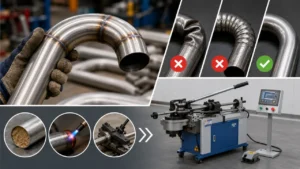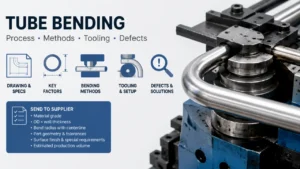
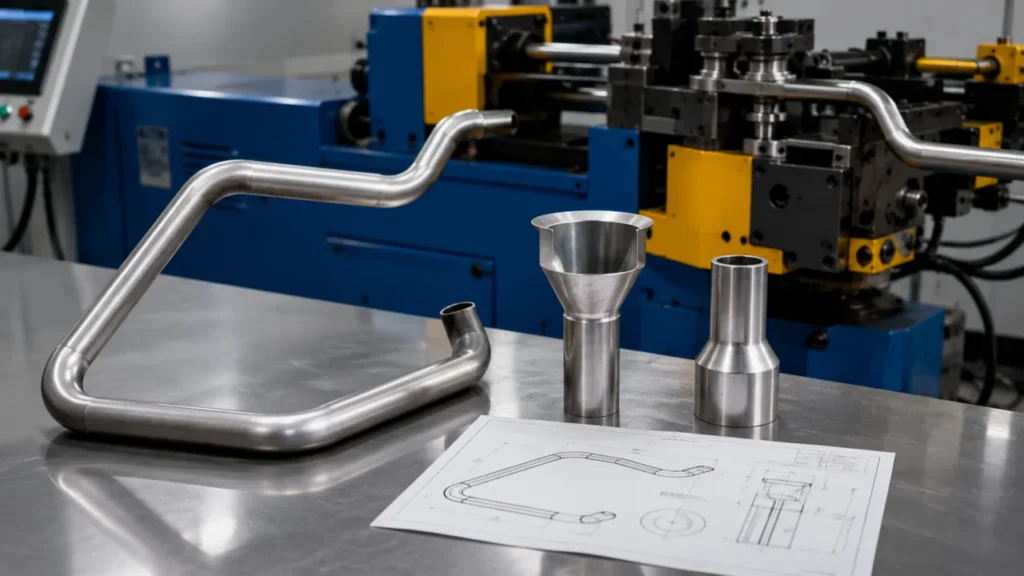
You may know the finished shape of your tube and still be unsure which machine can make it. A frame bend, an expanded connection, and a reduced tube end each require a different assessment of material, tooling, and geometry. Choosing equipment by maximum tube diameter alone leaves those questions unanswered.
To select a tube forming process, start with the feature you need, then check how the material must deform and how you will inspect the result. This guide covers the secondary forming of existing metal tubing, from bends to end features, rather than producing tube from strip or billet.
What Is the Tube Forming Process?
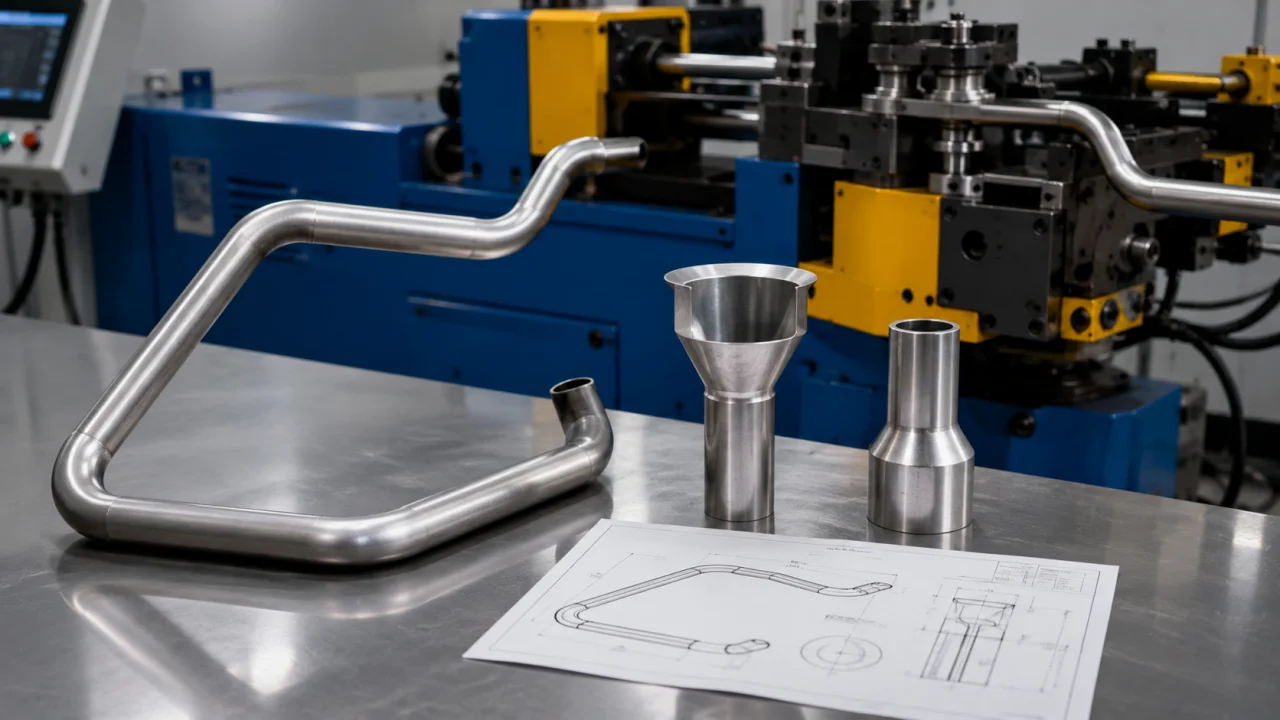
In a tube forming process, manufacturers apply force to give metal tubing a permanent change in shape. Depending on the operation, you can change its centerline path, end diameter, or local cross-section.
Tube Forming vs. Tube Manufacturing and Fabrication
Tube manufacturing produces the tube stock. Tube forming reshapes that stock. Tube fabrication covers a broader production route that can include cutting, forming, joining, finishing, and inspection.
For your project, make the starting point explicit: an existing tube with a specified material, outside diameter, and wall thickness. Then separate the forming operation from supporting work such as cutting blanks or removing burrs.
Start with the Feature Your Finished Tube Needs
Before choosing a tube forming process, mark the functional features on your drawing. Identify what each feature must do: route the tube around an obstruction, fit inside another component, or locate a connection.
Changing the Tube’s Direction or Bend Radius
For a bent component, specify the centerline radius, bend angle, and straight lengths between bends. A broad circular frame and a compact elbow need different assessments, even if you use the same tube stock.
Changing the Tube End’s Diameter or Connection Shape
For an end feature, specify both the original tube dimensions and the finished dimensions. Include the formed length, transition shape, and mating part. A description such as “expand the end” leaves the supplier without a target fit.
Changing a Local Section or Combining Several Features
A component may need both bends and formed ends. You must check access for tooling and clamping throughout the proposed route. Separate the required features before deciding whether one machine can handle the work.
Use the following table to shortlist methods. It is a starting point for an engineering review, not a capacity guarantee.
| Finished feature | Candidate method | Information to check |
|---|---|---|
| Defined-radius bend | Rotary draw bending | Radius, straight lengths, wall thickness, and support requirements |
| Broad arc or circular shape | Roll bending | Curvature, section stability, end allowance, and tooling |
| Press-formed bend | Press bending | Contour, support positions, and permitted section distortion |
| Changed end diameter or connection feature | Tube end forming | Starting and finished dimensions, transition, material, and fit |
| Complex local section | Specialized forming, including hydroforming | Expansion demand, material behavior, die design, and equipment |
Common Tube Forming Methods and Their Trade-Offs
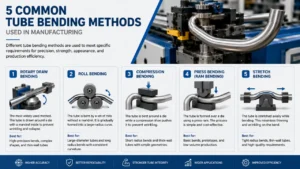
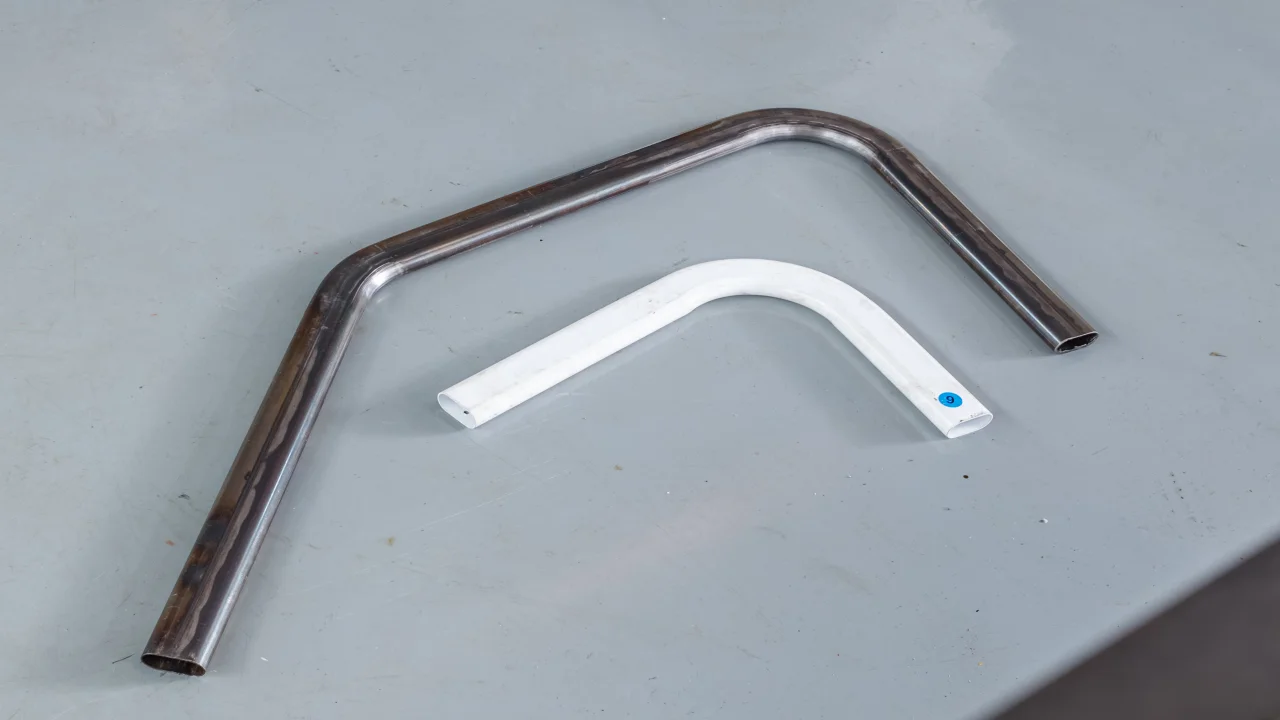
Rotary Draw Bending
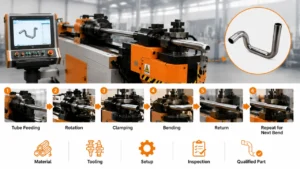
A clamp holds the tube against a rotating bend die. The die draws the tube around its profile while supporting tools control the adjacent material. Evaluate this method for defined-radius bends and parts with multiple bends.
Roll Bending
Rolls guide and curve the tube as it passes through the machine. Consider roll bending for sweeping arcs and circular components. Here, roll bending means curving existing tubing, rather than forming strip into tube on a production line.
Press Bending
A press drives a forming tool against a supported tube. Review the support arrangement and permitted cross-sectional change before selecting the setup. A suitable outer contour alone does not establish that the section meets your drawing.
SME’s tube bending study guide describes these methods and the roles of tube dimensions, geometry, and tooling in method selection.
Tube End Forming
Tube end forming covers features such as reductions, expansions, flares, and beads. A reduction makes the end smaller; an expansion makes it larger. A flare opens the mouth outward, while a bead adds a raised circumferential feature. These names describe the result; the supplier must still select how to produce it.
For example, a supplier may evaluate ram tooling or segmented tooling for a diameter change. These approaches differ in how they contact and work the circumference. You also need to consider tool marks, dimensional adjustment, and the required inside or outside fit. Tube Form Solutions discusses these distinctions in its end-forming methods guide.
Hydroforming and Other Specialized Methods
Hydroforming uses internal fluid pressure, sometimes with axial feeding, to shape a tube against a die cavity. Engineers may consider it for complex sections that need specialized tooling and process development. Schuler explains the tooling and pressure sequence in its tube hydroforming process description.
Treat it as a separate equipment assessment. A hydraulic drive on an end-forming machine does not make that machine a hydroforming system.
What Determines Whether a Forming Process Will Work?
Material Grade and Condition
Specify the grade and supply condition, not just “steel” or “aluminum.” Also identify welded or seamless stock and relevant surface requirements.
Previous processing can change the material’s forming behavior. AHSS Guidelines notes that engineers evaluating subsequent operations should consider the properties of the tube rather than assume they match the original flat sheet. Its discussion concerns advanced high-strength steels, so its examples should not become universal limits for other materials. See the tube forming technical guidance.
Outside Diameter, Wall Thickness, and Target Geometry
Assess the starting tube together with the finished feature. A machine’s diameter rating does not tell you whether it can produce your required transition, bend radius, or formed length.
Ask the supplier which material and forming conditions support the quoted capacity. Also confirm the available stroke and space for locating the part. Do not assume that separate maximum specifications apply together to your component.
Functional Dimensions, Surface Finish, and Mating Parts
Identify which dimensions control assembly. For a slip fit, provide the mating dimensions and clearance requirements. For a sealing feature, define the joint design and acceptance tests rather than relying on appearance.
Specify which tool marks you accept and which count as damage. A cosmetic surface and a hidden mounting feature may justify different tooling or handling arrangements.
Production Volume, Changeovers, and Handling
Include batch size, product variety, and shift requirements in your tube forming process review. You may gain little from a short forming stroke if loading, repositioning, or tool changes dominate production time.
Ask for a cycle-time assessment covering the full operation. A quoted stroke speed is not a finished-parts-per-hour figure. Compare automation options against your product mix and available operators.
Match the Machine and Tooling to the Forming Task
Machine Capacity Is Only One Part of the Decision
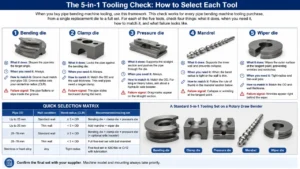
Once you shortlist a tube forming process, ask how the supplier will hold, support, and release your component. Check which tools the quotation includes and which features require additional tooling.
Establish the locating surfaces and reference points for the part. A tube may fit inside a machine’s working envelope while leaving insufficient access for the intended clamp or forming tool.
Why Some Parts Need Multiple Forming Stages
An engineer may divide a shape change into intermediate steps to manage deformation or reach the required final contour. The number of steps depends on the part, material, and tool design.
Keep these terms separate when comparing proposals:
- A forming stage is a step in creating the feature.
- A station is a position for tooling within the machine configuration.
- A tool set contains the tools required for a defined operation.
- A production cycle includes the actions required to complete and handle the part.
You cannot infer a three-step route or three-piece simultaneous output from a three-station specification.
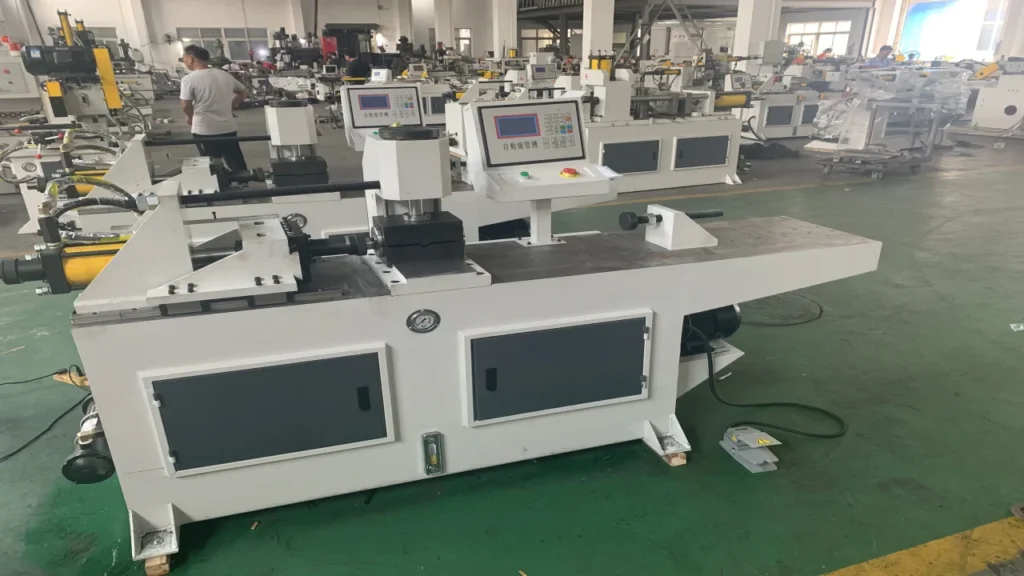
Where ZR’s TM-Series End Formers Fit
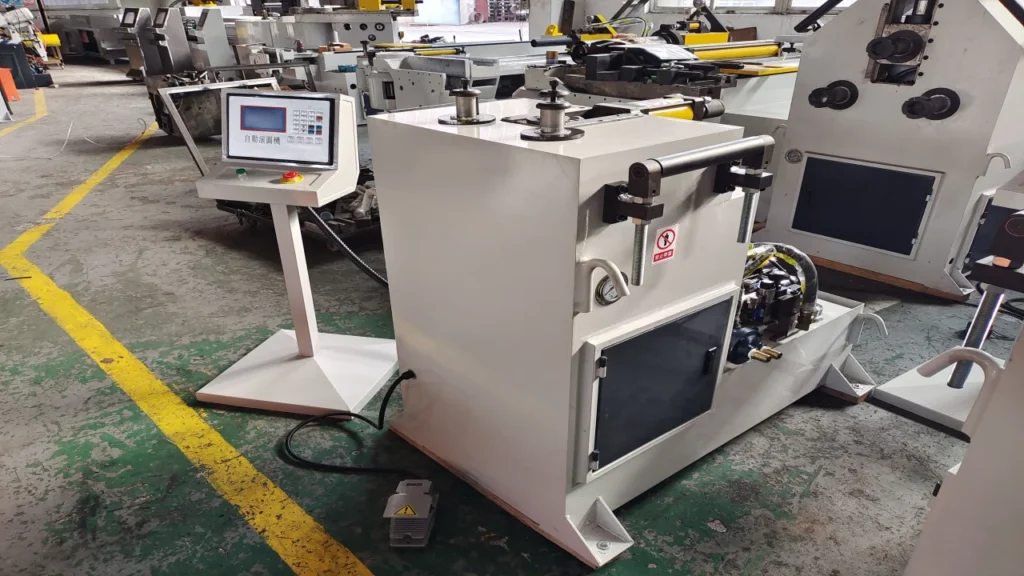
ZR’s TM-series technical sheets describe hydraulic drive, manual and semi-automatic operation, and tooling selected for the workpiece. The TM40NC-3, TM60NC-3, and TM80NC-3 sheets specify three stations; the TM120NC-2 sheet specifies two.
For example, the TM40NC-3 sheet lists a 100 mm maximum working stroke, while the TM60NC-3 sheet lists 125 mm. Compare these configuration details with the proposed tool travel and part setup. Neither figure establishes an allowable expansion, reduction, or finished-part tolerance.
Review ZR’s tube end-forming machines for the relevant product family, or browse the broader tube processing equipment range if your component also needs bending. Confirm the selected model, tooling, and scope of supply in the technical proposal.
Validate the Formed Part Before Committing to Production
Agree on What Must Be Measured
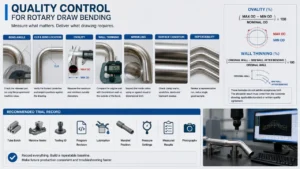
Define the inspection plan before the trial. For your component, this may include end diameter, formed length, transition position, bend geometry, surface condition, or fit with another part.
Specify the measurement method and drawing reference. You may need a fixture, gauge, profile measurement, or a functional test, depending on what the component must do. Avoid substituting a general machine accuracy figure for part acceptance.
Test with Representative Material and Tooling
Use material and tooling representative of the planned production setup. Record the tube specification and the settings used for the trial so you can interpret the results.
Agree which changes in stock, tooling, or processing conditions require another trial after approval. The trial only supports the conditions that the parties have assessed.
Separate a Successful Sample from Production Readiness
A successful sample establishes that the tested setup produced an acceptable part. To assess production readiness, you also need to examine repeat parts, handling, setup requirements, and the complete cycle.
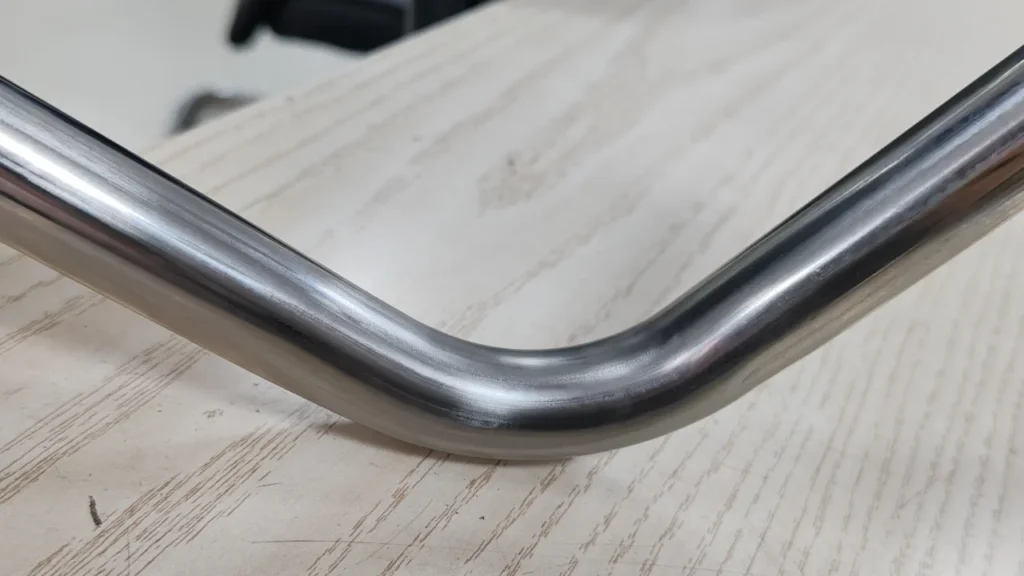
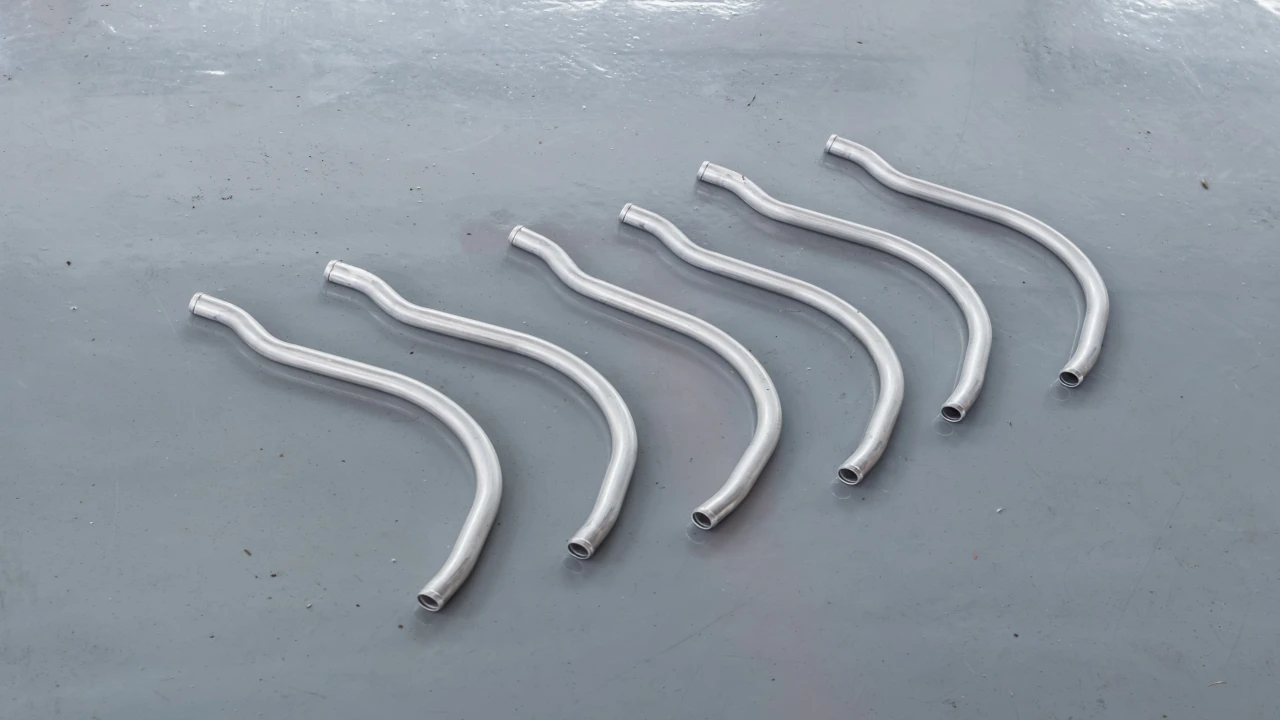
For your order, agree the sample quantity and acceptance criteria with the supplier. Do not treat a photograph of a finished tube as evidence of dimensional compliance or sustained output.
What to Send for a Tube Forming Evaluation
To help a supplier assess your tube forming process, provide:
- A dimensioned drawing and, if available, a 3D model.
- Material grade, condition, outside diameter, wall thickness, and blank length.
- Starting and finished dimensions for the formed features.
- Critical tolerances, mating-part information, and surface requirements.
- Target quantities, shifts, product variants, and handling preferences.
- Photos or measurements of existing defects, if you are improving a current operation.
Include both the geometry and its function. You may have flexibility in a transition shape but no flexibility in the final assembly dimension. Tell the supplier which requirements you can change.
Frequently Asked Questions
Is tube forming the same as tube bending?
Tube bending is one type of tube forming. You use bending to change the tube’s path. Other forming operations change end dimensions or local sections. A component may require more than one type of operation.
Does the maximum tube diameter apply to every material?
Do not assume so. Ask which material grade, wall thickness, and forming operation support the rating. You need a proposal for your tube specification and finished geometry, especially if the capacity table does not state its test conditions.
Can one machine perform different tube forming operations?
Some machines accept different tools or provide multiple stations. You must confirm which operations the specific configuration supports. Tool changes do not remove limits involving travel, clamping, force, or access to the part.
Can you calculate output from the machine’s stroke speed?
Stroke speed alone does not establish output. Request a full-cycle estimate that includes loading, clamping, forming, return travel, repositioning, and unloading as applicable. You should also allow for inspection, changeovers, and planned stops when estimating shift production.
Can tube end forming be done before or after bending?
Either sequence may be feasible, depending on the part. You need to check whether a formed end will interfere with bending tools and whether a bent tube will fit the end former’s holding arrangement. Confirm the sequence through drawing review and trials.
How do you check whether a formed tube meets the drawing?
Measure the specified features using the agreed inspection method and check any required assembly or functional performance. You should record the results against the drawing revision. Visual similarity is insufficient when the application has dimensional or functional requirements.
Discuss Your Forming Requirements with ZR
Send your drawing, tube specification, and production requirements to ZR’s technical team. You can then discuss the suitable equipment, tooling configuration, and sample acceptance requirements before confirming your order.