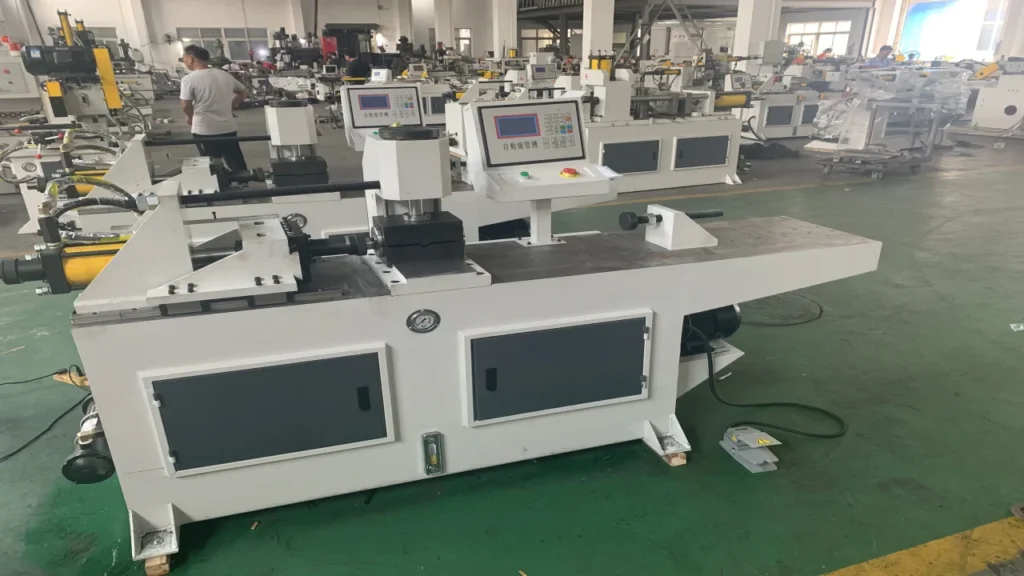
You cannot price a CNC pipe bending machine from tube diameter alone. Your part drawing, material, wall thickness, bend radius, production target, tooling package, automation level, and delivery scope all affect the quotation. Two machines that both handle a 50 mm tube may have different axis control, tooling stacks, loading systems, software, and acceptance requirements.
That difference changes more than the purchase price. It affects setup time, labor, scrap risk, future tooling, and the support you need after installation. A low machine price can become an expensive project when the quote excludes bend tooling, commissioning, operator training, or transport.
This guide gives you a practical way to build a budget and compare offers. You will learn how five cost layers shape a CNC pipe bending machine quotation, which questions expose missing scope, and what information a manufacturer needs before recommending a configuration. It also shows where a low offer can create extra cost during installation, validation, and production.
The Short Answer: Why There Is No Single CNC Pipe Bending Machine Price
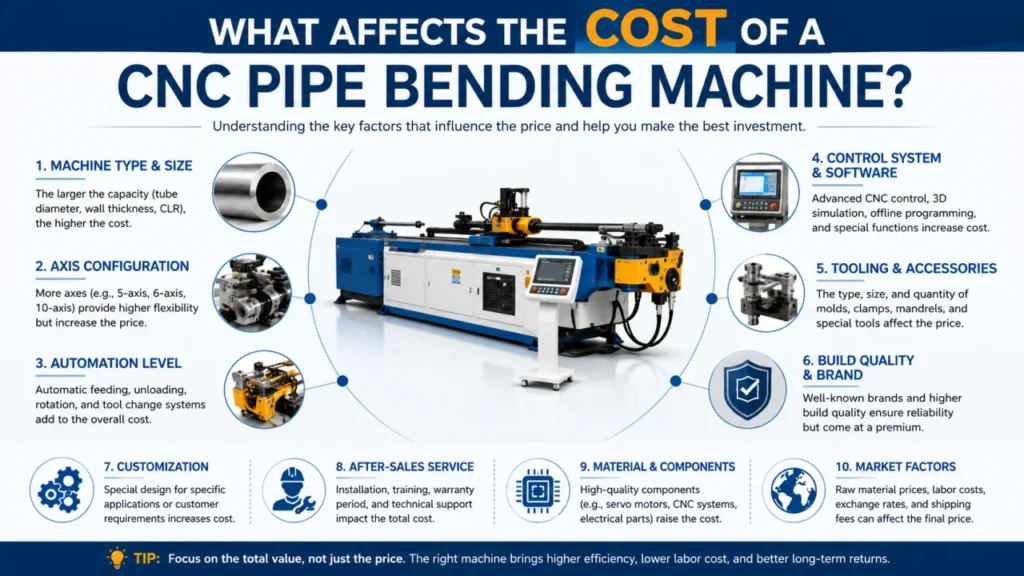
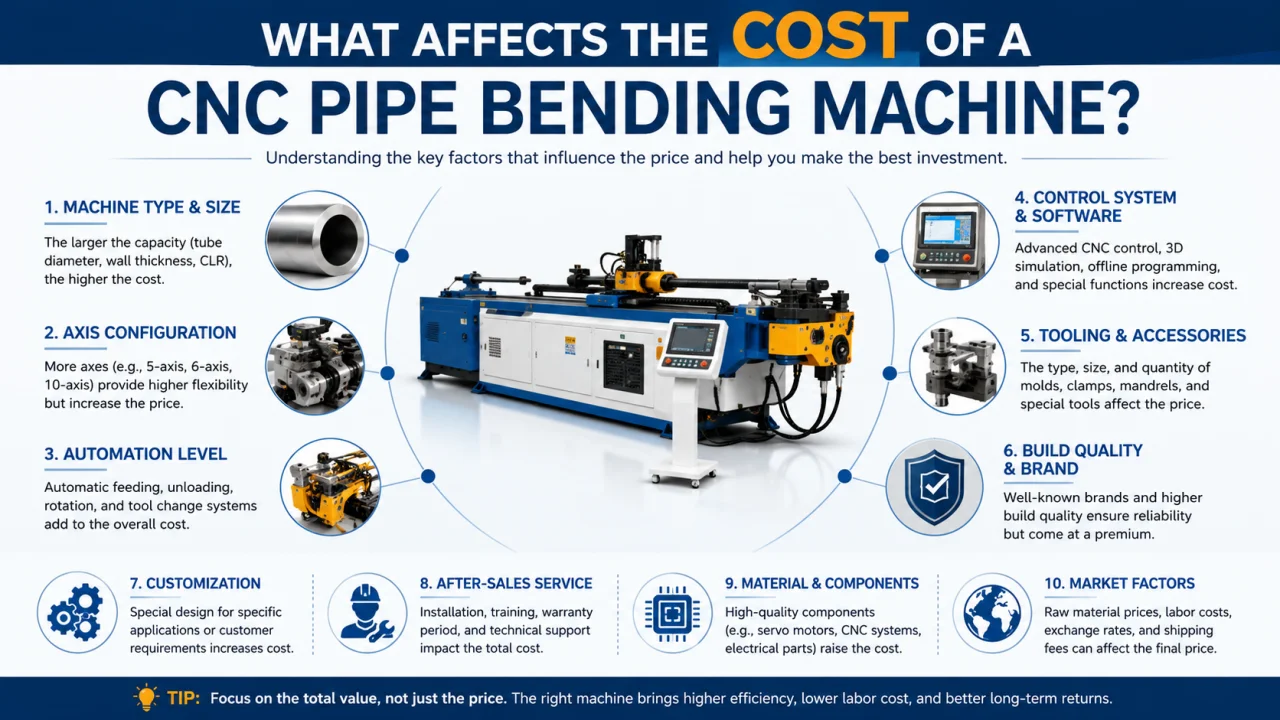
A useful price requires your part and production requirements. Tube capacity sets the starting point. Axis configuration, tooling, automation, software, inspection requirements, and the agreed Incoterm then shape the final CNC tube bending machine price.
Ask each supplier to quote against the same technical specification and delivery scope. A bare EXW machine price and a CIF quotation that includes tooling and freight do not represent the same purchase.
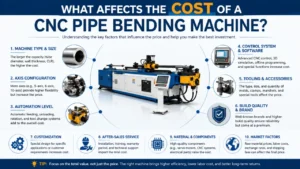
The Five-Layer CNC Pipe Bending Machine Cost Model
Use this five-layer model before you set a budget:
| Cost layer | Main inputs | Effect on your purchase |
|---|---|---|
| Workpiece requirements | Material, outside diameter, wall thickness, CLR, part geometry | Defines the bending force, machine capacity, and process support |
| Machine architecture | Axis control, drive system, tooling-stack capacity | Determines how the machine positions and bends the tube |
| Tooling package | Bend die, clamp die, pressure die, mandrel, wiper die | Determines which parts the machine can produce |
| Automation and software | Loading, unloading, seam detection, simulation, line integration | Changes labor needs, cycle control, and setup work |
| Commercial scope | Packaging, freight, commissioning, training, spare parts | Determines the delivered and installed cost |
How Your Part Drawing Determines the Base Machine Configuration
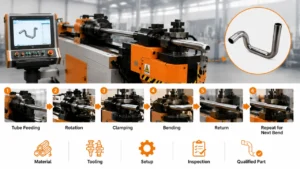
Your drawing gives the manufacturer more useful information than a target budget. It shows the tube size, bend locations, radii, angles, straight lengths, and part orientation. The manufacturer can then check whether one setup can produce the part and whether the process needs a mandrel, wiper die, or multiple tooling stacks.
Tube Material, Outside Diameter, and Wall Thickness
Outside diameter and wall thickness affect the force and support required during bending. Material behavior also changes the process. Carbon steel, stainless steel, aluminum, and copper do not respond to forming in the same way.
Send the exact material grade, tube construction, and finished-surface requirements. “Stainless steel tube” leaves too much uncertainty.
Capacity figures in a catalogue do not prove that a machine can bend every material at the listed outside diameter and wall thickness. Ask the manufacturer to confirm your exact combination.
Centerline Radius and Part Geometry
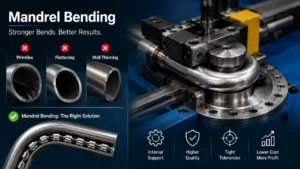
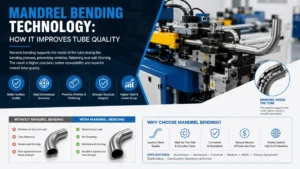
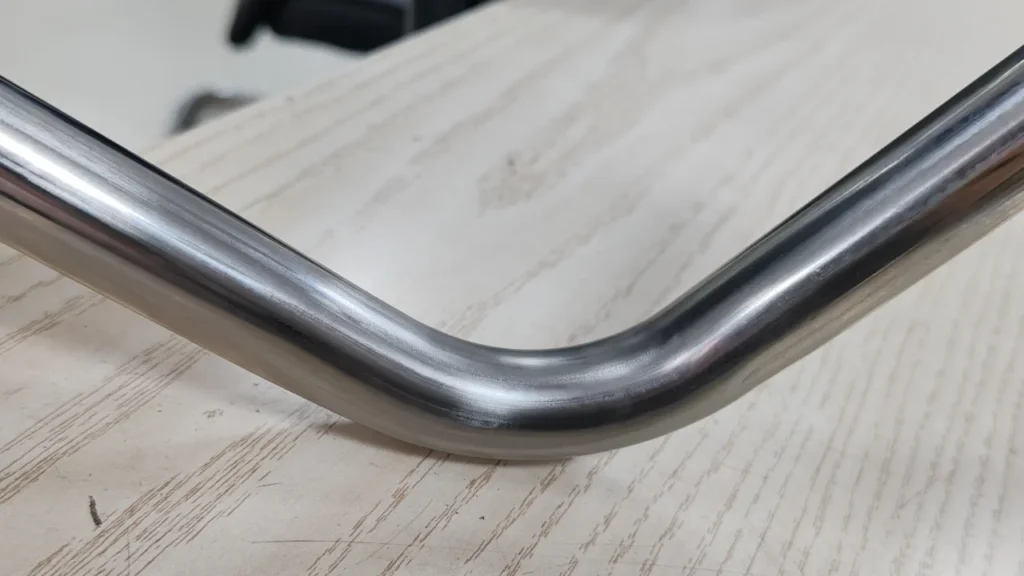
The centerline radius, or CLR, affects tooling and deformation control. A tight radius on a thin-wall tube can require a mandrel and wiper die. A large radius may require a different process or tool design.
Complexity also rises when your part contains several radii, short straight sections, or bends in different planes. Share a 2D drawing, 3D file, or physical sample. A photo with rough dimensions cannot support machine selection.
Production Volume and Cycle Requirements
A workshop that makes short batches may value fast setup and flexible tooling. A production line may need automatic loading, part detection, unloading, and links to other equipment.
State the required output per shift and product mix. One high-volume part needs a different configuration from many low-volume parts.
How Axis Configuration Changes Machine Cost
Axis count describes which machine movements use controlled drives. Suppliers may use different naming conventions, so ask each one to define the controlled axes in its offer.
When a 2-Axis CNC Bender May Be Enough
A 2-axis configuration can suit parts with fewer positioning demands. Zhuoran Machinery’s current catalogue lists 2-axis models across the DW38 to DW168 series, showing that axis count and maximum tube size are separate selection factors.
The drawing still controls the decision because a small tube can require several controlled movements.
When You Need 3-Axis Control
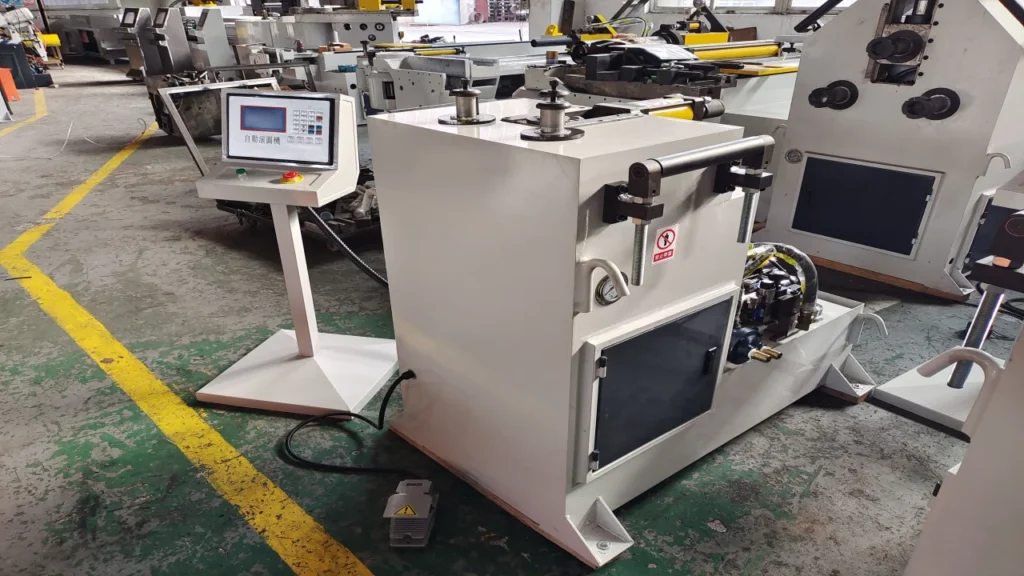
A typical 3-axis configuration controls bending, feeding, and tube rotation, supporting multi-plane parts without manual positioning. Suppliers may define axes differently, so confirm each axis, drive type, and any hydraulic or pneumatic operations.
When 4-, 5-, or 6-Axis Systems Become Necessary
Extra controlled axes can support tooling-stack changes, pressure-die movement, mandrel movement, or other process actions. Their functions depend on the machine design.
Higher axis counts make sense when the part or production method needs those movements. They add little value if your product family cannot use them. Ask the supplier to map each proposed axis to a feature on your drawing or production plan.
Tooling Costs That Buyers Often Miss
A CNC tube bender cannot produce your part without matching tooling. Many quotations show the machine and tooling as separate lines. Some offers include one set, while others exclude all product tooling.
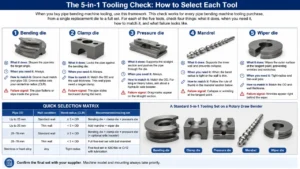
What a Complete Tooling Set May Include
A rotary-draw bending setup can use:
- a bend die that sets the bend radius;
- a clamp die that grips the tube;
- a pressure die that supports the tube during bending;
- a mandrel that supports the tube from inside;
- a wiper die that helps control wrinkles near the tangent;
- a collet or feeding clamp that positions the tube.
Your application may not need every item. The supplier should identify the proposed tooling and explain its purpose.
Why One Tube Size May Need More Than One Tooling Set
One outside diameter can appear in several products with different centerline radii. Each radius can require a separate bend die and matching tooling. A change in wall thickness or material may also require another mandrel or wiper-die design.
Create a tooling list by tube size, wall thickness, material, and CLR. This exposes the full tube bender tooling cost for your product range.
Single-Stack vs. Multi-Stack Tooling
A single-stack machine holds one tool position. A multi-stack setup can reduce changeovers when a part uses several radii or a product family shares one tube size. Compare machine clearance, controlled movement, and tooling cost as one system.
Automation and Software Options That Affect the Quote
Automation can reduce handling work and support stable production. It also adds engineering, guarding, controls, and commissioning work to the project.
Automatic Loading and Unloading
An automatic loader suits a stable product family with repeatable raw-tube dimensions. Give the supplier the stock length, tube shape, bundle condition, surface sensitivity, and required orientation. A bent part may need a conveyor, rack, or robot when its shape prevents drop discharge.
Seam Detection, Robots, and Production-Line Integration
Welded tube may need seam orientation before bending. A seam-detection unit can locate the weld and rotate the tube to the required position. Robots can move parts between bending, end forming, inspection, and packing stations.
SOCO’s automation examples show loaders, seam detection, robots, and connected processes in one production cell. Use this scope only when the output target supports it.
STEP Import, 3D Simulation, and Collision Detection
Software can reduce program entry and help your engineer review a bending sequence before a trial. Zhuoran’s catalogue lists options such as STEP import, 3D simulation, and interference detection. Confirm which model and control package provides each function. BLM and Unison provide useful comparison points for software and automation, but their published features apply only to their products.
What Should a CNC Tube Bender Quotation Include?
A clear quotation separates equipment, tooling, services, and delivery costs.
| Quotation item | Questions to ask |
|---|---|
| Base machine | Which axes, drives, control system, and safety equipment are included? |
| Tooling | How many complete sets are included, and which parts do they cover? |
| Automation | Does the offer include loading, unloading, detection, or robot interfaces? |
| Spare parts | Which wear parts, electrical parts, and service tools are included? |
| Documentation | Will you receive manuals, electrical drawings, parts lists, and program backups? |
| Factory testing | Which sample parts and acceptance checks will the supplier complete? |
| Site services | Does the price cover installation, commissioning, and operator training? |
| Logistics | Who handles export packing, freight, insurance, customs, and local transport? |
EXW, FOB, and CIF Are Not Directly Comparable
Incoterms allocate transport tasks, costs, and risks. EXW makes the goods available at the seller’s premises. FOB covers delivery on board the named vessel; CIF adds carriage and insurance to the named destination port. Cost coverage and risk transfer are not the same, so confirm both.
The ICC Incoterms 2020 checklist explains these boundaries and notes that FCA often fits container shipments better than FOB. Ask the supplier to state the named place or port and the Incoterms 2020 rule on the quotation.
Questions to Ask About Exclusions
Request a written exclusion list covering trial material, tooling prove-out, foundations, lifting equipment, technician travel, local transport, duties, taxes, utilities, and external safety fencing.
Purchase Price vs. Total Cost of Ownership
Purchase price covers one part of the investment. Use this planning formula:
TCO = machine + tooling + automation + logistics + installation + training + maintenance + downtime + future tooling
The formula does not require assumed percentages. Fill it with supplier quotations and your factory costs.
Setup Time, Labor, and Material Loss
Ask the supplier to show the setup process for a representative part. Count tool changes, manual adjustments, program steps, and trial pieces. For repeat work, record the approved program, tooling, and inspection method after a sample test.
Maintenance, Spare Parts, and Downtime
Review lubrication points, wear parts, control backups, service access, component model numbers, and supplier stock. A recognizable component brand may help local sourcing, but it does not replace machine-builder support.
Future Products and Additional Tooling
List likely future tube sizes and part families. Check whether the machine has enough force, clearance, tooling positions, and program capacity without buying unused capacity.
How to Compare CNC Pipe Bending Machine Quotes
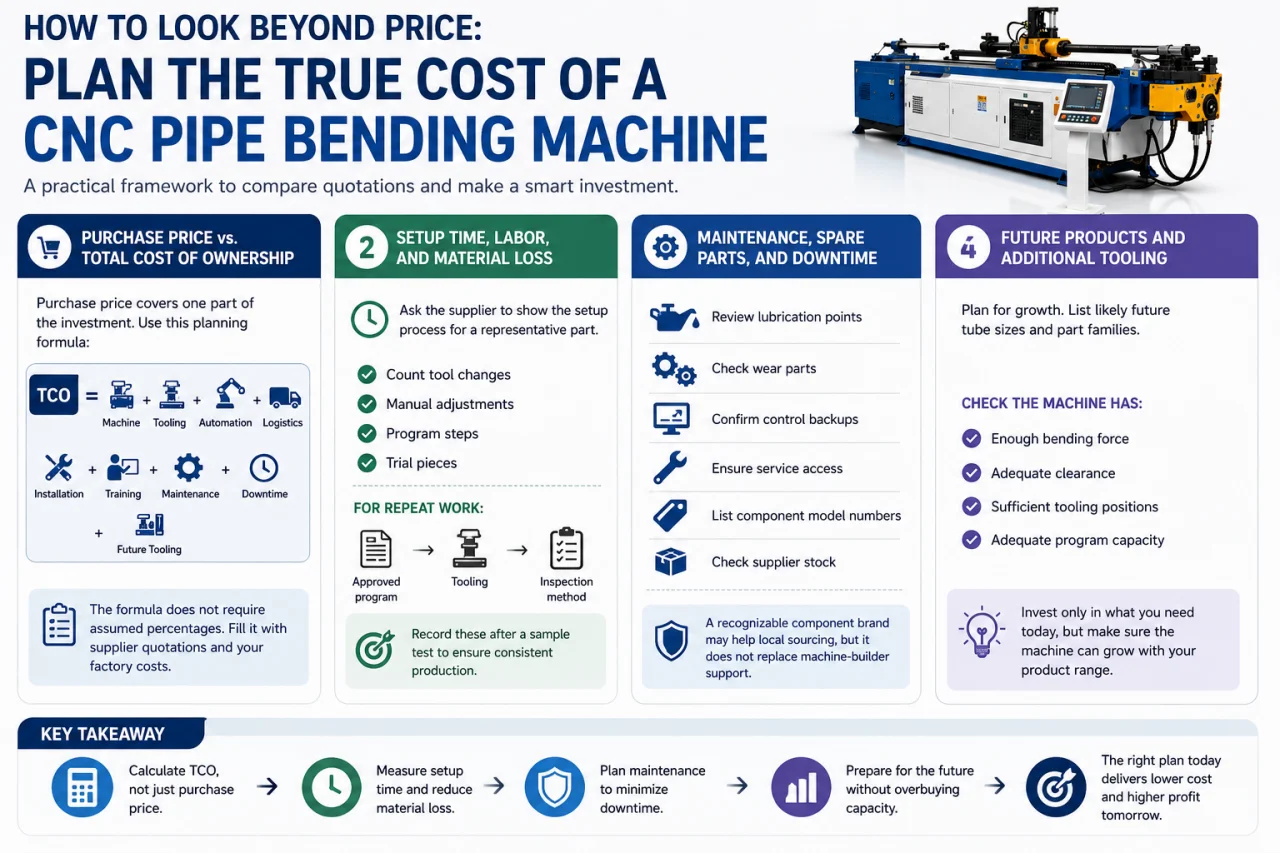
Build one comparison sheet and require each supplier to respond to the same fields.
| Comparison Item | Supplier A (Economy) | Supplier B (Premium) | Supplier C (Best Value) |
|---|---|---|---|
| Supported Tube Size | Ø6–50 mm | Ø10–76 mm | Ø6–63 mm |
| Axis Configuration & Drive | 2-Axis Servo | 10-Axis Full Servo | 4-Axis Servo |
| Included Tooling | 1 Standard Tooling Set | 2 Tooling Sets + Mandrel + Special Clamps | 1 Standard Tooling Set |
| Automation Features | Automatic Feeding + Automatic Rotation | Automatic Loading & Unloading + Robot Arm + Automatic Lubrication | Automatic Feeding + Automatic Rotation + Automatic Tool Change + Servo Bending |
| Software Features | Standard CNC Control | 3D Simulation + Offline Programming + Bend Interference Detection | Graphic Programming + USB Import |
| Sample Testing & Acceptance | Free Sample Bending | FAT + SAT | Video Acceptance |
| Installation & Training | Online Training | On-site Installation & Training | Online Training + Video Support |
| Warranty & Spare Parts | 12 Months | 24 Months | 18 Months |
Normalize the Technical Scope First
Send one RFQ package to every supplier and require marked exceptions. This exposes differences in capacity, tooling, software, and service.
Separate Machine Price from Delivered Cost
Record the machine, tooling, logistics, site work, and taxes in separate columns. Use one currency, one exchange-rate date, and each quotation’s validity period.
Treat an Unusually Low Quote as a Scope Question
Ask the supplier to explain each missing or lower-cost line. The difference may come from tooling, axis control, drive design, or an EXW delivery term.
How to Evaluate a CNC Pipe Bender Manufacturer
The supplier needs to prove that the proposed machine can produce your part and that its team can support the installation.
Application Review and Sample Bending
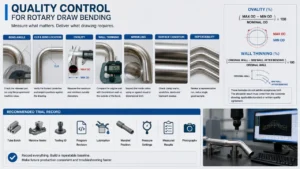
Send the drawing and tube specification before asking for a final offer. For a difficult or high-volume part, agree on the sample material, tooling, measurement points, and acceptance criteria before using a sample bending service.
Manufacturing and Inspection Evidence
Ask how the supplier machines key components, assembles the machine, tests the control system, and records final inspection. Zhuoran Machinery describes a workflow from material sourcing through machining, assembly, testing, and final inspection in its current company catalogue.
Request order-specific test records, sample parts, machine videos, and an acceptance checklist rather than a generic factory presentation.
Service, Documentation, and Spare-Parts Support
Before ordering, put installation, commissioning, and training, remote support, software backups, and spare-parts identification in the purchase contract.
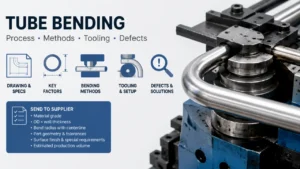
Information Required for an Accurate Quotation
Send these details with your RFQ:
- tube material and grade;
- outside diameter and wall thickness;
- centerline radius and bend angles;
- 2D drawing, 3D file, or sample;
- number of bends and part orientation;
- required output per shift;
- product mix and changeover frequency;
- automation and inspection needs;
- surface and appearance requirements;
- factory voltage and frequency;
- destination country and delivery address;
- preferred Incoterm;
- sample-test and acceptance requirements.
Add expected future products if you want the supplier to consider expansion capacity. Complete inputs help the design and engineering team select a machine and tooling package without adding broad contingency costs.
Have these details ready? Submit your drawing and production target for a model and tooling recommendation.
Common Questions About CNC Tube Bender Cost
How much does a CNC pipe bending machine cost?
The price depends on your tube specification, part geometry, axis configuration, tooling, automation, software, and delivery scope. Send the manufacturer a drawing and production requirement for a configuration-based quotation. Treat a price without a defined technical scope as a preliminary figure.
Is tooling included in the machine quotation?
Some suppliers include one tooling set, while others quote all tooling as a separate item. Ask for a tooling list that names each die, mandrel, wiper, and supported part. Also check whether the price includes tooling design, trial bending, and corrections after the sample test.
How many CNC axes do you need?
Your part and production method determine the required axes. Simple parts may use a 2-axis configuration. Multi-plane parts, several radii, or automated process movements may need more controlled axes. Ask the supplier to explain the function of each axis against your drawing.
Does a larger tube diameter always mean a higher price?
Larger or thicker tubes can require a stronger frame and drive system. Part complexity, tooling stacks, automation, and control functions also affect cost. A small, thin-wall tube with tight radii and several bend planes can require a more advanced configuration than a large tube with one bend.
What hidden costs should you include in your budget?
Budget for tooling, spare parts, export packing, freight, insurance, import charges, installation, training, maintenance, and future tooling. Check whether technician travel, lifting equipment, foundations, trial material, and local transport sit outside the supplier’s price.
How do EXW, FOB, and CIF quotations differ?
EXW, FOB, and CIF assign different transport duties, costs, and risks to the buyer and seller. Each quotation should state the Incoterm, named place or port, and rule version. Compare offers after you convert them to the same delivery boundary.
What information does a manufacturer need for an accurate quote?
Provide material grade, outside diameter, wall thickness, CLR, bend data, drawing, output target, product mix, automation needs, voltage, destination, and acceptance requirements. The supplier may request sample tubes for a trial when the part uses tight radii or difficult material.
Should you compare purchase price or total cost of ownership?
Use both. Purchase price controls the initial budget. Total cost of ownership adds tooling, logistics, installation, training, maintenance, downtime, and future product changes. Compare the same time period and scope across all suppliers.
Build Your Budget from the Part, Not a Generic Price Band
Start with the tube and finished-part requirements. Then define the machine movements, tooling, automation, and delivery scope that your factory needs. This sequence gives you a budget you can defend and quotations you can compare.
Zhuoran Machinery’s current catalogue covers CNC tube-bending configurations from 2 to 6 axes. Send us your material, tube dimensions, CLR, drawing, and output target for an engineering review and itemized machine-and-tooling quotation.
Need a configuration and tooling review? Send your tube specification, drawing, output target, and delivery destination for an itemized recommendation.
Sources Used for Technical Context
- Zhuoran Machinery Product Catalogue, current company edition supplied for this article.
- ICC Incoterms 2020 Checklist
- BLM ELECT Technical Information
- Unison All-Electric Tube Benders
- Unison Tube Bending FAQs
- SOCO Tube Bending and Forming Automation