Choosing a tube rolling machine starts with the finished part—not the machine brochure. If you are researching how to choose a tube rolling machine, define the material, tube or profile dimensions, wall thickness, target radius, production volume, tooling, and inspection requirements before comparing models.
This guide focuses on tube and profile roll bending for arcs, rings, coils, spirals, and other curved sections. It also explains how to distinguish roll bending from tube-end rolling and tube-to-tubesheet expansion.
What Does “Tube Rolling Machine” Mean?
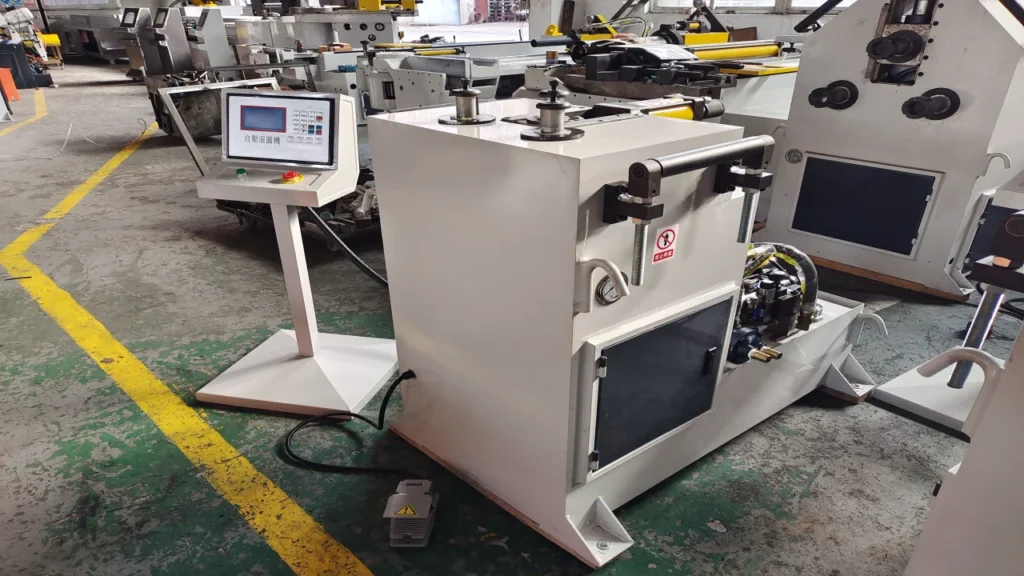
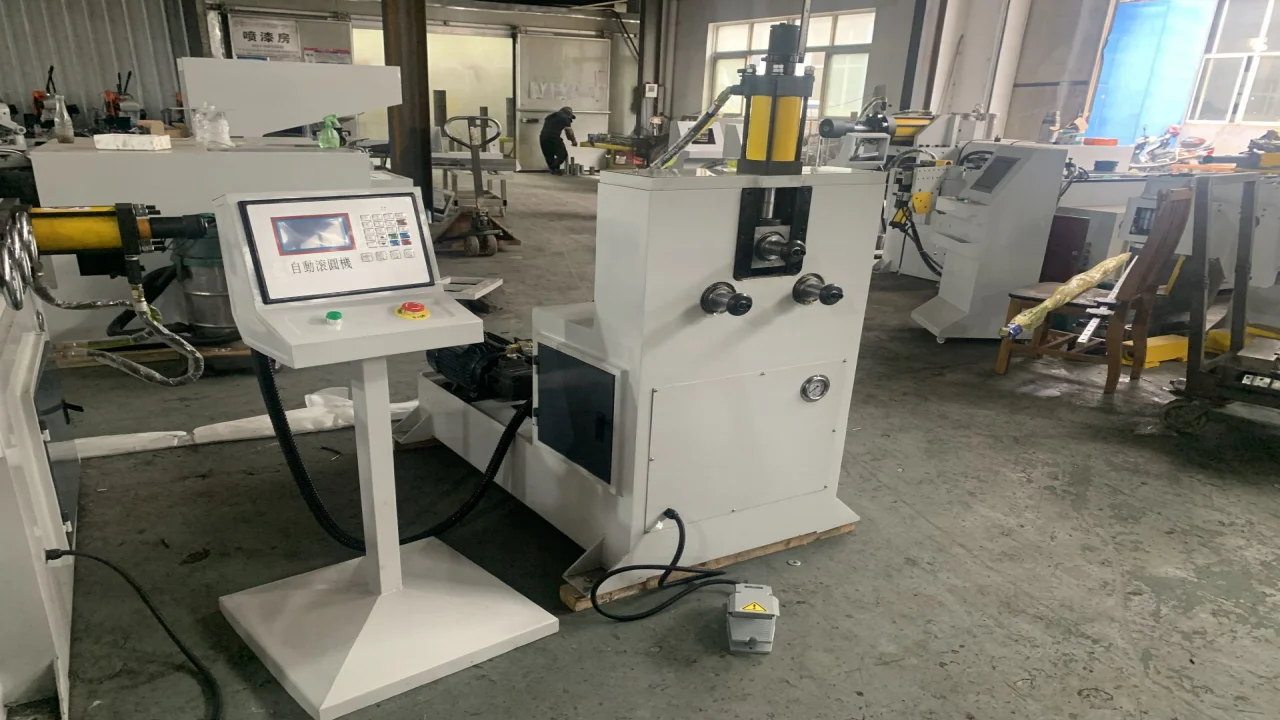
A tube rolling machine progressively forms a tube or profile through rollers. The process is normally used to produce arcs, rings, coils, spirals, and large-radius curved sections. Some buyers also call this equipment a pipe rolling machine; the selection logic remains the same.
| Process | Main purpose | Typical result |
|---|---|---|
| Tube and profile roll bending | Forms the full length of a tube or profile | Arcs, rings, coils, spirals, and curved sections |
| Tube-end rolling or end forming | Changes one or both tube ends | Flares, reductions, beads, grooves, and expanded ends |
| Tube-to-tubesheet rolling | Expands a tube inside a tubesheet | Mechanical joints for heat exchangers and boilers |
This article focuses on tube and profile roll bending. Tube-to-tubesheet projects require a different tooling and joint-quality evaluation; see Elliott’s assisted tube rolling guide for that separate application.
How Do You Choose the Right Tube Rolling Machine Type and Control System?
Choose the machine type from the complete workpiece condition, including material, wall thickness, profile shape, target radius, and production requirement.
3-Roll Tube Rolling Machine Applications
A 3-roll configuration can suit standard tube and profile rolling, including round tubes, angle steel, flat steel, aluminum profiles, rings, and large-radius curved sections. The final choice still depends on the material, wall thickness, roller groove, and target radius.
7-Wheel Drive Configuration
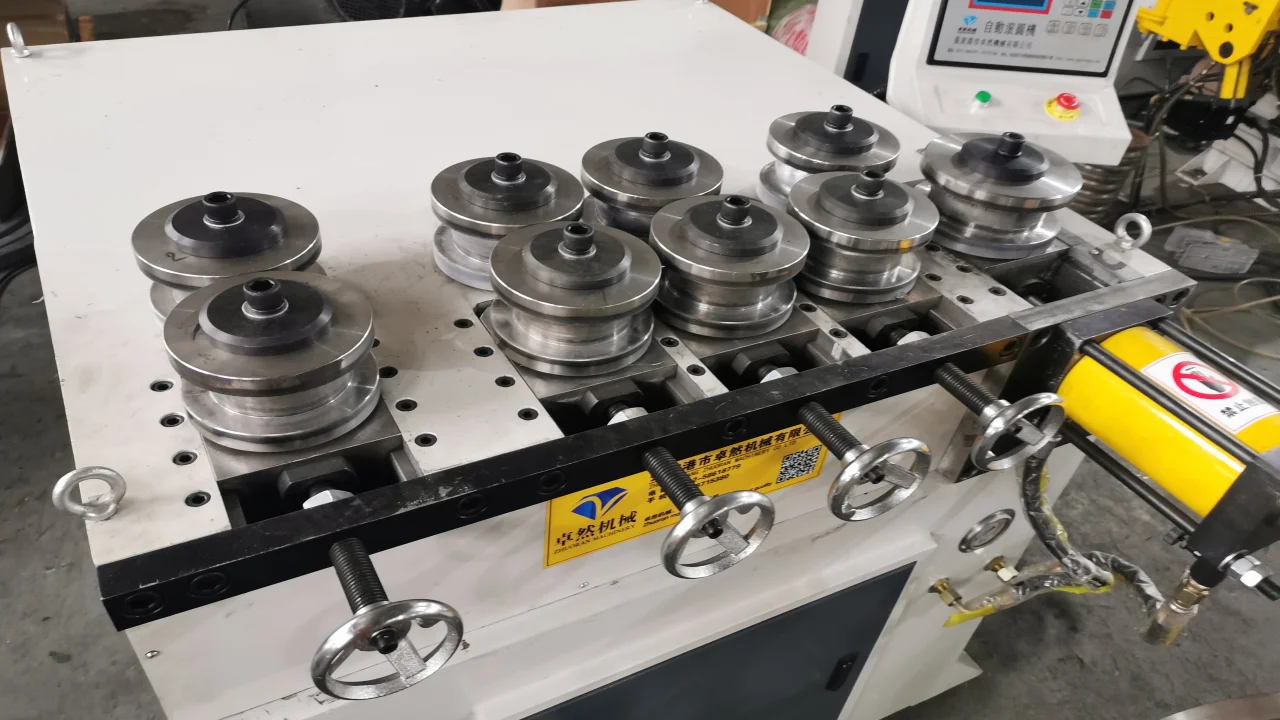
Zhuoran’s GY series includes 7-wheel drive configurations designed to reduce slipping during forming. This can be useful for thin-wall materials, longer workpieces, and applications that require stable feeding. The correct configuration should be selected from the actual drawing rather than from wheel count alone.
Profile Rolling Applications
You need a profile rolling setup when the workpiece is not a simple round tube. Common examples include angle steel, flat steel, aluminum profiles, and special cross-sections. The roller groove must match the profile geometry to reduce twisting, pressure marks, and local deformation.
Comparing 3-Roll, 4-Roll, and 7-Wheel Configurations
Three-roll machines are a common starting point for tube and profile rolling. Four-roll machines may be selected for special applications where the additional roll arrangement improves support or control. The 7-wheel drive option is another configuration for applications that need more stable contact and feeding.
The correct configuration depends on the section, material, wall thickness, target radius, and production method. Do not select a configuration from the roll count alone.
NC, Hydraulic, and CNC Control Systems
NC, hydraulic, and CNC describe different aspects of a machine and should not be treated as three completely separate categories. Hydraulic describes the drive or forming force, while NC and CNC describe the control level and programmability.
NC System Applications
An NC system is suitable when the workpiece uses repeatable settings but does not require a complex multi-axis production program. It can be a practical choice for standard tube or profile rolling, recurring parts, and operations where an operator still manages loading, unloading, or adjustments.
Hydraulic Configuration Applications
Hydraulic drive is useful when the machine needs higher forming force or adjustable roller movement for larger sections, thicker walls, or demanding materials. A hydraulic machine can also have NC or CNC control; these terms describe the control system rather than replacing the hydraulic drive.
CNC Applications
CNC becomes more valuable when you run long, repeating batches, multiple radii, complex profiles, or automated production. CNC can store programs, coordinate roller positions, support repeatability, and connect with production-line control. The exact number of controlled axes and automation functions must be confirmed for the selected model.
For Zhuoran, the GY series model and control package should be stated separately in the quotation. This prevents a buyer from confusing an NC control system with a hydraulic drive or assuming that every model has the same automation level.
Workpiece, Radius, and Tooling Information
Before requesting a quotation, prepare the following information:
- Material and grade;
- Tube outside diameter and wall thickness;
- Profile width, height, and cross-section;
- Target radius or ring diameter;
- Arc length and straight-end length;
- Number of rolling passes;
- Surface requirements and dimensional tolerance;
- Daily or monthly output;
- Loading and unloading method;
- 2D drawing or 3D STEP file.
Material Grade and Workpiece Requirements
Provide the exact grade instead of only saying “metal tube.” 304 stainless steel, 6061 aluminum, C12200 copper, and Grade 5 titanium alloy have different forming and surface requirements.
Tube Diameter, Wall Thickness, and Profile Dimensions
For round tubes, provide outside diameter, wall thickness, tolerance, length, and surface condition. For profiles, provide the full cross-section, wall thickness, material orientation, and any critical dimensions.
Radius, Arc Length, and Straight-End Requirements
State whether the target is a centerline radius, inside radius, outside radius, ring diameter, or another reference. Also provide the arc length and the required straight sections at both ends.
Part Complexity and Output Requirements
State whether the part is a single arc, a multi-pass part, a large-radius section, a complete ring, a spiral, or a complex profile. Include the required output, number of shifts, expected changeovers, and handling method.
Material and Profile Effects on Selection
Zhuoran tube rolling machines can process carbon steel, stainless steel, aluminum alloy, copper, brass, galvanized steel, and titanium alloy.
| Material category | Common grades or material forms |
|---|---|
| Carbon steel | Q235, Q345, S235, S355 |
| Stainless steel | 201, 304, 304L, 316, 316L |
| Aluminum alloy | 6061, 6063, 5052 |
| Copper | C11000, C12200 |
| Brass | C26000, C26800 |
| Galvanized steel | Galvanized carbon steel tube |
| Titanium alloy | Grade 2, Grade 5 |
Material selection should be considered together with tube diameter, wall thickness, target radius, profile geometry, and surface requirements.
Carbon Steel and Stainless Steel Selection
Carbon steel is common for standard tube and profile rolling. Stainless steel requires additional attention to springback, roller contact condition, surface protection, wall thickness, and pressure marks.
Aluminum, Copper, Brass, and Titanium Considerations
Aluminum, copper, and brass may require closer control of roller surface condition, contact pressure, lubrication, and workpiece support. Titanium alloy requires attention to forming force, springback, surface protection, and the number of forming passes.
Round-Tube and Profile Rolling Differences
Yes. Round-tube selection focuses mainly on outside diameter, wall thickness, and radius. Profile rolling also requires cross-section geometry, neutral-axis behavior, torsion control, and a matched roller groove.
Matching Diameter, Wall Thickness, and Radius to a Model
Match the machine to the complete forming condition, not to maximum outside diameter alone. The following are Zhuoran reference configurations for selected GY models.
| Model | Reference tube capacity | Reference material | Reference minimum radius |
|---|---|---|---|
| GY18NC-7 | Ø18 × 2 mm | Carbon steel | R ≥ 10D |
| GY40NC | Ø40 × 2 mm | Carbon steel | R ≥ 10D |
| GY60NC | Ø60 × 2 mm | Carbon steel | R ≥ 10D |
| GY80NC | Ø80 × 4 mm | Carbon steel | R ≥ 10D |
| GY100NC | Ø100 × 6 mm | Carbon steel | R ≥ 10D |
| GY120NC-7 | Ø120 × 6 mm | Carbon steel | R ≥ 10D |
| GY168NC-3 | Ø168 × 6 mm | Carbon steel | R ≥ 10D |
Maximum Diameter and Actual Capacity
No. Maximum diameter is a reference machine capability. Actual suitability also depends on material grade, wall thickness, target radius, profile geometry, tooling, and forming method.
Wall Thickness and Forming Load
Wall thickness affects forming force, local deformation, ovality, flattening, surface quality, machine load, and the number of rolling passes.
Target Radius and Machine Selection
The target radius determines how much deformation is required. Provide the tube diameter, wall thickness, material grade, centerline radius, arc length, and straight-end length so the supplier can assess the complete condition.
Minimum Rolling Radius Selection
There is no single minimum radius that applies to every tube, profile, material, and wall thickness. Start with the required centerline radius or ring diameter, then compare it with the selected machine’s reference range for the actual section and material.
For selected Zhuoran GY reference configurations, the minimum radius is listed as R ≥ 10D. Here, D represents the relevant tube diameter reference. This value should be used as a model-selection reference, while the final result is confirmed against the actual drawing, tooling, material, and sample trial.
Use this process:
- Define whether the radius is an inside radius, outside radius, or centerline radius.
- Convert the requirement into a consistent reference, such as CLR or ring diameter.
- Compare the required radius with the model’s reference radius and tube capacity.
- Check the material, wall thickness, and profile shape.
- Use a sample trial when the radius is tight, the wall is thin, or the profile is unusual.
Smaller radius-to-diameter ratios and larger diameter-to-thickness ratios generally increase the risk of cross-section deformation and wrinkling in tube forming. See the research discussion in Numerical study on thin-walled tube NC bending.
Tooling and Roller Configuration
Tooling should be selected from the workpiece geometry instead of added after the machine has been quoted.
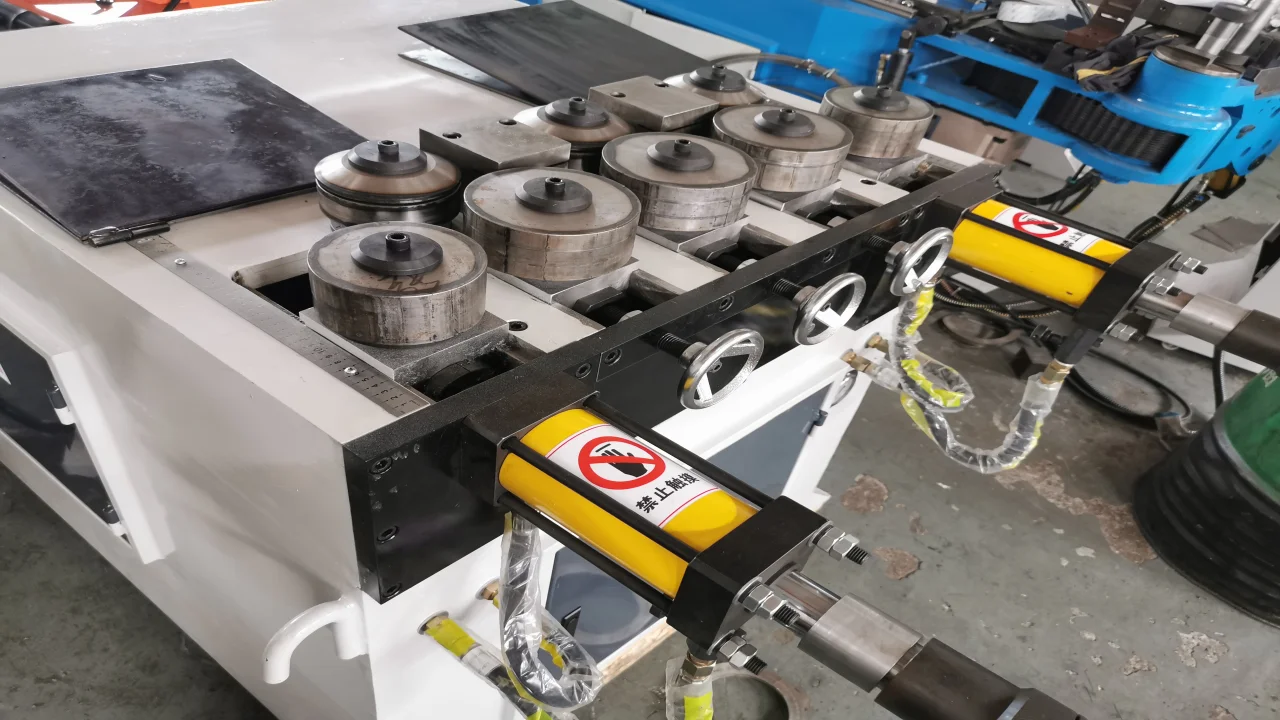
Roller grooves should match the tube outside diameter, profile cross-section, wall thickness, target radius, material, and surface requirements. For profile rolling, a round-tube roller is not automatically suitable.
Ask the supplier to separate the main machine, control system, standard rollers, special rollers, profile-specific tooling, installation, training, spare parts, packaging, shipping, warranty, and optional loading and unloading equipment. For broader equipment options, review Zhuoran’s tube processing equipment.
Accuracy and Qualified Production Capacity
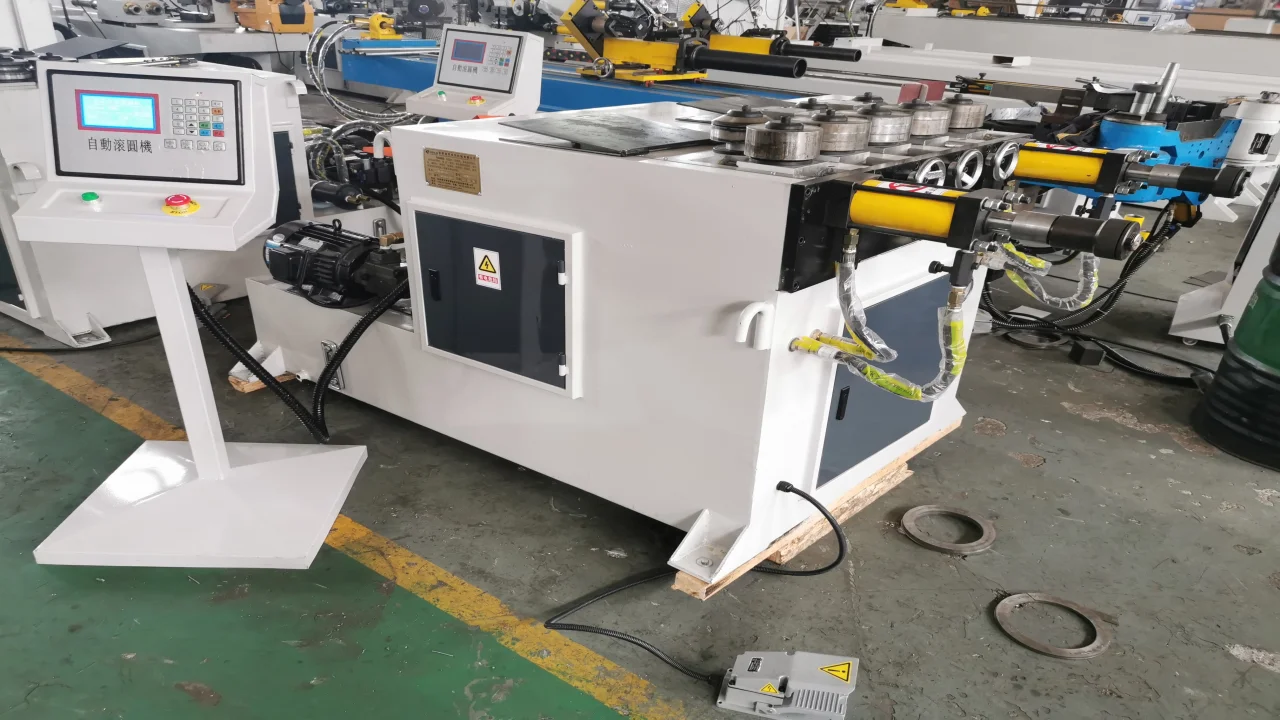
Zhuoran tube rolling machines provide a machining accuracy of ±0.5 mm for applicable workpiece dimensions and profile requirements.
| Workpiece complexity | Cycle time | Estimated qualified output |
|---|---|---|
| Simple small-diameter single-arc tube parts | 30 sec/pc | 120 pcs/h |
| Standard tube rolling | 60 sec/pc | 58 pcs/h |
| Multiple rolling passes or large-radius parts | 120 sec/pc | 28 pcs/h |
| Large and complex profiles | 180 sec/pc | 20 pcs/h |
Meaning of ±0.5 mm Accuracy
The ±0.5 mm machining accuracy applies to applicable workpiece dimensions and profile requirements. Depending on the part, controlled dimensions may include arc or ring dimensions, linear dimensions, profile position, straight-end length, and finished contour.
Qualified Output versus Theoretical Speed
Qualified output includes loading, positioning, roller adjustment, rolling, unloading, inspection, sorting, and tooling changes. Production planning should therefore use estimated qualified output rather than only machine movement speed.
Square and Rectangular Tube Rolling
Yes, tube and profile rolling machines can process square tube and rectangular tube when the machine capacity, roller set, profile orientation, and target radius are suitable. Manufacturer references for tube and profile rolling commonly list round, square, rectangular, flat, angle, channel, and other sections as separate tooling applications. For example, KNUTH’s tube and profile rolling range lists square or rectangular sections among the application types.
For a Zhuoran recommendation, send the outside width and height, wall thickness, corner radius, material and grade, required bending direction, target radius, and a cross-section drawing or 3D model.
The required roller groove is different from a round-tube groove. The supplier should confirm whether the profile can be rolled without excessive twisting, corner collapse, flattening, or surface damage.
Preventing Ovality, Flattening, Wrinkles, and Springback
Reduce common defects by matching the material, roller groove, forming parameters, and inspection method to the workpiece.
Causes of Ovality and Flattening
Typical causes include an incorrect roller groove, excessive local pressure, thin wall thickness, inadequate support, an unsuitable forming sequence, or excessive deformation in one pass.
Causes of Wrinkles During Tube Rolling
Wrinkles are usually related to compressive deformation on the inside of the curve. The risk increases when the radius is too tight for the section, the wall is thin, the roller groove does not support the profile, or too much deformation is applied in one pass.
To reduce wrinkling, review the target radius, section support, roller groove, pressure setting, forming sequence, and number of passes. A sample trial should inspect the inside radius as well as the outside contour.
Springback Control
Springback is the elastic recovery that changes the shape after the forming load is released. It is affected by material grade, wall thickness, radius, friction, and forming conditions. Control it through representative trials, measured correction, and a documented roller or program setting. Avoid using one universal over-bend value for every material and radius. See STAUFF’s springback monitoring example.
Reducing Surface Marks on Stainless Steel or Aluminum
Review roller surface condition, contact pressure, lubrication, cleanliness, workpiece support, and the required finished surface standard. Include photographs or sample parts when appearance requirements are strict.
When to Use a Sample Trial
A sample trial is especially useful for a new material grade, special profile, unusual radius, multiple rolling passes, strict surface requirements, or high-volume production. You can discuss a sample testing service with Zhuoran.
Tube Rolling Machine RFQ Requirements
A complete RFQ should include technical data and commercial requirements.
Technical Documents for the RFQ
Send a 2D drawing or 3D STEP file, material grade, tube OD, wall thickness, profile cross-section, target radius, arc length, straight-end length, surface requirements, tolerance, and expected production volume.
Commercial Items to Confirm
Ask the supplier to confirm the recommended model, working range, roller and tooling scope, control system, loading and unloading method, installation, training, spare parts, delivery, warranty, sample trial, and final acceptance procedure.
Machine Validation Before Purchase
Validate the machine with the actual material, tooling, and workpiece geometry when the application is complex or commercially important.
Sample Trial Records
Record the material and grade, tube or profile dimensions, wall thickness, target radius, tooling configuration, sample quantity, qualified quantity, cycle time, defects, and inspection results.
Final Acceptance Checklist
The checklist may include dimensional accuracy, finished radius or contour, straight-end length, profile shape, ovality or flattening, surface quality, repeatability, qualified output, safety functions, training, and documentation.
Choosing the Right Tube Rolling Machine
Choose the machine that matches the complete part and production requirement.
| Your requirement | Recommended starting point |
|---|---|
| Small-diameter single-arc tube | Suitable small GY configuration |
| Standard tube rolling | GY model matched to OD and wall thickness |
| Large-radius tube forming | Larger-capacity GY model |
| Angle, flat, or special profile rolling | Profile-specific roller evaluation |
| Stainless steel or aluminum surface protection | Material-specific tooling review |
| High production volume | Cycle-time and qualified-output evaluation |
| New or complex part | Sample trial before final quotation |
Tube Rolling Machine Selection FAQ
What is the difference between a tube rolling machine and a tube bending machine?
A tube rolling machine progressively forms a tube or profile through rollers, usually for arcs, rings, coils, and large-radius curves. A tube bending machine may use another forming method, such as rotary draw bending, for tighter or more complex bends.
Can a tube rolling machine process stainless steel and aluminum?
Yes. Zhuoran’s stated material range includes stainless steel and aluminum alloys. The machine and roller configuration should be selected according to the material grade, wall thickness, surface requirements, and target radius.
How do I choose between a 3-roll and 7-wheel machine?
Start with the workpiece geometry, material, wall thickness, radius, and production requirement. Zhuoran offers both three-roll and seven-wheel drive configurations in the GY series. The final choice should be based on the actual part rather than wheel count alone.
What information does a supplier need for a machine recommendation?
Provide the material grade, tube OD or profile dimensions, wall thickness, target radius, arc length, straight-end length, drawing, surface requirements, tolerance, and production target.
Can Zhuoran test my tube or profile before quotation?
A sample trial can be arranged according to project requirements. The trial should use the intended material and workpiece geometry and should define the required dimensions, surface condition, cycle time, and acceptance criteria in advance.
Conclusion: Start with the Finished Part
Start with the finished part. Define the material, diameter or profile dimensions, wall thickness, target radius, arc length, straight ends, production volume, surface requirements, and tolerance. Then compare the suitable GY configuration, roller arrangement, tooling, expected qualified output, and service scope.
Send Zhuoran your drawing, material information, target radius, and production target to request a machine recommendation or sample test. You can also review the Zhuoran tube rolling machine category.