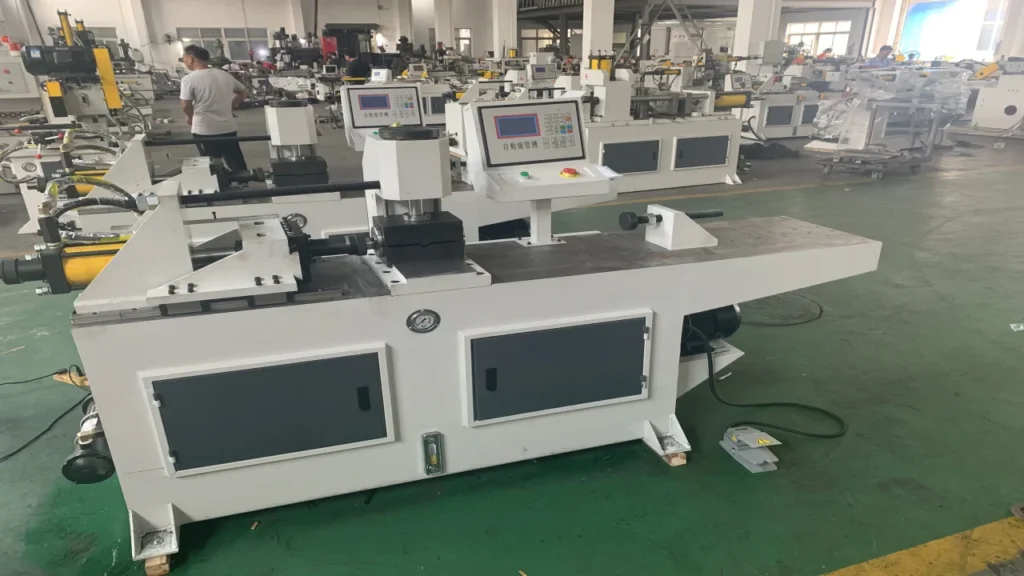
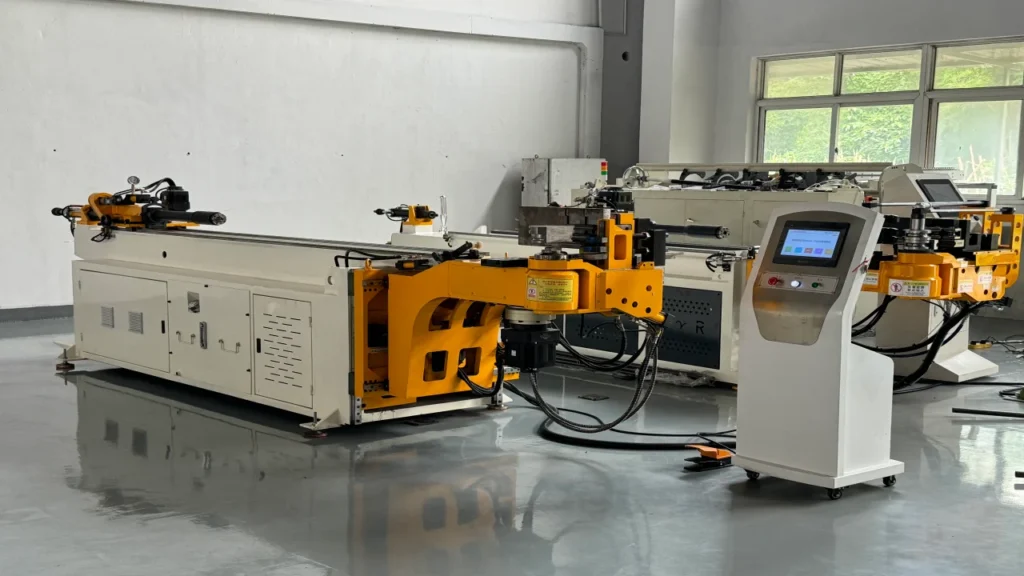
Automatic tube processing is reshaping the metal forming industry. Labor costs keep rising, skilled operators are hard to find, and customers demand tighter quality every year. If your line still relies on manual handling, you may be losing ground to more automated competitors.
This guide explains how automation is changing tube processing. You will learn the five key benefits, the real workflow behind an automated line, and how to choose the right automation level for your shop. By the end, you will know whether automation is the right move for your production. For anyone in tube processing, the shift toward automatic tube processing is no longer optional; it is becoming a competitive requirement. Therefore, understanding this technology matters for every manufacturer who works with metal tubes.
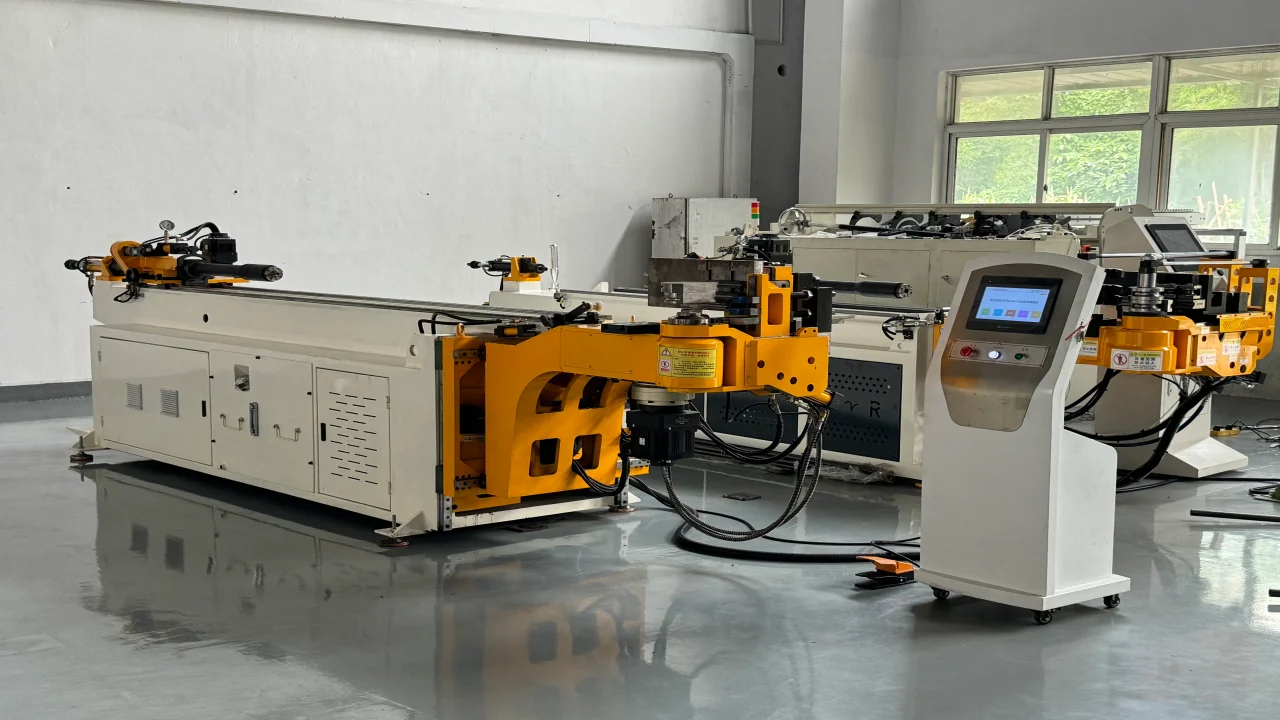
What Is Automatic Tube Processing?
Automatic tube processing means using machines and control systems to handle tube fabrication with minimal manual intervention. It covers cutting, chamfering, end forming, bending, inspection, and integration. In modern tube processing, automation removes repetitive manual work and replaces it with programmed, repeatable operations. When you compare automatic tube processing with manual methods, the differences in speed and consistency become obvious quickly.
From Manual Handling to Automated Flow
Traditional tube processing depends on operators moving parts between machines. Each transfer adds time, labor, and risk of variation. Automation connects the steps, so tubes flow from one operation to the next without manual handling. The result is a smoother, faster, and more consistent production flow. For most shops, this is the first benefit they notice after adopting automatic tube processing.
The Scope of Automatic Tube Processing
Automation covers the full sequence of tube fabrication. Cutting prepares the tube to length. Chamfering removes burrs and prepares edges. End forming shapes the tube ends, and bending creates the required angles. Inspection verifies quality, and integration assembles the parts. An automated system can cover any or all of these steps, depending on your needs. This flexibility is why automatic tube processing fits so many different industries.
Five Ways Automation Is Changing Tube Processing
Automation changes the industry in five measurable ways. Each one addresses a challenge that manual processing cannot fully solve. As you read, compare each benefit against your own production situation. These five benefits together explain why automatic tube processing is spreading so quickly across the manufacturing world.
Reducing Labor Dependence
Automation reduces the need for skilled manual labor. Machines handle the repetitive work, so operators supervise instead of perform. This matters when skilled workers are hard to recruit or retain. In tube processing, automation lets you maintain output with a smaller, more specialized team. When labor shortages hit, automated shops keep running while manual shops struggle. First, you reduce the hiring burden; then, you free your skilled workers for higher-value tasks. This is the most immediate benefit of automatic tube processing for many factories.
Improving Quality Consistency
Automated machines follow programmed sequences exactly. Every part runs the same way, so batch-to-batch variation shrinks. Manufacturers typically report scrap rate reductions between 24% and 45% after automation. Those are typical improvements reported by manufacturers, and your results depend on your parts and process. Consistency is the biggest quality win from automation, and it is the reason customers trust automated suppliers. However, consistency only holds if the machines are maintained and the programs are managed correctly.
Boosting Throughput and Efficiency
Automation shortens cycle times and removes manual transfer delays. Machines run continuously with minimal stops, so throughput rises. Manufacturers typically report productivity gains of more than 40% with automated systems. Faster output per shift means you can meet growing orders without adding labor. For many factories, this efficiency gain alone justifies the investment in automatic tube processing. Moreover, higher throughput opens the door to larger contracts that manual shops cannot handle.
Lowering Overall Cost
Automation lowers cost through three paths: less labor per part, fewer rejected parts, and less rework. The initial investment is real, but the operating cost per part drops steadily. For tube processing, the economics improve as volume grows. The key is matching the automation level to your production volume. When you calculate cost per part, automated lines usually win at scale.
Enabling Integrated Production Lines
Automation connects cutting, end forming, and bending into one continuous flow. Integrated lines eliminate the handling time between operations and keep the whole process under one control system. This is where automation delivers its biggest impact, turning separate machines into a single production system. In short, integrated automatic tube processing is the highest form of the technology. For more on automated steps, read The Fabricator’s guide to automated tube end forming.
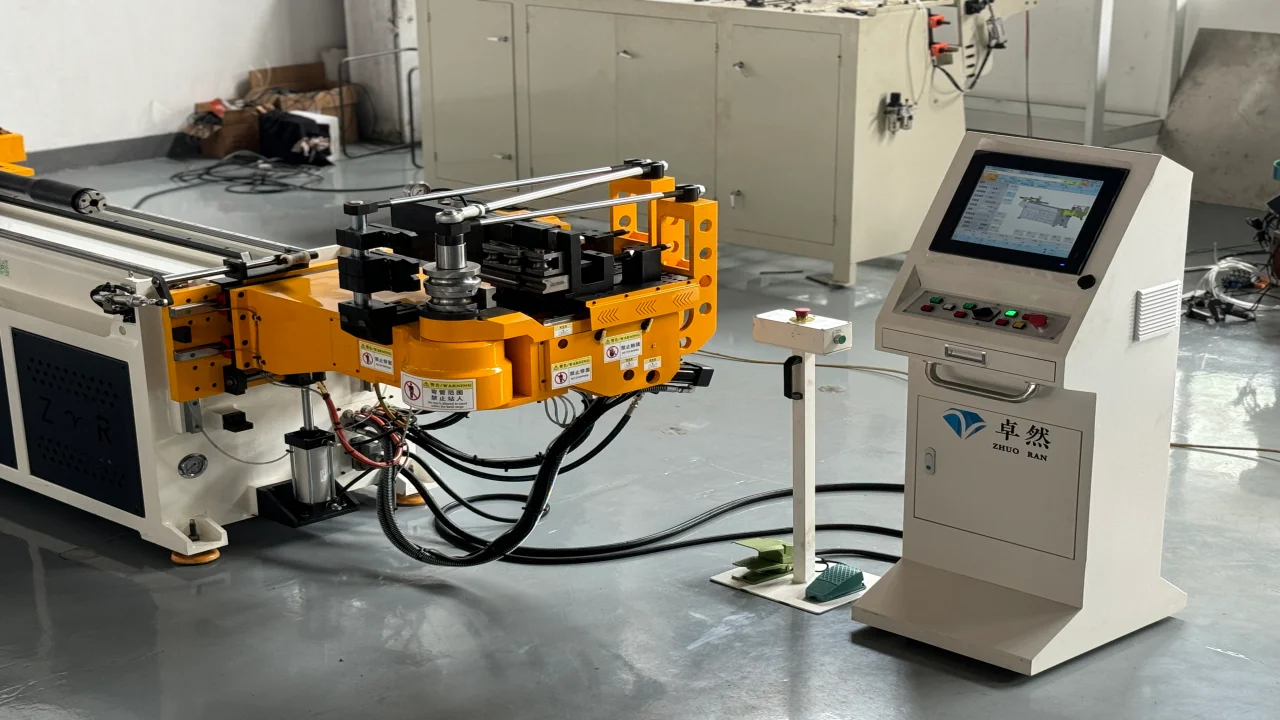
The Automated Tube Processing Workflow
Here is how a typical automated tube processing line works. The sequence reflects real production practice, and it may vary with your product. Understanding this workflow helps you plan your own automation project.
Cutting and Chamfering
The line starts with cutting. A tube cutting machine feeds the tube and cuts it to length automatically. Next, chamfering removes burrs and prepares the edges for the next operation. Cutting always comes before chamfering, because you need a clean cut before you can finish the edge. This first stage sets the foundation for everything that follows. It is also the easiest place to start automating if you are new to the technology. In fact, many manufacturers begin their automatic tube processing journey right here at the cutting station. Explore the pipe cutting machine collection for cutting options.
End Forming or Bending: Order Depends on Your Part
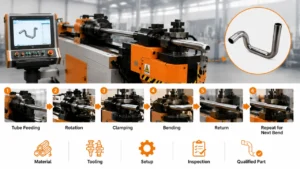
After chamfering, the workflow splits. Some parts need end forming, where the tube end is shaped into a flare, reduce, or other profile. Others need bending, where the tube is angled to the required geometry. The order depends on your customer’s product. In most production line setups, end forming comes first, then bending. Some parts skip end forming entirely and go straight to bending. This flexibility is what makes automation practical across different product ranges. Ask your supplier how they handle this sequencing in an automated line. See the tube end-forming machine collection and the CNC pipe bending machine collection for equipment.
Inspection and Integration
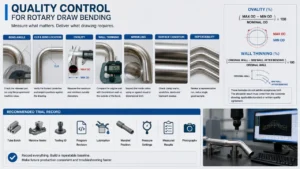
The final stage verifies quality and completes the product. Inspection checks angles, dimensions, and surface quality. Integration assembles the bent tubes into the final assembly or packs them for shipping. In automated lines, inspection can be inline, catching defects before they reach the next step. This closes the quality loop and protects the output. Without inspection, automation only speeds up the production of defects. As a result, inspection is not an add-on; it is a core part of any automatic tube processing line.
How Automation Improves Quality and Efficiency
Automation earns its place through measurable results. Here are the numbers that matter when you build your business case. Use them as a benchmark for your own automation plan.
Scrap Reduction
Precision control directly attacks scrap. Programmed sequences avoid the variation of manual operation. Interference detection and simulation catch problems before they become defects. Manufacturers typically report scrap rate reductions between 24% and 45% after automation. Even the lower end of that range saves significant material every month. Scrap savings are often the fastest payback from automation.
Productivity Gains
Automation removes manual transfer delays and shortens cycle times. Machines run with minimal stops, so you produce more parts per shift. Manufacturers typically report productivity gains of more than 40%. Faster output helps you meet growing demand without expanding your workforce. For growing companies, this is the most visible benefit of automatic tube processing.
Consistency That Wins Repeat Orders
Automated systems reproduce the same part every time. Program recall, servo control, and stable process parameters keep the output consistent. Customers notice the difference in fit and quality, and repeat orders follow. In tube processing, consistency is what turns a first order into a long-term relationship. Consistency builds trust faster than any marketing message. Consequently, quality consistency is the strongest sales argument for automatic tube processing.
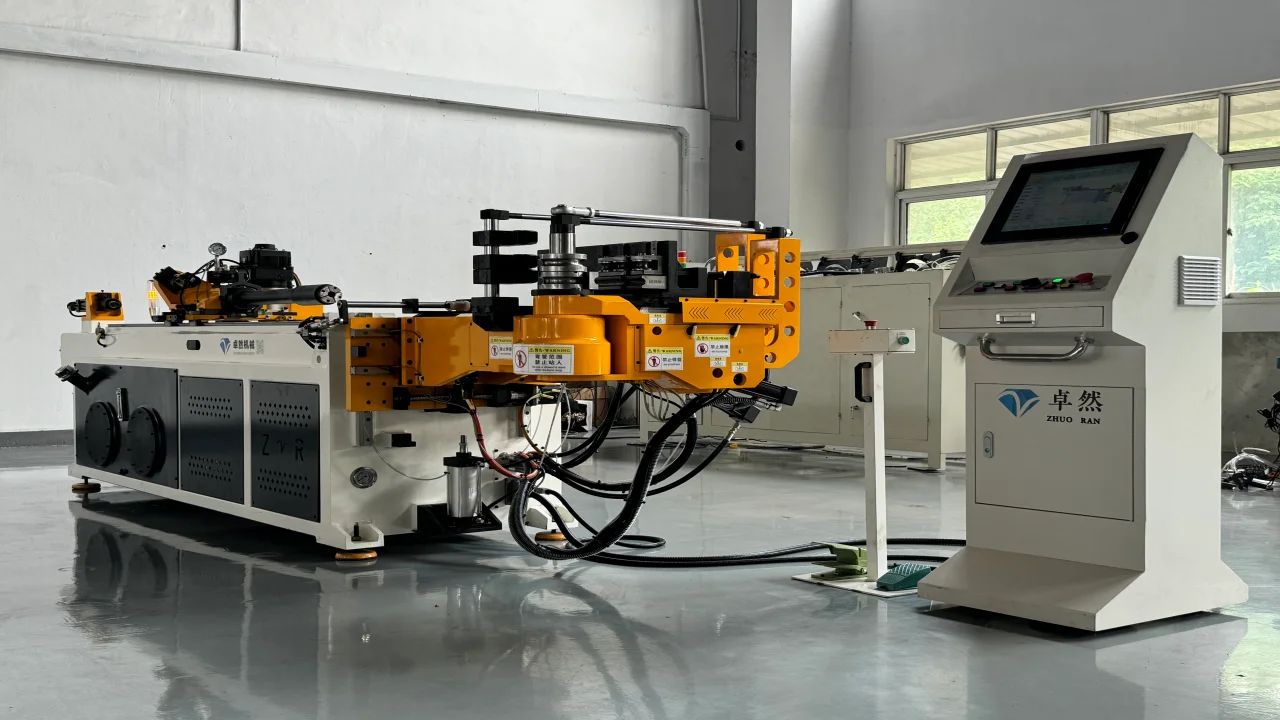
Choosing the Right Automation Level
Automation is not all or nothing. You can start with one machine and expand over time. Three levels cover most situations, and each one fits a different production profile.
| Automation Level | What It Does | Best For | Investment |
|---|---|---|---|
| Single-Machine Automation | One CNC machine automates its own cycle (e.g., automatic bending cycle) | Shops starting their automation journey | Medium |
| Automated Work Cell | Several machines linked, parts move automatically between steps | Medium-volume production | Medium-High |
| Fully Automatic Line | Cutting to integration under one control system | Mass production, high volume | Highest |
Single-Machine Automation
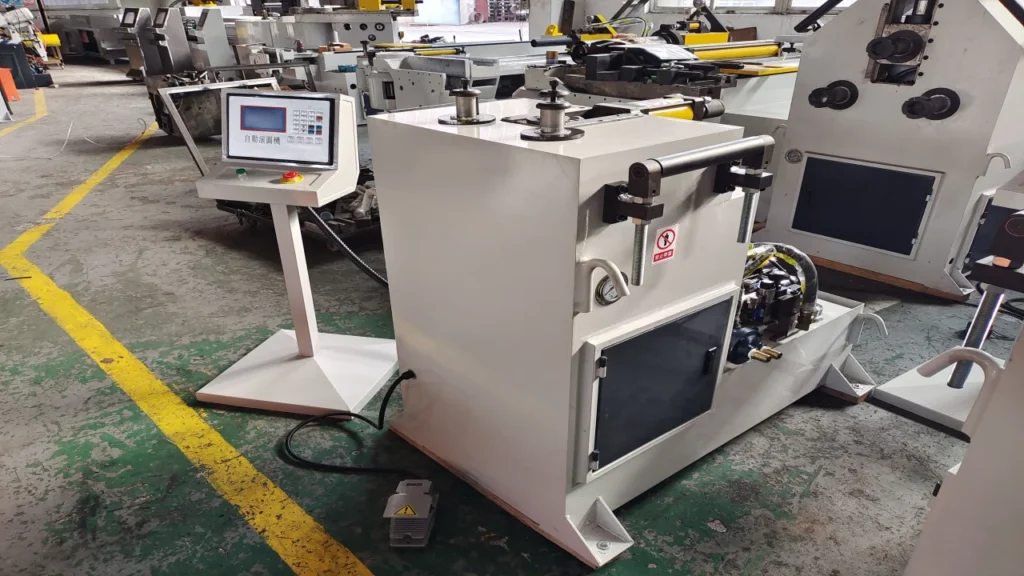
Start with one automated machine, such as a CNC bending machine with an automatic cycle. Operators load the tube, and the machine handles the bending sequence automatically. This level suits shops that want to automate a specific bottleneck without reworking the whole floor. It is the lowest-risk starting point. Many shops begin here and expand once they see the results.
Automated Work Cells
An automated work cell links several machines. Parts move between steps automatically, reducing handling time and labor. This level suits medium-volume production where multiple operations feed each other. It is a practical step between a single machine and a full line. Work cells give you most of the benefits of automation without the complexity of a full line.
Fully Automatic Production Lines
A fully automatic line integrates cutting, end forming, bending, inspection, and integration under one control system. Parts flow continuously from raw tube to finished product. This level suits mass production where volume justifies the investment. It delivers the highest consistency and the lowest cost per part. For high-volume manufacturers, a full line is the end goal of the automation journey.
Is Automation Worth the Investment?
The investment question is fair, and the answer depends on your situation. Three payback paths make the economics clearer. Work through them with your own numbers.
The Three Payback Paths
Automation pays back through three routes: labor savings, scrap reduction, and efficiency gains. Labor savings come from fewer operators per shift. Scrap reduction comes from fewer rejected parts. Efficiency gains come from more parts per hour. Add these three together, and the payback becomes concrete. Run the math with your own numbers before you decide. For most shops, at least two of the three paths are significant.
Start Where the Pain Is
You do not need to automate everything at once. Start with the operation that causes the most pain: the highest labor cost, the highest scrap rate, or the biggest bottleneck. Automate that step first, measure the improvement, and expand from there. This pragmatic approach reduces risk and builds confidence in automation. You can verify your parts with a sample before committing to a full line. Our sample service lets you test your parts first.
Frequently Asked Questions About Automatic Tube Processing
What is automatic tube processing?
Automatic tube processing uses machines and control systems to fabricate tubes with minimal manual intervention. It covers cutting, chamfering, end forming, bending, inspection, and integration. Automation removes repetitive manual work and replaces it with programmed, repeatable operations.
What are the benefits of automating tube processing?
Automation reduces labor dependence, improves quality consistency, boosts throughput, and lowers overall cost. It also enables integrated production lines. Manufacturers typically report scrap reductions and significant productivity gains after automation.
What machines are used in automatic tube processing?
Typical machines include tube cutting machines, chamfering machines, end-forming machines, and CNC bending machines. In a full line, these are integrated with automatic feeding, unloading, and inspection systems. The equipment set depends on your product requirements.
How do I automate my tube processing line?
Start with the operation that causes the most pain, such as the highest labor cost or scrap rate. Automate that step first, measure the improvement, and expand. Choose a single machine, an automated cell, or a full line based on your volume and budget.
What is the difference between semi-automatic and fully automatic?
Semi-automatic machines automate part of the cycle but need operator involvement for loading or unloading. Fully automatic systems handle the complete cycle, including feeding, processing, and unloading. The right choice depends on your batch size and labor situation.
Does automation reduce tube processing costs?
Yes, through three paths: less labor per part, fewer rejected parts, and less rework. The initial investment is real, but operating cost per part drops as volume grows. Run the payback calculation with your own numbers to confirm.
What industries benefit most from automatic tube processing?
High-volume industries benefit most: HVAC, automotive, furniture, fitness equipment, and appliances. These sectors run large batches where automation’s consistency and speed pay off. Mass production is where integrated lines deliver the biggest impact. You can also review our general FAQ for more guidance.
Conclusion
Automatic tube processing is changing the industry, and the direction is clear. You now know the five benefits: less labor dependence, better consistency, higher throughput, lower cost, and integrated lines. You also know the real workflow, from cutting to integration, and the three automation levels. Start where the pain is, measure the improvement, and expand. Automation is a journey, and the first step matters most.
At Zhangjiagang Zhuoran Machinery, we build the full range of tube processing equipment: pipe cutting machines, chamfering machines, tube end-forming machines, and CNC bending machines from 2-axis to 6-axis. Our CNC machines feature 3D simulation, interference detection, and 500-program storage. We are built to ISO 9001 quality standards and CE compliance requirements, and our equipment is exported to more than 80 countries. Whatever your automation goal, we can match the right equipment to your production needs. Explore how our equipment serves different applications.
Ready to start your automation journey? Send us your tube OD, wall thickness, bend radius, material, and current workflow. Our engineers will recommend the right automation level and equipment for your production. Whatever your tube processing challenge, automatic solutions are within reach.