Buying industrial bending equipment is a major decision, and the choices are not always clear. A buyer faces CNC versus NC, multi-axis versus single-axis, and a wide spread in pricing. Get it wrong, and the shop ends up with a machine that cannot hold tolerance, runs too slowly, or sits idle because it does not match the parts.
This guide focuses on tube and pipe bending equipment. It walks through the machine types, a selection matrix, real price ranges, supplier checks, and the RFQ details that matter, so the buying decision is grounded in facts.
Types of Tube Bending Equipment
Before choosing a machine, it helps to know what is available. This guide focuses on tube and pipe bending equipment rather than sheet metal brakes, because the two solve different problems. Understanding the equipment types is the first step in any bending equipment purchase.
CNC Tube Benders
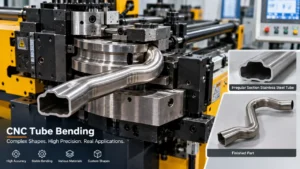
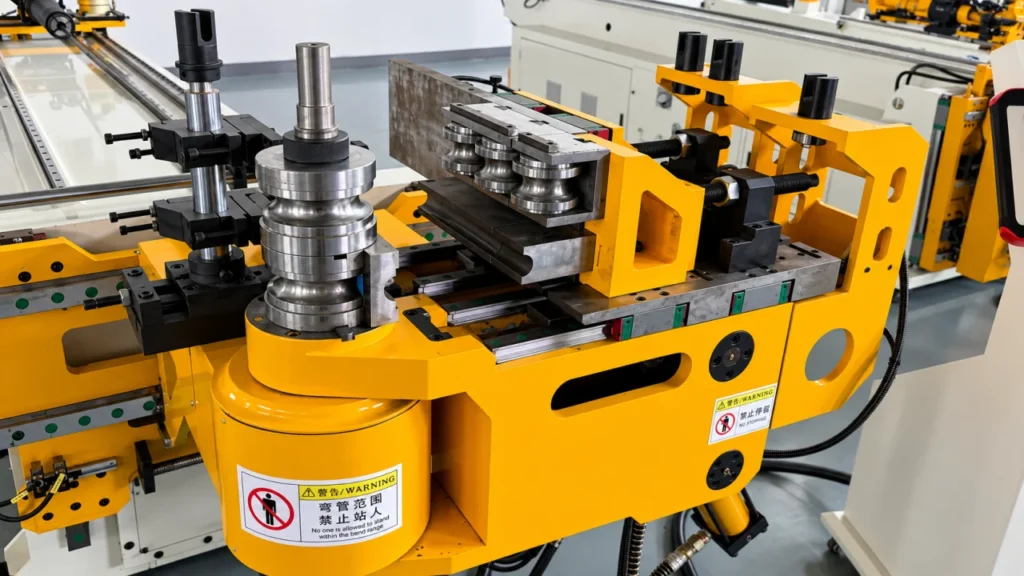
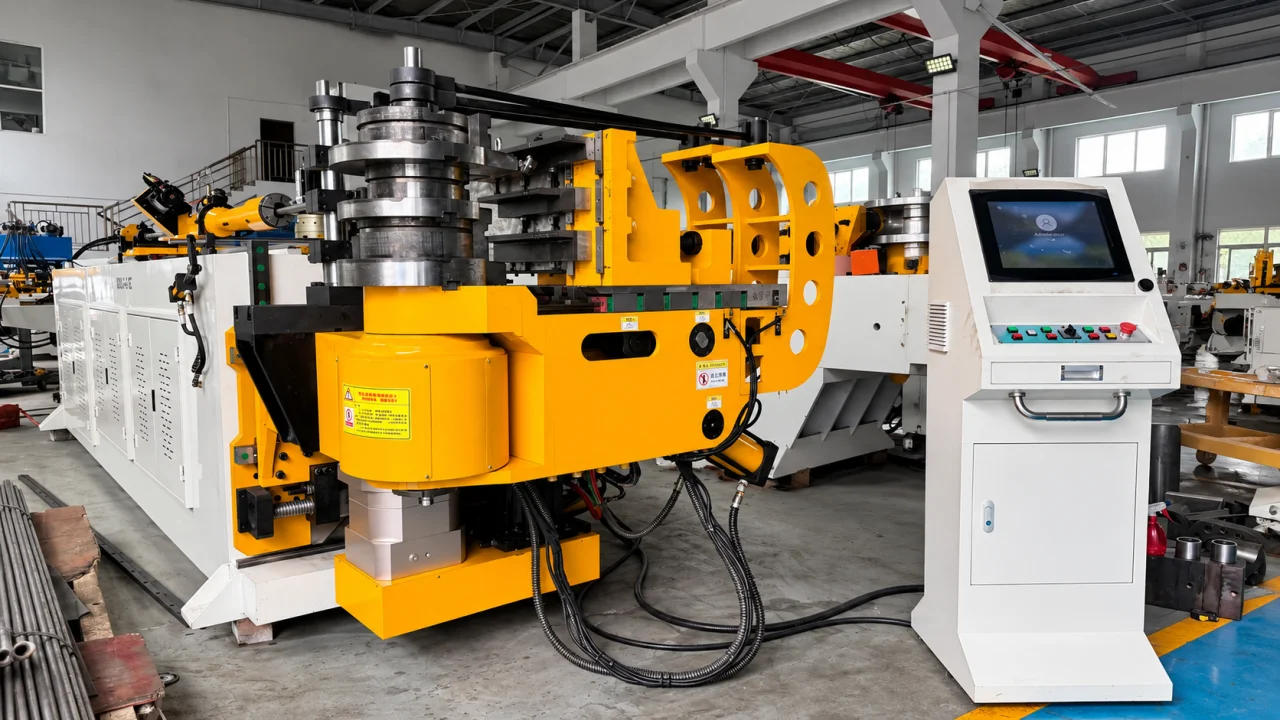
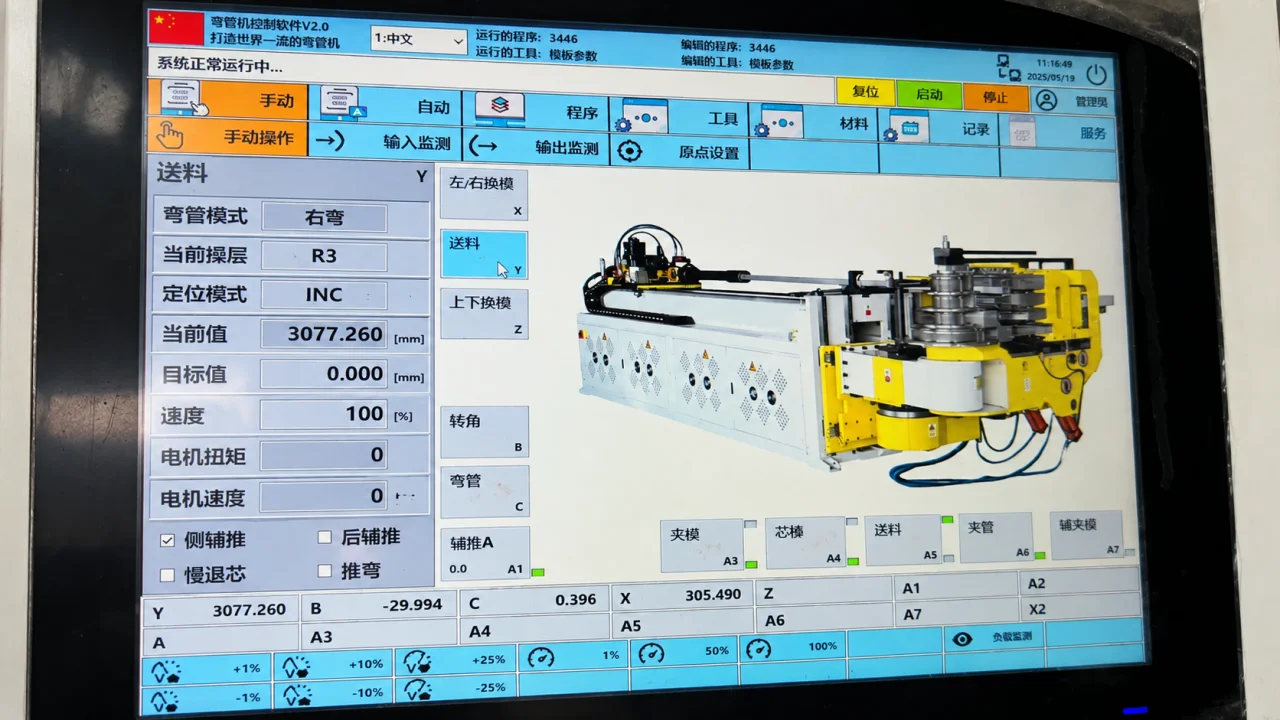
CNC tube benders are the workhorses of precision production. They range from 2-axis machines for simple single-plane bends to 6-axis systems for complex 3D geometry. Multi-layer tooling lets one machine run several bend radii without changing dies, which keeps changeover time short. These machines hold tight tolerances and repeat the same bend reliably across large batches. If your parts need accuracy and consistency, a CNC bender is usually the right starting point. See the CNC pipe bending machine collection for configurations across the full size range.
NC Tube Benders
NC tube benders offer semi-automatic operation at a lower price. An operator loads the tube, and the machine follows a set sequence for the bend. They suit small and medium batches where full CNC control is not justified. NC machines are simpler to run and maintain, which makes them a practical entry point for smaller shops. Browse the NC pipe bending machine collection for semi-automatic options.
Double-Head Tube Benders
Double-head tube benders bend both ends of a tube in one setup. They are ideal for symmetric parts, such as frames and handrails, where both ends need the same angle. This design cuts handling time and improves consistency on matched pairs.
Roll Benders
Roll benders, also called rolling machines, form large-radius curves and arcs by passing the tube through driven rollers. They suit rings, spiral shapes, and long sweeping bends that draw-based benders cannot reach. Roll bending is the right tool for handrails, structural frames, and large-diameter tube work.
Complementary Equipment
A complete tube processing line usually needs more than a bender. Cutting machines prepare the tube to length, chamfering machines finish the edges, and end-forming machines shape the tube ends. When you buy bending equipment, consider how these upstream and downstream steps fit into your workflow.
How to Choose the Right Bending Equipment
The right machine depends on tube size, part complexity, and batch volume. First, work through these factors before comparing quotes. Choosing bending equipment is a process of elimination, not a single leap.
Match the Machine to Tube Diameter and Wall Thickness
Tube diameter and wall thickness set the machine size class. Small machines bend thin tube up to about 25 mm. Mid-size machines handle 38 mm to 76 mm. Large machines cover 89 mm and above, up to 168 mm or more. Always confirm the maximum diameter and wall thickness a machine can bend, because bending a 50 mm tube with 3 mm wall is a different job from bending a 50 mm tube with 1 mm wall.
Match Axis Count to Part Complexity
Axis count is the second decision. A 2-axis machine bends in one plane and suits simple parts. A 3-axis machine adds rotation for multi-plane bends. Four-axis and 5-axis machines add multi-layer tooling for several radii in one run. A 6-axis machine handles the most complex 3D geometry. Match the axis count to the complexity of your drawings, not to a sales pitch.
A Selection Decision Matrix
Use this matrix to narrow the field. It maps tube size class to typical applications, using the CNC machine classes common in the industry.
| Tube Diameter | Typical Machine Class | Common Applications |
|---|---|---|
| Up to 25 mm | 18/25 CNC | Small tube, furniture, HVAC lines |
| Up to 38 mm | 38 CNC | Automotive lines, furniture, metal products |
| Up to 50 mm | 50 CNC | Exhaust tubes, seat frames, structural tube |
| Up to 63 mm | 63 CNC | Automotive, mechanical structural parts |
| Up to 76 mm | 75/76 CNC | Automotive, construction machinery |
| Up to 89 mm | 89 CNC | Large structural tube, exhaust systems |
| Up to 114 mm | 100/114 CNC | Heavy tube, construction machinery |
| Up to 168 mm | 130/168 CNC | Large industrial tube |
This is a starting point, not a substitute for confirming your exact part against a machine specification.
CNC vs NC: Which Do You Need?
CNC machines give you programmability, repeatability, and the ability to store hundreds of programs. NC machines give you reliable semi-automatic bending at a lower cost. Choose CNC when you need tight tolerances, complex parts, or frequent program changes. Choose NC when your parts are simple and your budget is tight. Many shops run both: CNC for the demanding work and NC for the simple jobs. For a deeper look at machine selection, The Fabricator’s guide to choosing a tube bending machine is a useful reference.
Bending Equipment Price Guide
Price is where many buyers struggle, because published numbers are rare. Here are reference ranges to set a budget, followed by what actually drives the price. Transparent pricing is the exception in the bending equipment market, so these ranges are a useful anchor.
Price Ranges by Machine Size
The table below shows reference price ranges by tube diameter class. These are reference ranges only. Your actual price depends on configuration, tooling, and quantity.
| Tube Diameter | Reference Price Range |
|---|---|
| Up to 25 mm | $10,000 – $30,000 |
| Up to 38 mm | $12,000 – $40,000 |
| Up to 50 mm | $15,000 – $50,000 |
| Up to 63 mm | $20,000 – $65,000 |
| Up to 76 mm | $25,000 – $70,000 |
| Up to 89 mm | $35,000 – $80,000 |
| Up to 114 mm | $40,000 – $100,000+ |
| Up to 168 mm | $80,000 – $200,000+ |
Use these numbers to build a realistic budget, then request a firm quote for your specific tube size, material, and part geometry.
What Drives the Price?
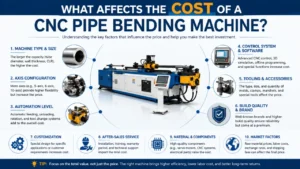
Five factors move the price more than anything else. Axis count adds cost with each axis. Tooling scope, including the number of bend radii and mandrel options, adds cost. Automation, such as automatic loading and unloading, adds cost. Machine size class sets the base. Order quantity affects unit pricing. Understanding these levers helps you compare quotes on a like-for-like basis instead of chasing the lowest number.
How to Evaluate a Bending Equipment Supplier
The machine matters, but the supplier matters just as much. Evaluate these three areas before committing. A reliable supplier is half the value of any bending equipment purchase.
Capability and Verification
A serious supplier can prove its machine works on your parts. Ask for a sample bend using your own tube, then measure the angle, radius, and wall thickness against your drawing. The best suppliers confirm your parameters, build the tooling, produce a sample, and only ship after acceptance. This verification step is the difference between a documented capability and a promise. For a structured question list, Inductaflex’s supplier checklist is a practical companion.
Warranty and After-Sales
Confirm the warranty before you buy. A typical standard is a 12-month warranty covering manufacturing defects, with free technical support and covered parts replacement during the warranty period. Wear parts and damage from misuse are normally excluded. After the warranty, look for lifetime technical support and spare parts available at cost. For overseas projects, ask whether the supplier can provide on-site installation, commissioning, maintenance, and training, with travel costs agreed in advance.
Certifications and Export Experience
Certifications and export history signal reliability. Look for ISO 9001 quality management and CE compliance for machines shipped to Europe. A supplier that exports to many countries has already solved the logistics, documentation, and support challenges of international delivery. These signals reduce your risk when buying from overseas.
Bending Equipment RFQ: What to Prepare
A good quote starts with a complete request. Missing details cause delays, wrong configurations, and inflated prices. A complete RFQ is the fastest path to accurate bending equipment pricing.
The Parameters to Send
Prepare these details before you request a quote: tube outside diameter, wall thickness, material, bend radius, bend angle, number of bends per part, batch size, and your drawing. Also state your accuracy and surface finish requirements. The more complete your RFQ, the faster and more accurate the quote.
Common Specification Mistakes
Buyers make the same mistakes repeatedly. One is stating only tube diameter without wall thickness, which changes the machine class entirely. Another is ignoring tooling, which can cost as much as a meaningful part of the machine. A third is understating batch size, which leads to a machine that cannot keep up. Avoid these by sending complete parameters and a drawing on the first inquiry.
Frequently Asked Questions
What are the different types of tube bending equipment?
The main types are CNC tube benders, NC tube benders, double-head tube benders, and roll benders. CNC machines offer programmability and high precision. NC machines provide semi-automatic bending at lower cost. Double-head machines bend both ends in one setup. Roll benders form large-radius curves.
How do I choose the right bending equipment?
Match the machine to your tube diameter, wall thickness, and part complexity. Small tubes suit small machines; complex 3D parts need more axes. Consider your batch size and tolerance requirements. A selection matrix and a sample bend with your own tube are the most reliable guides.
How much does a tube bending machine cost?
Reference prices range from about $10,000 for small machines to $200,000 or more for large industrial models. Your actual price depends on configuration, axis count, tooling, automation, and order quantity. Request a firm quote for your specific parts.
What is the difference between CNC and NC tube benders?
CNC benders are programmable, store many programs, and deliver high repeatability. NC benders offer semi-automatic bending with simpler control at a lower price. CNC suits complex parts and tight tolerances; NC suits simple parts and smaller budgets.
What should I ask a bending equipment supplier?
Ask about sample bending, warranty terms, after-sales support, spare parts availability, and certifications. Confirm the supplier can prove capability on your own tube before shipment. These checks reduce the risk of buying a machine that cannot meet your needs.
What parameters do I need to get a bending machine quote?
Provide tube outside diameter, wall thickness, material, bend radius, bend angle, number of bends, batch size, and your drawing. Also state accuracy and surface finish requirements. Complete parameters produce a faster, more accurate quote.
What warranty and after-sales should I expect?
A typical standard is a 12-month warranty covering manufacturing defects, with free technical support during the warranty period. Wear parts and misuse are usually excluded. After the warranty, look for lifetime technical support and spare parts at cost, plus optional on-site service for overseas projects.
Conclusion
Buying industrial bending equipment does not have to be a gamble. You now know the machine types, how to match them to your parts, realistic price ranges, and how to evaluate a supplier. You also know exactly what to prepare for a quote. Use the selection matrix to narrow your options, then verify your choice with a sample bend on your own tube.
At Zhangjiagang Zhuoran Machinery, we build CNC and NC tube benders from 2-axis to 6-axis, with single to multi-layer tooling. Our machines handle tube diameters from 5 mm to 168 mm, hold bending accuracy around ±0.1 degrees, and achieve bend radii down to 1.5D. We manufacture our own tooling, provide a 12-month warranty with lifetime technical support, and export to more than 80 countries. We are built to ISO 9001 quality standards and CE compliance requirements. Explore how our equipment serves different applications.
Ready to get a quote? Send us your tube OD, wall thickness, bend radius, material, and drawing. Our engineers will recommend the right configuration and provide a firm price for your parts.