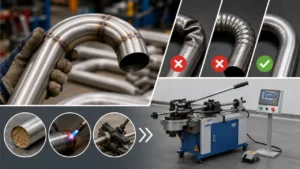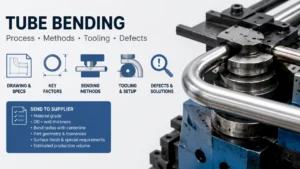
Choosing a cnc vs nc tube bending machine is a production decision, not only a choice between two control labels. You need to match the machine with your tube diameter, wall thickness, material, centerline radius, bend count, rotation angle, tolerance, production volume, and loading method.
An NC tube bender can be a practical fit for repeat 2D parts, shorter runs, and operations where an experienced operator manages the process. A CNC tube bending machine becomes more useful when your parts have several bends, multiple planes, frequent changeovers, tighter repeatability needs, or a clear path toward automated feeding and production-line integration.
This guide explains how to compare CNC and NC tube bending machines, how to read model specifications, and which information you should send before requesting a machine recommendation from Zhuoran Machinery.
Quick answer: CNC or NC tube bending machine?
Choose an NC machine when your parts are relatively simple, the product mix is stable, the batch size is limited, and manual setup is acceptable. Choose CNC when your parts require coordinated feeding, rotation, and bending, or when you need repeatable programs for multiple products.
That rule is only a starting point. An NC machine may support multiple bends and stored programs, while a CNC machine may use hydraulic, servo, or combined drive systems. Your decision should be based on the actual axis configuration and the complete production route.
What is the practical difference between NC and CNC tube benders?
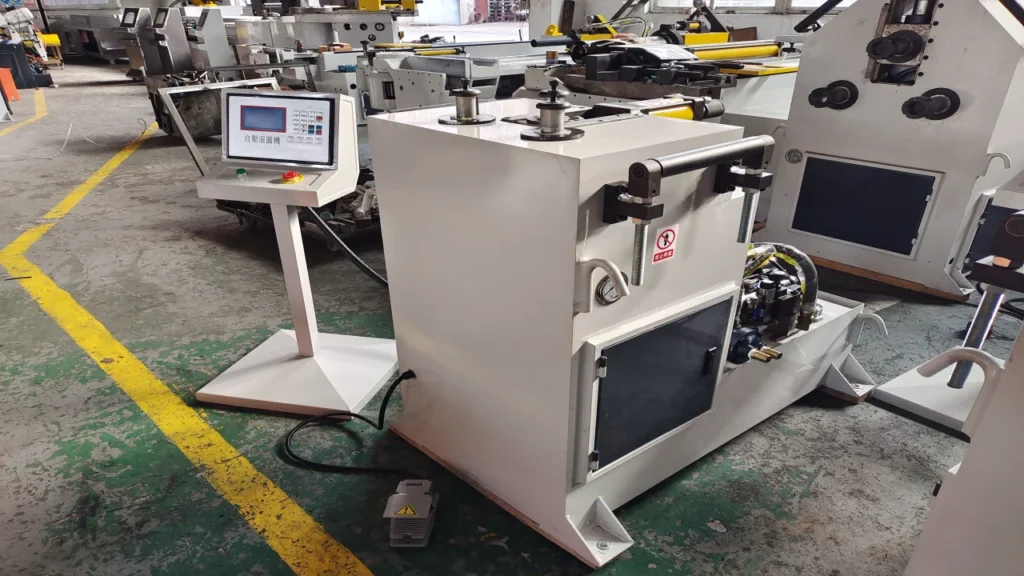
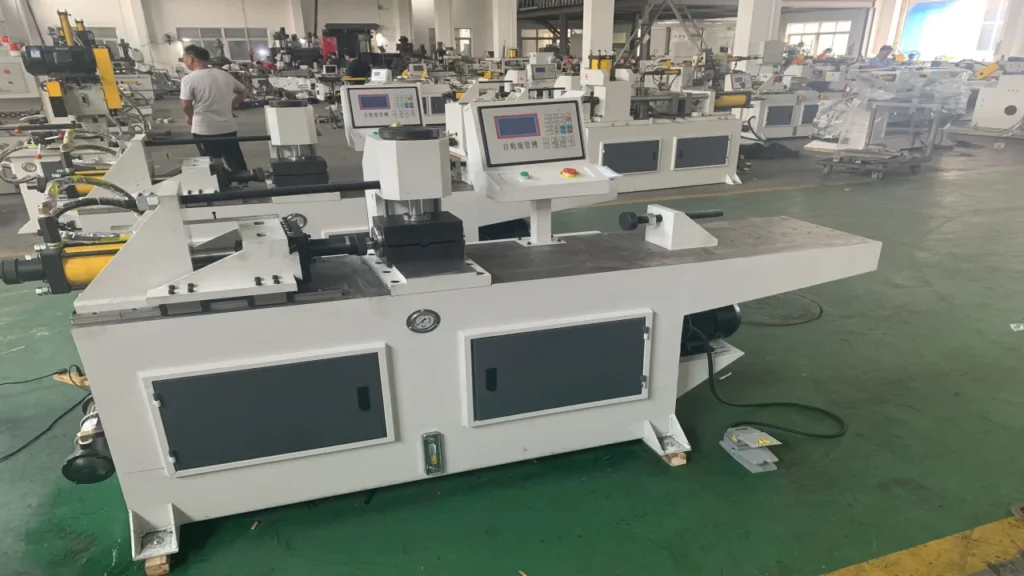
NC commonly means numerical control. The machine stores programmed values for selected operations, but the operator may still perform more setup, positioning, or handling work between steps. Zhuoran NC models use microcomputer control, support multiple programs and angle settings, and can be operated in manual, semi-cycle, or full-cycle modes depending on the model.
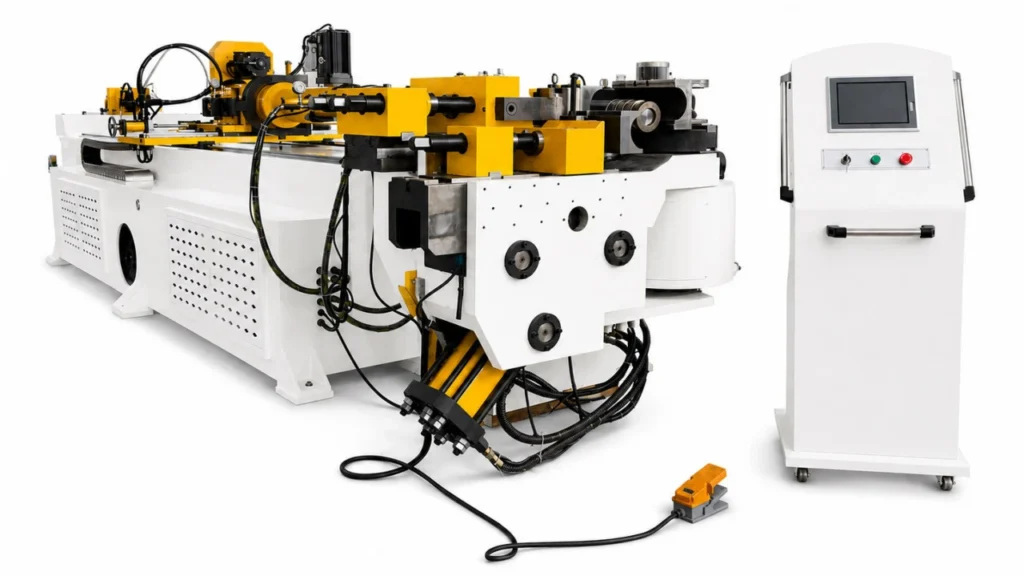
CNC means computer numerical control. A CNC system normally coordinates more programmed movements, such as tube feeding, rotation, and bending. This can reduce manual repositioning and make it easier to repeat a multi-bend sequence. CNC does not automatically mean that every function is electric, fully automatic, or suitable for every material.
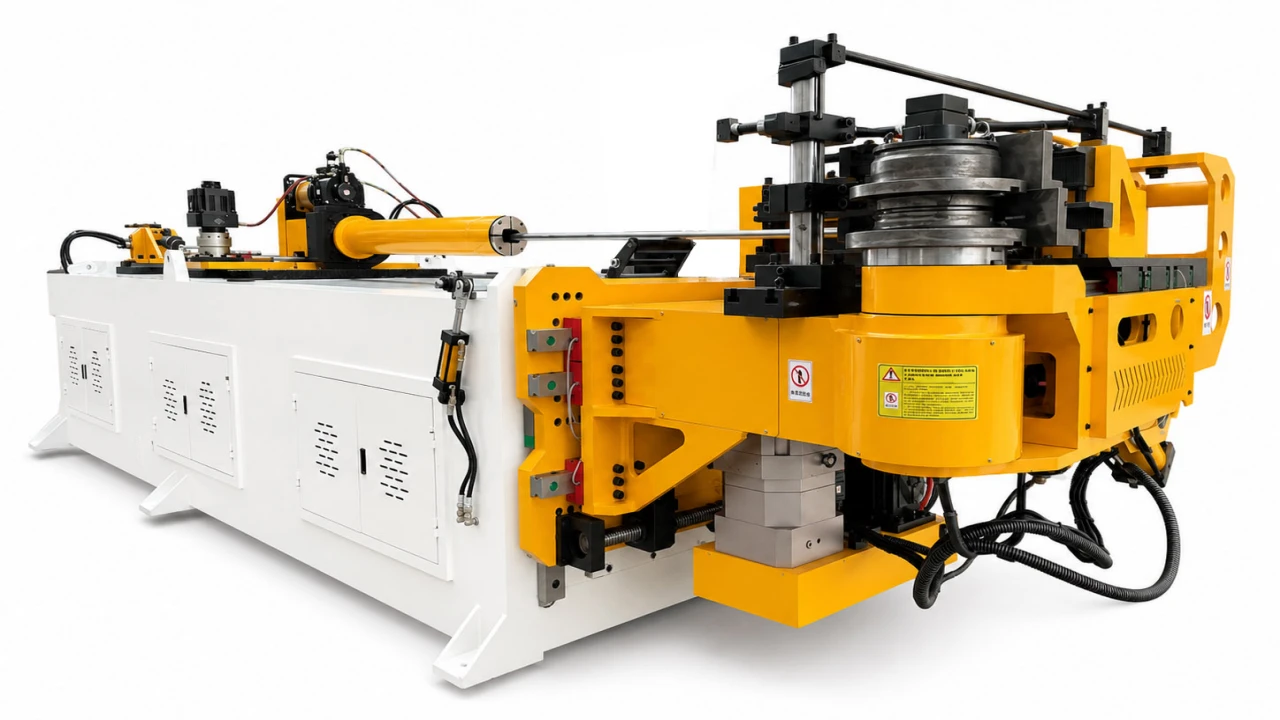
For example, the Zhuoran CNC pipe bending machine range includes different model sizes and axis configurations. A small CNC machine and a large hydraulic CNC machine should not be treated as if they have the same capacity, speed, or precision.
Compare the actual axes instead of relying on the label
Before you compare quotations, ask which movements are programmable and how they are driven:
- Tube feeding or carriage movement
- Tube rotation between bend planes
- Bending die rotation
- Die changing or multi-layer die movement
- Pressure die, clamp, mandrel, or wiper die movement
- Loading, cutting, unloading, and inspection functions
A machine with more axes is not automatically the best choice. Additional axes are useful only when they solve a real part or production problem.
CNC vs NC tube bending machine comparison
| Decision factor | NC tube bender | CNC tube bender |
|---|---|---|
| Typical use | Repeat parts, simpler 2D bends, smaller or stable production runs | Multi-bend parts, 3D geometry, repeat orders, and frequent product changes |
| Operator involvement | Usually higher during setup, positioning, and handling | Usually lower after the program, tooling, and process are validated |
| Program control | Microcomputer or numerical control, depending on the model | Computer-based multi-axis control, depending on the model |
| Multi-bend work | Possible, but the workflow depends on the model and operator process | Better suited to coordinated feeding, rotation, and bending sequences |
| Changeover | May be economical when the product mix is narrow | More attractive when programs and products change often |
| Automation | Can be combined with loading or production equipment according to the project | More suitable for servo feeding, automatic handling, cutting, and line integration |
| Investment decision | Often considered for simpler production requirements | Often justified by repeatability, labor reduction, flexibility, or future capacity |
When is an NC tube bending machine the better choice?
An NC machine can be a sound choice when your production route is predictable and your parts do not need extensive spatial coordination. It may fit a workshop that makes one or a few standard products, changes tooling infrequently, and has operators who understand the material and bending sequence.
NC is worth considering when:
- The tube has a small number of bends.
- Most bends remain in one plane.
- Production batches are short or moderate.
- The operator can manage setup and part handling.
- You do not need a complex automatic loading and unloading cell.
- The machine capacity matches the actual OD, wall thickness, material, and CLR.
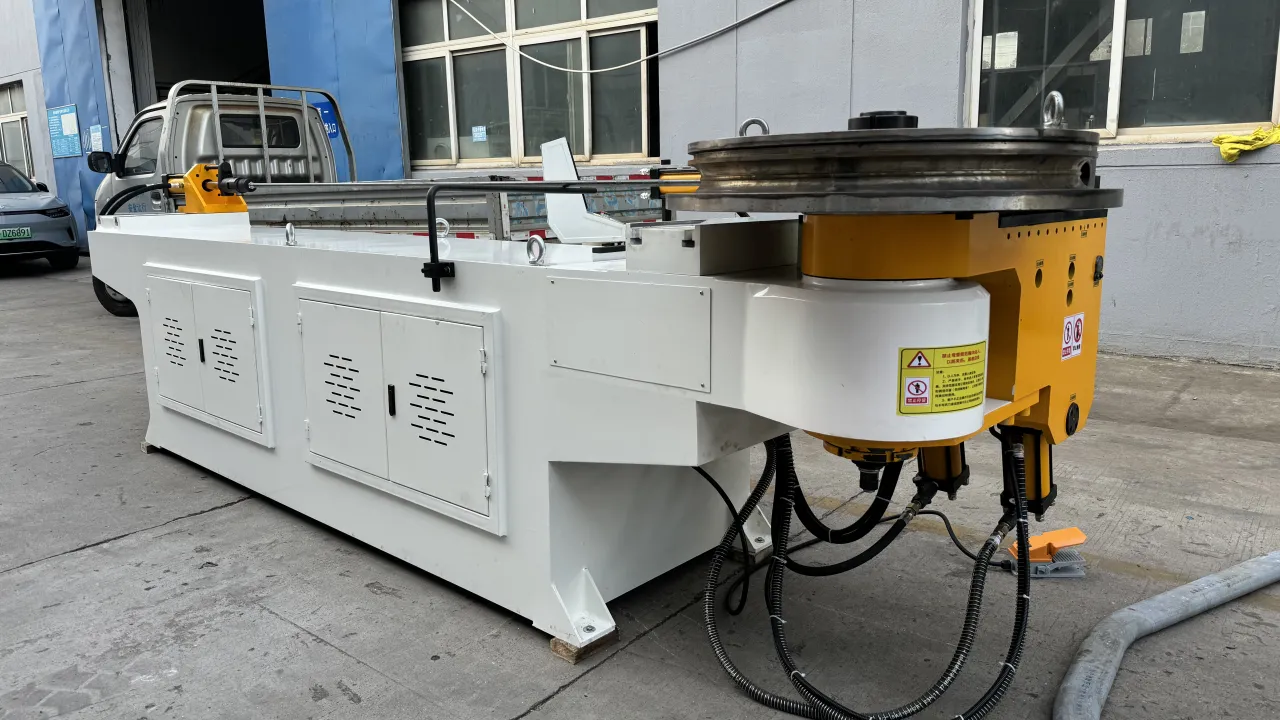
Zhuoran NC models are hydraulic tube benders with microcomputer control. The documented range includes models such as the DW38NC, DW50NC, DW63NC, DW75NC, DW114NC, and DW168NC. These models differ in tube size, wall thickness, standard mandrel length, hydraulic power, and machine dimensions.
Review the NC pipe bending machine range together with your drawing. Do not select an NC machine only because the purchase price appears lower. Tooling, operator time, setup time, scrap, and future product changes also affect the total cost.
When should you choose a CNC tube bending machine?
CNC becomes more valuable when your part geometry or production schedule creates repeated setup work. A CNC system can store and repeat a coordinated motion sequence after you validate the program and tooling.
A CNC tube bender may be suitable when you have:
- Three or more bends on one part.
- Bends on different planes that require controlled tube rotation.
- Several product numbers with different bend programs.
- Repeat orders where stable setup and repeatability matter.
- Longer production runs where manual positioning becomes a bottleneck.
- A plan to integrate feeding, cutting, unloading, or inspection.
CNC control cannot compensate for unsuitable tube material, an incorrect CLR, poor tooling, excessive material variation, or a drawing that does not define the acceptance requirements. You still need a proper sample-bending and inspection process.
Match the machine to tube diameter, wall thickness, material, and CLR
Machine selection starts with the tube, not with the machine name. A buyer should provide the outside diameter, wall thickness, material grade and condition, centerline radius, bend angles, straight lengths, bend count, rotation angle, and expected output.
The examples below are taken from Zhuoran model documents. They are model- and material-specific examples, not a universal capacity promise for every tube material.
| Model example | Documented capacity or reference | Control and precision notes | Typical selection question |
|---|---|---|---|
| DW18CNC-3A-1S | Up to Φ18 × 2 mm in the model data; model table lists R≥1.2D and maximum 180° | Feed precision ±0.1 mm; bend and rotation precision ±0.1° in the model data | Is the small tube size compatible with the material, tooling, and required radius? |
| DW25CNC-3A-1S | Up to Φ25 × 1.6 mm carbon steel; minimum radius R≥1.5D; maximum angle 190° | Servo feed, rotation, and bending; documented feed and angular precision ±0.1 in their respective units | Do you need more coordinated movement than a basic NC process provides? |
| DW50CNC-4A-2S | Up to Φ50 × 2 mm carbon steel; minimum radius R≥1.5D; maximum angle 190° | 4A-2S configuration with die-change servo in the model information | Will several products require repeatable die changes or different programs? |
| DW130CNC-2A-1S | Up to Φ130 × 12 mm carbon steel; minimum radius R≥1.5D; maximum angle 180° | Documented bend precision ±0.5°, rotation ±0.1°, and feed ±0.1 mm | Can the machine support the large tube force, tooling, and part handling method? |
| DW38NC | Up to Φ38 × 2 mm; minimum radius R≥1.5D; maximum angle 190° | Microcomputer control, 16 allowed bends, and standard mandrel length 1600 mm | Is the part simple enough for the selected operator workflow? |
| DW75NC | Up to Φ75 × 6 mm carbon steel; minimum radius R≥1.5D; maximum angle 190° | Hydraulic NC configuration with 16 allowed bends and standard mandrel length 2800 mm | Does the heavy tube require more force than a smaller NC machine can provide? |
| DW114NC / DW168NC | Up to Φ114 × 10 mm and Φ168 × 14 mm in the documented model data | Large-tube hydraulic NC configurations; standard mandrel lengths vary by model | Does the large diameter require special tooling, support, and handling? |
Material changes can change the feasible range. Stainless steel, aluminum, copper, brass, and carbon steel do not respond identically to bending. Strength, elongation, work hardening, springback, weld seam, surface condition, and wall thickness all affect the process.
How CLR changes the selection
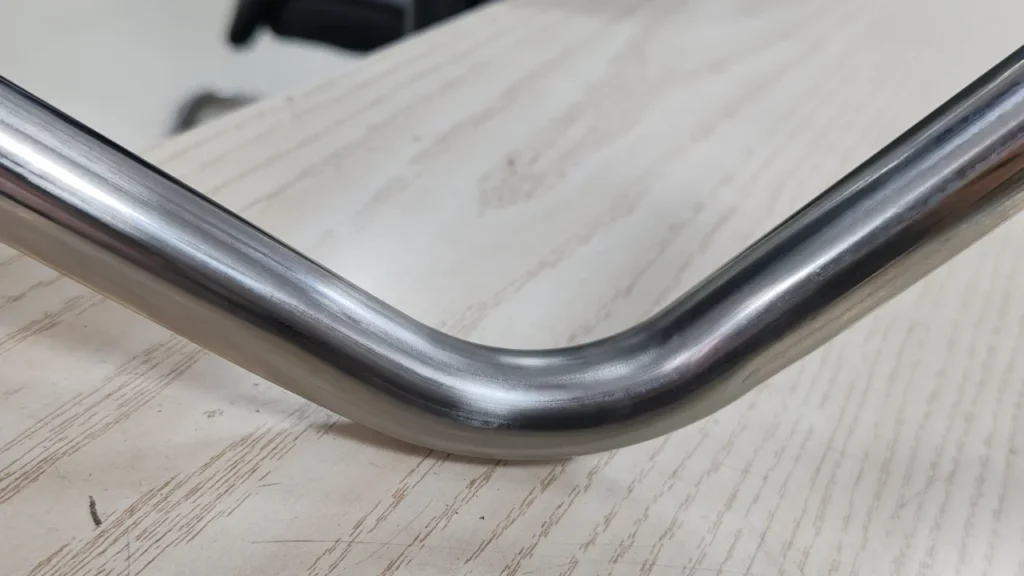
CLR means centerline radius. For example, a tube with an outside diameter of 38 mm and a CLR of 57 mm has an approximate 1.5D radius. A smaller CLR generally increases the need for accurate tooling and tube support.
Do not treat 1.5D as a guaranteed universal result for every machine and material. Confirm the actual tube, wall thickness, material condition, tooling, and acceptable ovality or wall thinning through a sample test.
How to define accuracy before comparing CNC and NC
“Accuracy” can refer to several different measurements. A quotation becomes difficult to compare when one supplier gives a feed accuracy while another gives a bend angle accuracy.
- Feed accuracy: a linear value in mm, related to tube feeding or a defined straight length.
- Rotation accuracy: an angular value in degrees between bend planes.
- Bend angle accuracy: the difference between the programmed angle and the measured angle.
- 3D position accuracy: the measured XYZ position of a bend or tube endpoint.
- Part repeatability: the variation across multiple accepted parts, not only one first sample.
Some Zhuoran CNC documents list feed precision of ±0.1 mm and angular precision of ±0.1°. DW130CNC-2A-1S uses a different documented bend precision of ±0.5°, with rotation ±0.1° and feed ±0.1 mm. The final part tolerance still depends on tube variation, tooling, springback, setup, and the inspection method.
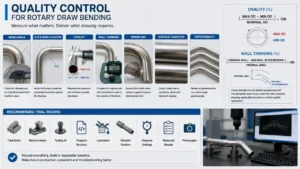
Use the tube bending tolerances guide to define which dimensions matter on your drawing. A useful acceptance plan may include angle, rotation, straight length, endpoint position, ovality, wall thinning, wrinkles, and surface condition.
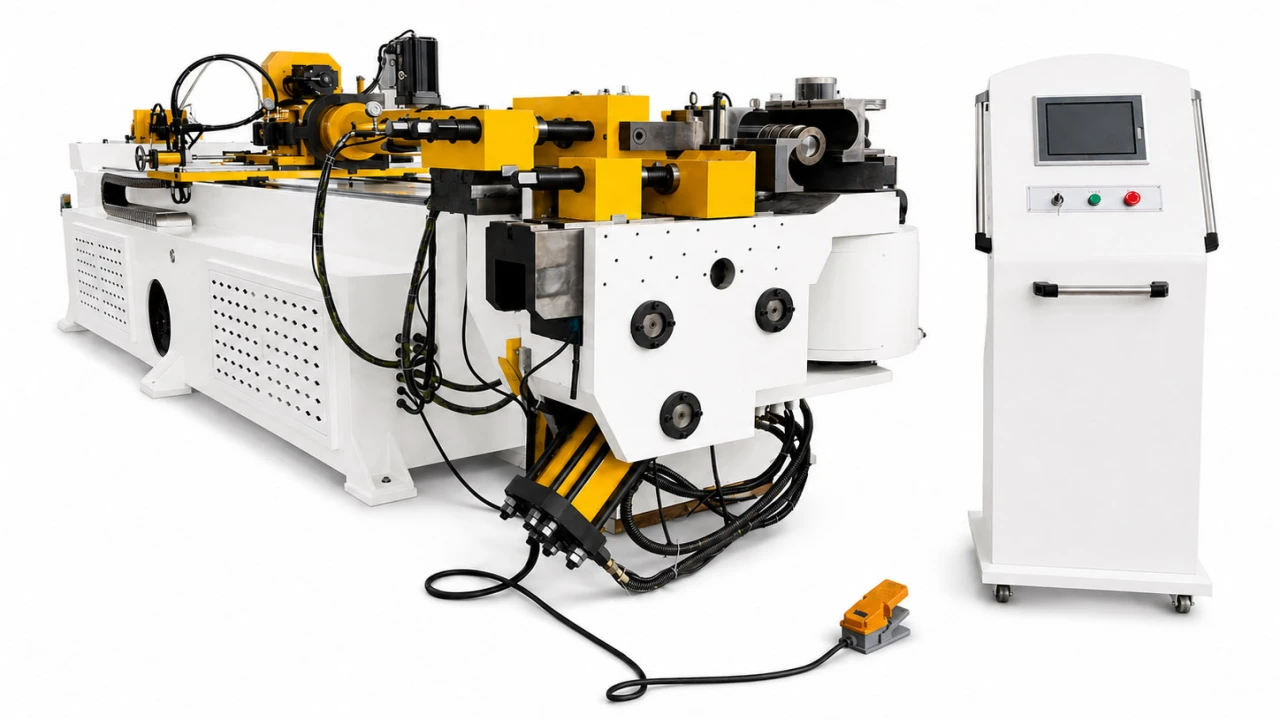
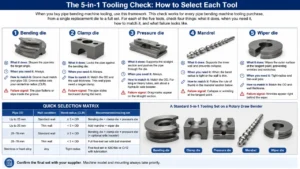
Tooling: mandrel, wiper die, pressure die, and multi-layer dies
NC and CNC machines may use similar bending principles, but the tooling configuration must match the tube and the target geometry. The control system does not replace the need for correct dies.
Mandrel
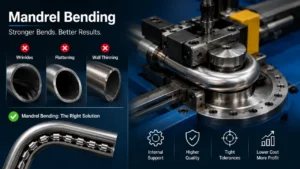
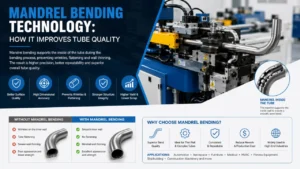
A mandrel supports the inside of the tube during a difficult bend. It may help control flattening, collapse, and excessive deformation, especially when the wall is thin or the CLR is small.
Wiper die
A wiper die supports the inside radius and can help reduce wrinkles in applications where the tube tends to buckle. It is not automatically required for every tube or every bend.
Pressure die and clamp die
The pressure die supports the tube during the draw-bending operation. The clamp die holds the tube against the bend die. Their size, surface condition, clearance, and alignment affect both shape and surface quality.
Multi-layer tooling
Multi-layer dies can be useful when different tube sizes or bend radii must be processed in one machine configuration. Confirm whether the selected machine has the required die-changing function and whether the tooling package is included in the quotation.
See the pipe bending machine tooling guide before comparing a machine-only price. The same machine frame can produce different results with different die, mandrel, lubrication, and support configurations.
Automatic feeding, cutting, unloading, and production-line integration
CNC and NC selection should include the complete production route. A standalone machine may be the simplest solution when operators load and unload different products. A customized line makes more sense when the product sequence is stable and the required output justifies integration.
A typical automated tube-processing route may include:
- Raw material storage or tube rack
- Automatic loading
- Straightening or tube preparation
- Measured feeding
- Cutting to length
- CNC or NC bending
- Tube-end forming, chamfering, or other downstream work
- Automatic unloading
- Dimensional or visual inspection
- Good-part collection and NG separation
Automatic cutting and unloading are commonly selected or integrated according to the material, tube size, end-face requirement, takt time, and handling risk. A robotic handler may be useful for complex 3D parts that could be damaged by free falling.
When you compare quotations, ask whether each item is standard, optional, or custom:
- Automatic loading and tube separation
- Servo feeding and length measurement
- Saw, blade, rotary, or other cutting method
- Automatic unloading or robotic handling
- Online presence, length, angle, or vision inspection
- PLC, MES, data logging, and traceability
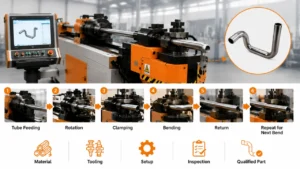
For a broader process view, read the tube fabrication overview together with your actual product sequence. Do not compare cycle time only by bending speed. Loading, feeding, rotation, clamping, bending, return, unloading, and inspection all contribute to the finished cycle.
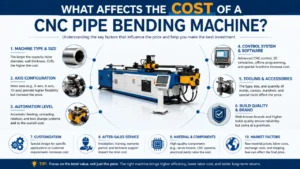
Cost and ROI: compare the production route, not only the machine price
NC may require less initial investment for a simple product, but a lower purchase price does not guarantee a lower cost per accepted part. CNC may require more investment while reducing manual positioning, setup repetition, and scrap on a complex product.
Compare these factors:
- Machine purchase price and installation
- Tooling, mandrel, wiper die, and spare-part cost
- Operator time per piece
- Setup and changeover time
- Scrap caused by wrong positioning or unstable forming
- Inspection and rework time
- Future product numbers and expected volume
- Loading, cutting, unloading, and line-integration cost
A simple payback model should use your own production data. The CNC pipe bending machine cost guide can support the cost discussion, but a reliable quotation still requires the drawing, material, tooling route, and target output.
Sample bending and acceptance process
A supplier recommendation becomes more reliable when it is based on your actual part rather than a machine label. Prepare the drawing or STEP file, tube specification, and production target before the trial.
Information to provide before the trial
- 2D drawing or 3D STEP file
- Material grade and material condition
- Round, square, rectangular, or special-profile tube shape
- Outside diameter and wall thickness
- CLR for every bend
- Bend angle and bend sequence
- Number of bends and tube rotation between bends
- Required straight lengths and critical tolerances
- Daily or monthly production target
- Loading, unloading, cutting, and inspection requirements
Recommended verification sequence
- Review the drawing, material, tube condition, and machine range.
- Select the bend die, clamp die, pressure die, mandrel, and wiper die where required.
- Run the first sample and record the actual settings.
- Measure angle, rotation, straight lengths, endpoint position, and visible defects.
- Adjust springback compensation, mandrel position, pressure, speed, or lubrication.
- Repeat the sample until the process is stable.
- Run several parts to check repeatability rather than approving only one sample.
- Confirm the final program, tooling list, inspection method, and acceptance criteria.
Request a tube bending sample service when the material, CLR, multi-bend sequence, or tolerance creates uncertainty. Sample testing should confirm feasibility; it should not be treated as a substitute for a complete drawing and agreed acceptance plan.
Questions to ask before buying a CNC or NC tube bender
Is a CNC tube bending machine always better than an NC machine?
No. CNC is often more suitable for coordinated multi-bend work, frequent changeovers, and repeat production. NC may be more economical for simple parts and stable workflows. Your part geometry and production route should decide the machine class.
Can an NC tube bender make parts with multiple bends?
Yes, depending on the model and process. Zhuoran NC documents list multiple allowed bends and stored programs. You still need to confirm bend count, bend spacing, tube rotation, tooling, and the operator workflow for the specific part.
Does CNC mean automatic loading and unloading?
No. CNC describes the control system, not the complete factory automation package. Automatic loading, cutting, unloading, robotics, and online inspection are selected according to the machine configuration and project requirements.
Do CNC and NC machines use the same tooling?
They may use similar tooling principles, including bend dies, clamp dies, pressure dies, mandrels, and wiper dies. The correct configuration depends on OD, wall thickness, material, CLR, surface requirements, and allowable deformation.
What does ±0.1 mm mean on a tube bending quotation?
It normally refers to a linear value such as feed accuracy or a selected position dimension. It should not be interpreted as ±0.1° bend-angle accuracy. Ask the supplier to identify the measurement item, reference point, inspection method, and repeatability condition.
Can a CNC tube bending machine use hydraulic bending?
Yes. CNC refers to the control method, while bending force may come from servo, hydraulic, or combined systems. Zhuoran’s model range includes both servo-controlled small and medium CNC configurations and larger hydraulic CNC equipment.
How should you compare machine cycle time?
Use the complete cycle: loading, feeding, rotation, clamping, bending, return, cutting, unloading, and inspection. A cycle-time estimate should use your actual number of bends, tube length, tooling changes, handling method, and quality requirements.
What should you send to Zhuoran for a machine recommendation?
Send a drawing or STEP file, material and grade, OD, wall thickness, CLR, bend angles, bend count, rotation, straight lengths, tolerances, monthly volume, and automation requirements. Sample photos are useful when the profile or surface condition is unusual.
Request a CNC or NC tube bending recommendation
Zhuoran can review whether an NC tube bender, a CNC tube bending machine, or a customized processing line fits your production route. The recommendation should be based on the part drawing, material, tube dimensions, CLR, bend sequence, tooling, acceptance standard, and target output.
When you contact the engineering team, include your tube OD, wall thickness, material, bend radius, bend angle, bend count, production volume, and preferred loading or unloading method. You can also include photos, a 2D drawing, a 3D STEP file, or an existing sample.
Contact Zhuoran engineers for a machine recommendation
References and further reading
The following third-party pages are used as industry comparison references. They do not replace Zhuoran’s model documents, drawing review, or sample-bending verification.