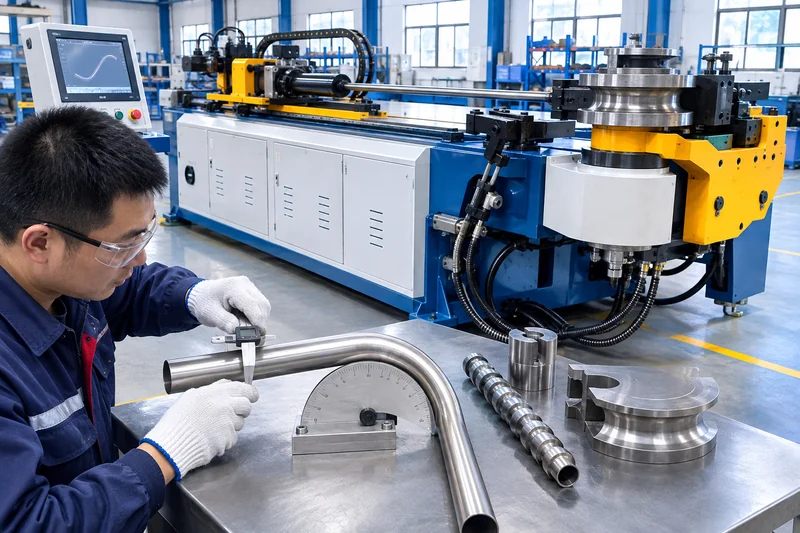
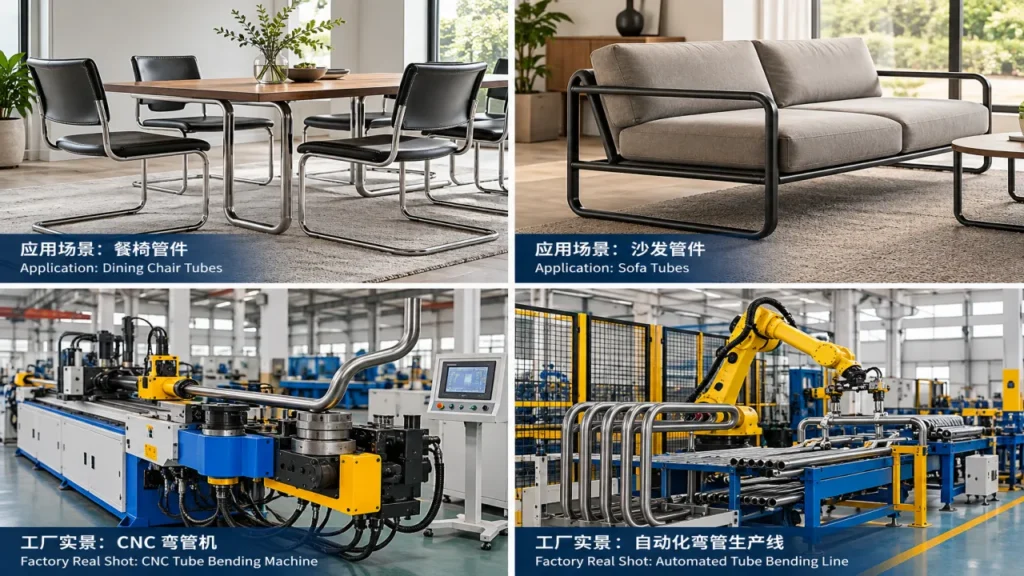
Metal furniture manufacturing involves more than cutting steel and welding a frame. For many chairs, tables, beds, cabinets, and commercial furniture products, the quality of the final structure depends on how accurately you cut, bend, form, join, and inspect the metal components.
If your project uses tubes or profiles, the main equipment decisions usually involve tube cutting, CNC or NC tube bending, tube end forming, rolling, tooling, and automation. This guide explains how these processes connect and what you should prepare before requesting a machine or production-line quotation. It focuses on tube-processing equipment for metal furniture frames and components, rather than complete furniture production.
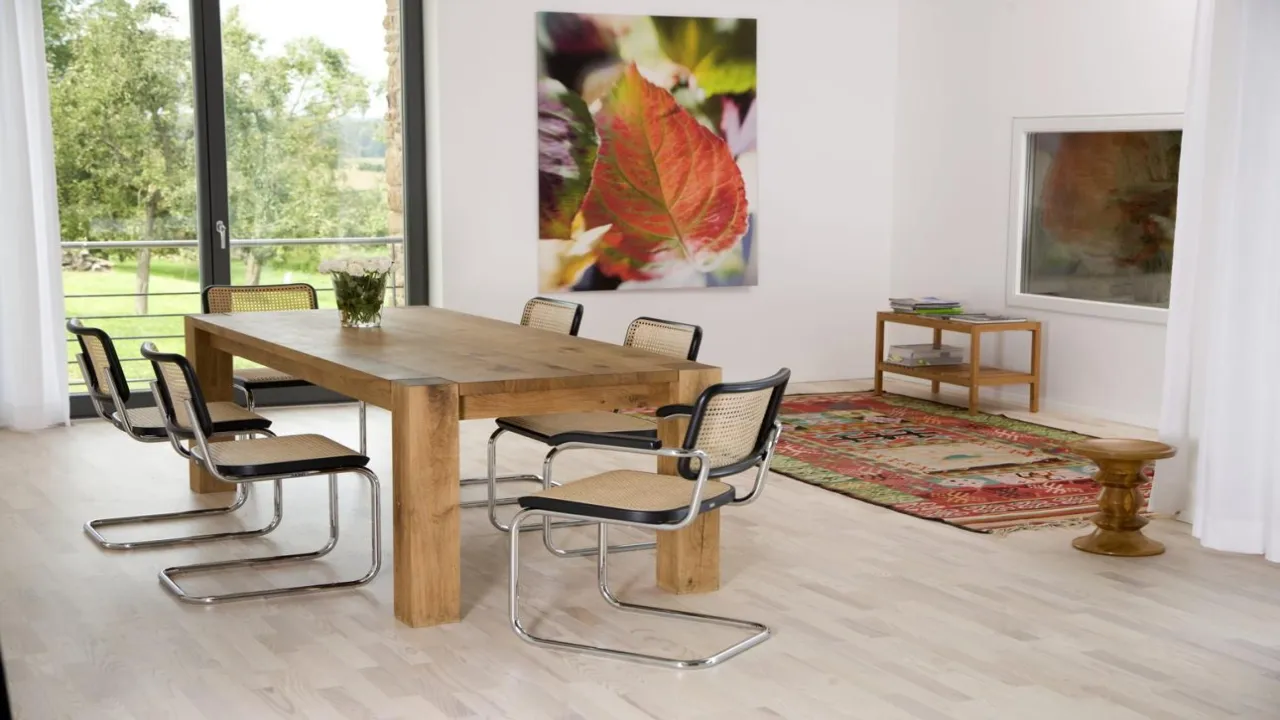
How Is Metal Furniture Manufactured?
Metal furniture manufacturing normally follows a sequence from design review to material preparation, forming, joining, finishing, inspection, and packaging. The exact process depends on the product. A simple chair frame may need cutting, bending, welding, and coating. A commercial cabinet may rely more heavily on sheet-metal cutting, punching, folding, and assembly. A curved table frame may require tube bending or tube rolling before welding.
From design review to material preparation
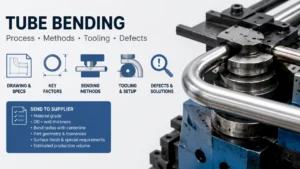
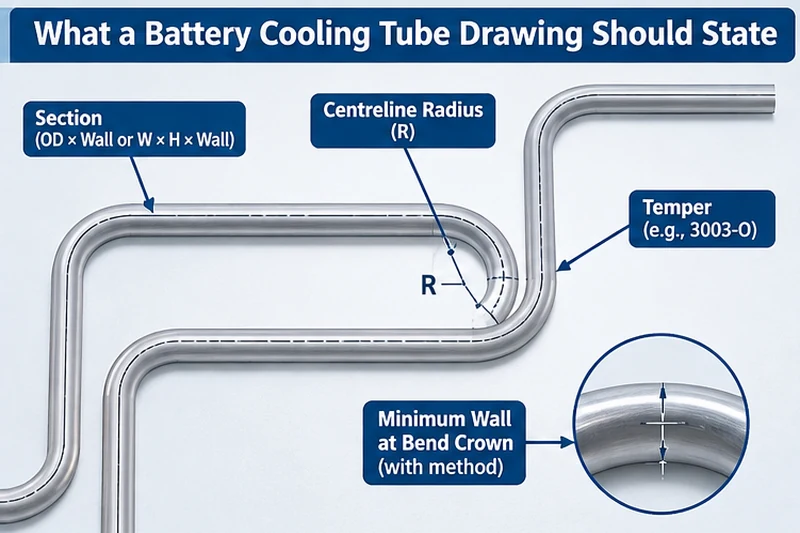
The process starts with the product drawing or 3D model. Before production begins, you normally need to confirm the tube or profile material, outside diameter or profile size, wall thickness, raw tube length, bend radius, bend angle, number of bends, connection method, surface requirements, and production quantity.
The material is then inspected before it enters production. Tube diameter, wall thickness, straightness, and surface condition can affect cutting accuracy, bending stability, and the final appearance.
From cutting and forming to assembly
A typical tube-based furniture frame may follow this workflow:
Design Review → Material Inspection → Tube Cutting → Tube Bending or Rolling → Tube End Forming → Welding and Joining → Grinding and Surface Preparation → Coating → Assembly → Inspection → Packaging
Not every product needs every step. A welded chair frame may not require tube end forming, while a frame designed for press-fit or mechanical joining may need expansion, reduction, flaring, or another end-forming operation.
For additional industry context, see V-Trust’s metal furniture quality-control guide.
Where Does Tube Processing Fit in Metal Furniture Production?
For tube-based furniture frames, tube processing is one of the first major production decisions because it affects the shape, fit, and repeatability of the frame.
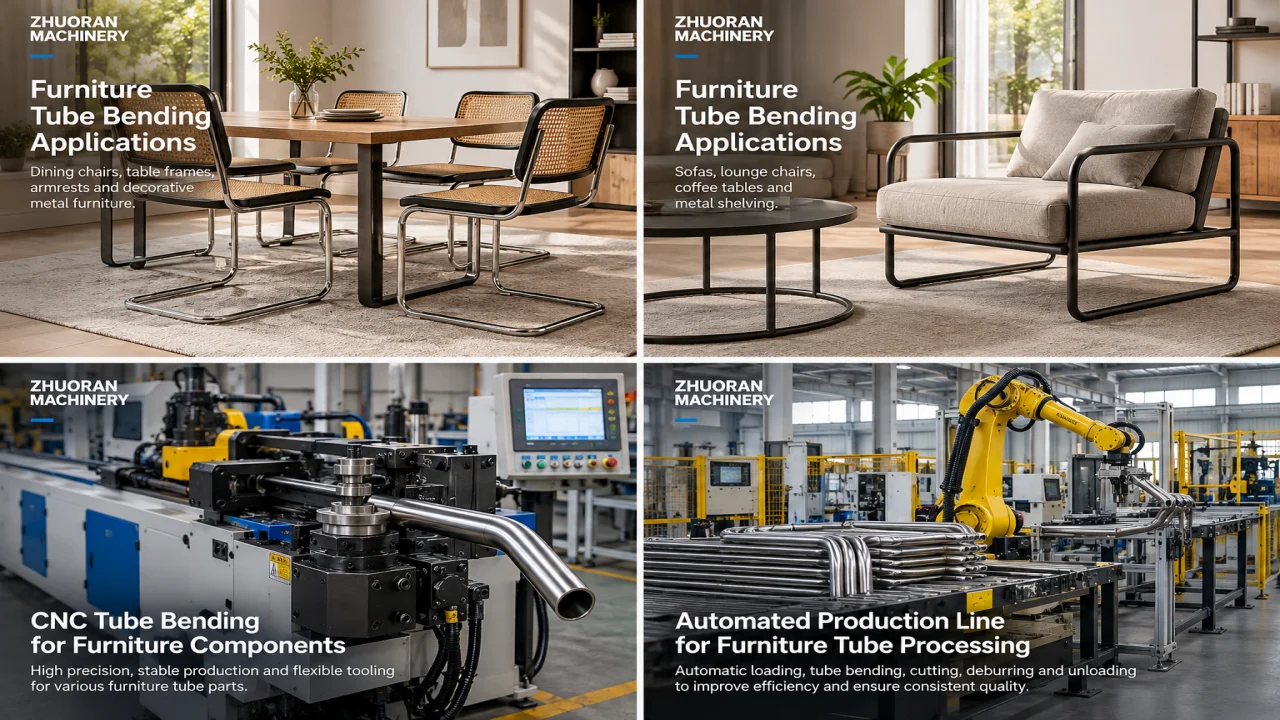
A bent tube may become a chair back, table leg, bed-frame support, armrest, handrail, or structural brace. The part may look simple, but its manufacturability depends on the relationship between the material, profile, bend radius, tooling, and assembly method.
Common furniture parts made from tubes
- Chair frames
- Table frames
- Bed frames
- Sofa support structures
- Armrests and handrails
- Office furniture frames
- Outdoor furniture frames
- Shelving and display structures
- Commercial furniture bases
- Custom metal-frame components
The production requirement changes when the frame uses multiple bends, different bend directions, or a small centerline radius. A product that looks simple in a drawing may require several controlled axes and dedicated tooling.
Why bending accuracy affects assembly
A bent tube can meet its nominal angle and still create assembly problems if the bend position or straight length is wrong. A small deviation in bend position may cause misaligned welding fixtures, uneven frame legs, gaps between connected parts, difficulty installing panels or hardware, and poor stability after assembly.
For this reason, evaluate more than the final bend angle. Bend position, straight length, tube-end location, profile deformation, and surface condition may all affect the finished furniture frame.
Which Machines Are Used for Metal Furniture Manufacturing?
The required machines depend on the furniture design and the material form. Tube-based furniture frames generally need a different equipment combination from sheet-metal cabinets or lockers.
| Manufacturing step | Typical equipment | Main decision point |
|---|---|---|
| Tube cutting | Pipe cutting machine | Cut length, burrs, and tolerance |
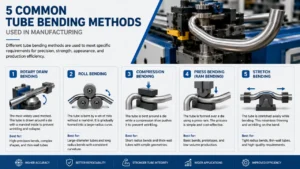
| Tube bending | NC or CNC tube bending machine | Geometry, repeatability, and production volume |
| Tube rolling | Tube rolling machine | Continuous arcs and large-radius curves |
| Tube end forming | Tube end-forming machine | Expansion, reduction, flaring, or connection |
| Welding | MIG, TIG, or robotic welding system | Joint design and production volume |
| Surface preparation | Grinding or polishing equipment | Surface quality before coating |
| Coating | Powder-coating or painting line | Environment and corrosion requirements |
| Inspection | Fixtures, measuring tools, or vision systems | Dimensional and appearance control |
A complete metal furniture project may use several machine types. Define which operation you want to perform in-house and which operation will be completed by another supplier. Zhuoran’s equipment focus is tube processing. You can review the furniture tube-processing application and connect each required operation to the appropriate machine category.
How Do You Choose a Tube Bending Machine for Furniture Frames?
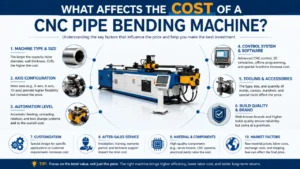
Choose a tube bending machine based on the actual part geometry, material, production volume, and quality requirements—not only the maximum tube diameter listed in a catalogue.
Before selecting a machine, prepare the tube outside diameter, wall thickness, material grade, centerline radius, bend angle, number of bends, bend sequence, bend direction, rotation angle, straight lengths, surface-quality requirement, and target production quantity.
When is an NC tube bender enough?
An NC tube bender may be suitable when the part has a simple bending sequence, a limited number of bend positions, moderate production volume, infrequent product changeover, and no need for full automation. The final decision still depends on the actual workpiece. A simple-looking part may require additional control if it has a small radius, thin wall, or strict surface requirements.
When should you choose a CNC tube bender?
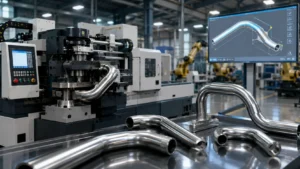
A CNC tube bending machine is usually worth evaluating when you need multiple bends on one tube, different bend directions, three-dimensional furniture frames, frequent product changeovers, program storage, CNC feeding, tube rotation, or connection with automatic loading and unloading.
Compare the CNC pipe bending machine and NC pipe bending machine directions against your actual workpiece and production plan.
Why is maximum tube diameter not enough?
A machine may support a certain nominal tube diameter but still be unsuitable for your part because of wall thickness, material strength, required bend radius, number of bends, profile shape, clamp length, straight length between bends, surface requirements, or required cycle time.
The correct selection process starts with the drawing and the tube specification. The machine model should follow the application, not replace the application review.
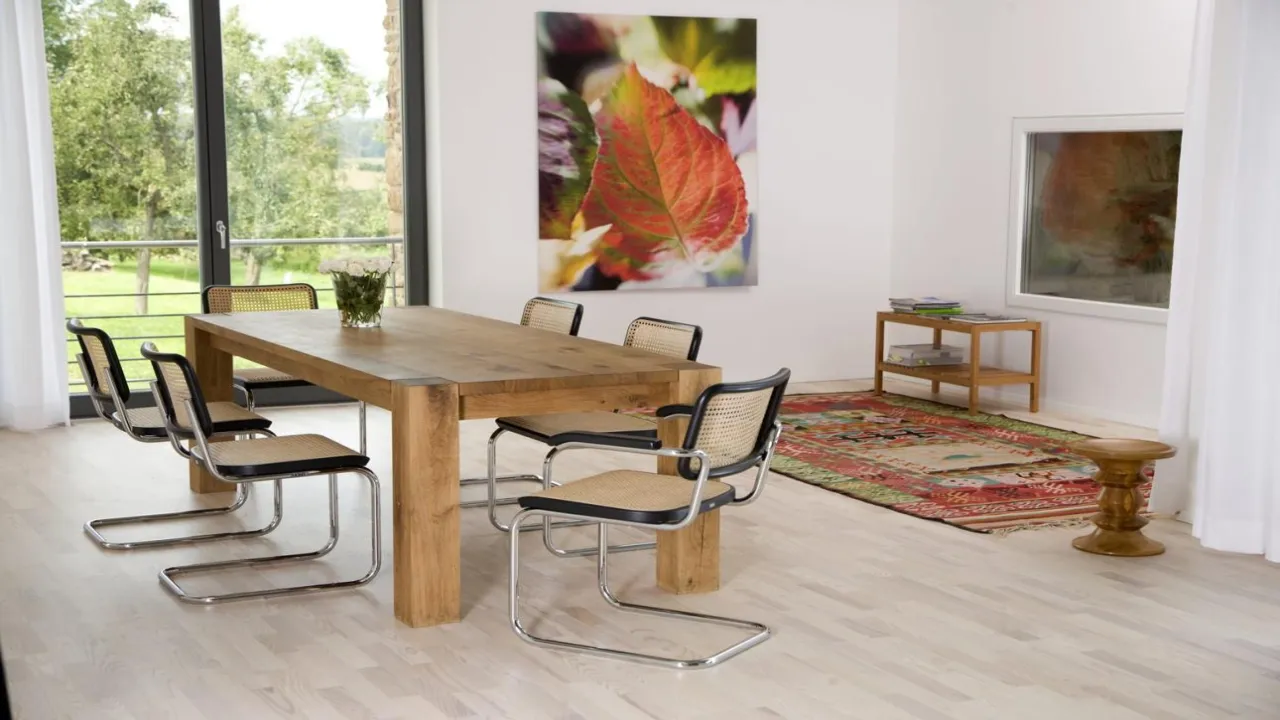
Material and Profile Requirements in Metal Furniture Manufacturing
Material selection affects bending force, springback, surface quality, tooling life, and the final strength of the frame.
Common materials
- Carbon steel
- Stainless steel
- Aluminum alloy
- Galvanized steel
- Brass or copper in selected decorative or functional components
Each material should be assessed according to its grade, temper, wall thickness, surface condition, and forming behavior. Aluminum may require different forming control from carbon steel. Stainless steel may require more attention to surface scratches and tooling contact. Galvanized material may require additional consideration for surface protection and post-processing.
Round, square, rectangular, and oval profiles
Round tube is common in chairs, tables, handrails, and support frames. Square and rectangular tube may be used when the frame needs a flat contact surface or a specific visual appearance. Oval tube may be selected for ergonomic or visual reasons.
Square, rectangular, and oval profiles require particular attention to profile orientation, rotation control, cross-section deformation, contact marks, and assembly direction. Do not assume that tooling designed for round tube can be reused for another profile without evaluation.
Tooling Determines the Quality of Bent Furniture Tubes
The tooling package is part of the production solution. Comparing only the machine body or control system can lead to an incomplete quotation.
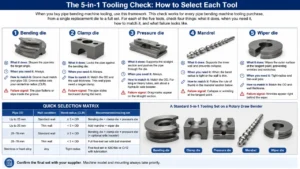
Typical tube-bending tooling may include a bending die, clamp die, pressure die, mandrel, wiper die, multi-stack tooling, profile-specific tooling, and inspection fixtures.
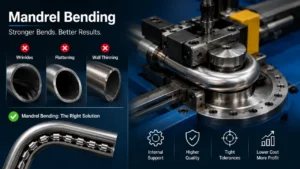
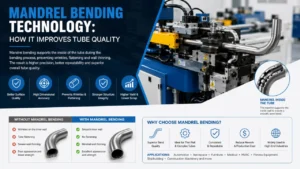
When do you need a mandrel?
A mandrel may need to be evaluated when the tube has a thin wall, a small bend radius, a high surface-quality requirement, a strict cross-section requirement, or a risk of collapse or excessive deformation.
When are wiper dies and pressure dies considered?
A wiper die may be considered when the inner radius has a high risk of wrinkling. A pressure die supports the tube during bending and helps maintain process stability. The need for these tools depends on the material, wall thickness, bend radius, tube diameter, surface requirements, bend sequence, and required profile accuracy.
What about square and rectangular tube tooling?
Square and rectangular profiles normally require dedicated tooling. The tooling must support the profile without causing unacceptable corner deformation, twisting, or surface damage. For a new furniture-frame project, review the drawing, prepare the proposed tooling, and complete a sample trial before finalizing the equipment package.
How Can Cutting, Bending, and End Forming Be Automated?
Automation should be planned around the complete production flow rather than added as isolated machine features.
Basic machine-level automation
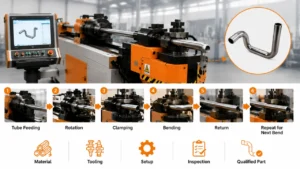
A CNC tube-bending machine may be evaluated with CNC feeding, tube rotation, automatic positioning, program management, and automatic sequence control. These functions control the tube inside the machine. They do not necessarily include raw-material loading or finished-part handling.
Material and part-handling automation
Depending on the project, the line may also include raw-tube loading, automatic feeding, automatic cutting, automatic unloading, robotic handling, finished-part collection, and transfer between machines.
Line-level control and inspection
A more advanced tube-processing line may include line PLC/HMI, inline dimensional inspection, NG sorting, production data collection, MES connection, alarm handling, and safety interlocking.
A typical line may follow this structure:
Raw Tube → Cutting → CNC Bending → Tube End Forming → Inspection → OK / NG Sorting
The actual sequence may change depending on the product. Automation modules should be classified clearly in the quotation as standard configuration, optional configuration, project customization, or not included. This prevents confusion between CNC feeding and automatic raw-material loading.
How Should Production Capacity Be Evaluated?
A machine’s theoretical speed is not the same as its actual good-part output. Evaluate average cycle time, loading and unloading time, changeover time, inspection time, machine running-time ratio, good-part rate, unplanned downtime, and automation coordination.
A useful calculation is:
Good Output = (3600 × A × Y) ÷ T
- A = machine running-time ratio
- Y = good-part rate
- T = average cycle time in seconds
For example, if the line has a 30-second average cycle time, a 95% running-time ratio, and a 99% good-part rate, the estimated good output is 112.9 pieces per hour. This is an estimation method, not a universal production guarantee. Actual output depends on product geometry, handling, tooling, operator workflow, inspection, and downtime.
What Should Be Tested Before Buying the Equipment?
Before approving a machine, test the actual furniture tube or profile whenever possible.
Dimensional tests
- Cut length
- Bend angle
- Bend position
- Straight length
- Tube-end position
- Overall profile
- Assembly fit
Shape and surface tests
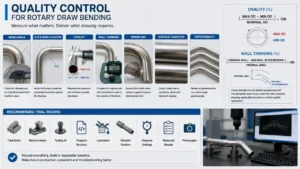
- Ovality
- Wall thinning
- Wrinkles
- Scratches
- Dents
- Burrs
- Cracks
- Tooling marks
| Test item | Requirement | Result | Tool |
|---|---|---|---|
| Cut length | Drawing tolerance | To be filled | Length gauge |
| Bend angle | Drawing tolerance | To be filled | Angle gauge |
| Bend position | Drawing tolerance | To be filled | Fixture or CMM |
| Ovality | Project requirement | To be filled | Caliper or fixture |
| Surface quality | Approved sample | To be filled | Visual inspection |
| Continuous run | Agreed quantity | To be filled | Production record |
The acceptance criteria should be agreed before the trial. If you approve a machine based only on a short demonstration, important production risks may remain hidden.
What Information Should You Include in a Tube-Processing RFQ?
A clear RFQ helps the supplier select the machine, tooling, automation, and testing method more accurately.
Part and material information
- 2D drawing or 3D STEP file
- Material grade
- Outside diameter
- Wall thickness
- Profile shape
- Raw tube length
- Surface condition
Geometry and quality information
- Bend radius
- Bend angle
- Bend sequence
- Bend direction
- Rotation angle
- Straight lengths
- Tube-end position
- Dimensional tolerances
- Surface requirements
- Assembly requirements
Production and automation information
- Daily or monthly quantity
- Number of shifts
- Target cycle time
- Loading method
- Unloading method
- Inspection requirements
- Required automation level
- Delivery location
- Installation and training requirements
Ask the supplier to identify the main machine, control system, tooling package, mandrel, wiper die, pressure die, multi-stack tooling, automatic feeding, cutting, unloading, installation, training, sample trial, transportation, packaging, and excluded items.
A complete RFQ makes it easier to compare suppliers based on the total production solution instead of only the machine price.
How Can Zhuoran Support Metal Furniture Frame Processing?
Zhuoran focuses on tube-processing equipment for applications that require cutting, bending, end forming, rolling, and automation.
Depending on your project, the equipment discussion may include CNC tube bending machines, NC tube bending machines, pipe cutting machines, tube end-forming machines, tube rolling machines, dedicated tooling, automatic feeding, automatic unloading, robotic handling, inline inspection, and production-line control.
The final configuration depends on your drawing, material, profile, bend geometry, production target, and quality requirements. Zhuoran’s role in this workflow is focused on tube-processing equipment and related automation evaluation. Welding, coating, assembly, and other downstream operations should be confirmed separately for each project.
For a new furniture-frame project, the evaluation should normally include drawing review, material and profile confirmation, bend-radius assessment, tooling review, automation review, sample trial, capacity evaluation, and configuration confirmation.
You can also review the pipe cutting machine, tube end-forming machine, and tube rolling machine categories when your furniture project requires more than bending.
Key Takeaways for Furniture Manufacturers
Metal furniture manufacturing may involve several different production processes. When your product uses tubes or profiles, the bending and forming stages strongly influence the final frame quality.
- Define the furniture frame and component requirements.
- Confirm the tube material, profile, outside diameter, and wall thickness.
- Specify the bend radius, angle, sequence, and straight lengths.
- Compare CNC, NC, and automated configurations based on the actual workpiece.
- Include tooling requirements in the quotation.
- Separate CNC feeding from automatic raw-material loading.
- Evaluate good-part output instead of only theoretical speed.
- Test actual samples before final acceptance.
- Define dimensional, surface, and production requirements in writing.
- Send complete drawings and production information to the supplier.
If you are planning a furniture-frame project, send your drawing, tube material, profile size, bend radius, production target, surface requirements, and automation needs to Zhuoran for a machine, tooling, or tube-processing-line recommendation.
Frequently Asked Questions
Is metal furniture manufacturing the same as tube bending?
No. Tube bending is only one process within metal furniture manufacturing. A complete project may also include material preparation, cutting, tube end forming, welding, grinding, coating, assembly, inspection, and packaging.
Which machine is used for furniture tube frames?
The correct machine depends on the tube material, profile, bend geometry, production volume, and automation requirement. NC machines may suit simpler parts, while CNC machines are often evaluated for multi-bend or three-dimensional frames.
Can square and rectangular tubes be bent for furniture frames?
Yes, but they normally require dedicated tooling and sample testing. The tooling must control the profile without causing unacceptable corner deformation, twisting, or surface damage.
Do all tube-bending machines include automatic loading?
No. CNC feeding, raw-material loading, automatic unloading, and robotic handling are separate functions. Their inclusion depends on the model and project configuration.
How should I calculate the output of a furniture tube-processing line?
Use average cycle time together with machine running-time ratio and good-part rate. Loading, unloading, inspection, changeover, and downtime should be included in the capacity evaluation.
What should I send to a machine supplier?
Send a drawing or 3D file, material, outside diameter, wall thickness, profile, bend radius, bend angles, production quantity, quality requirements, and automation expectations. This information allows the supplier to evaluate the machine and tooling more accurately.