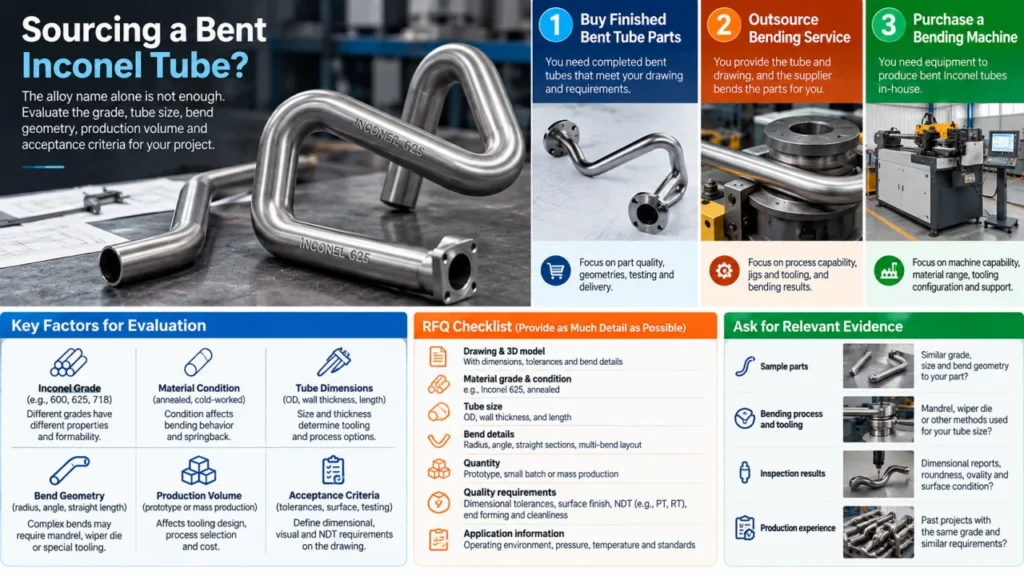
If you are sourcing a bent Inconel tube or evaluating equipment for a specific part, the alloy name alone is not enough to establish whether the job is feasible. The grade, material condition, tube dimensions, bend geometry, production volume, and acceptance criteria all affect the evaluation. This guide helps you separate a finished-part purchase from a bending-service request or a machine purchase, prepare a useful RFQ, and ask for evidence that applies to your part. It does not provide a universal minimum radius or claim that any particular supplier or machine is qualified for your Inconel application.
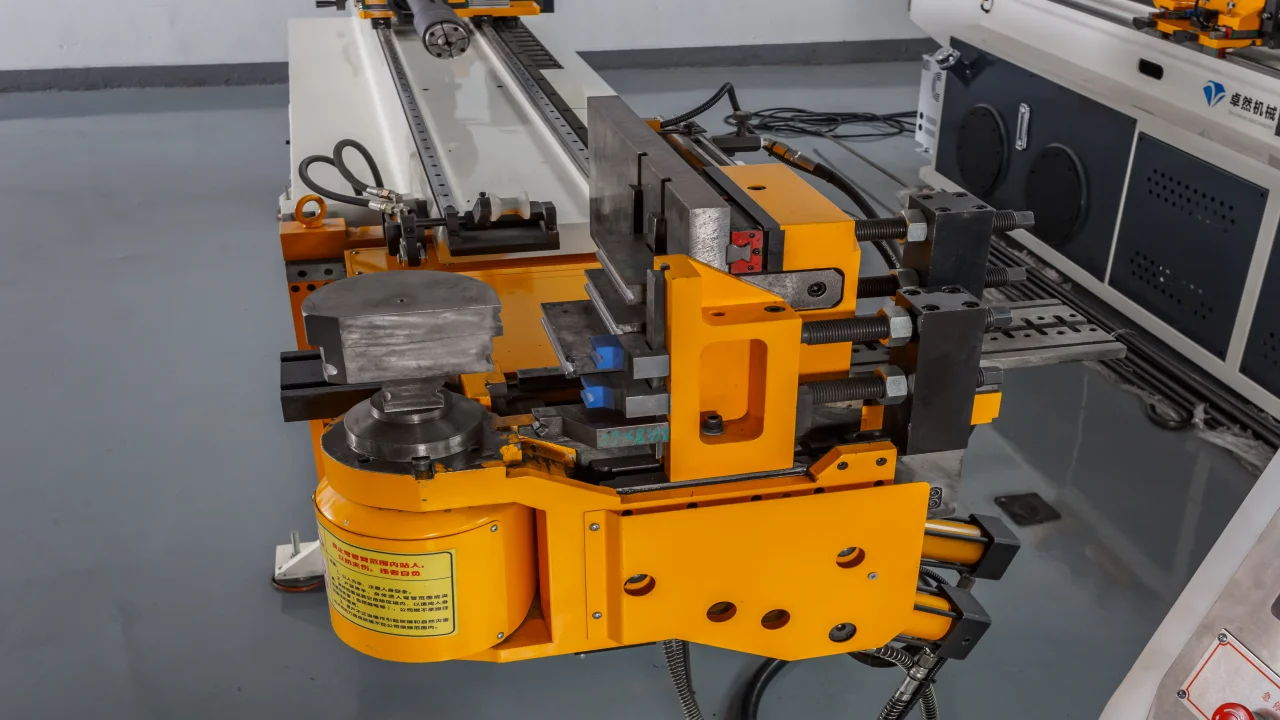
Are you buying a finished bend, a bending service, or a tube-bending machine?
Searches for Inconel tube bending can point to different purchasing tasks. You may need a completed component, a supplier to bend material you provide, or production equipment for your own facility. These are different scopes, so identify yours before comparing search results or quotes. The linked machine range provides general CNC product information and does not confirm an Inconel application. If your project also involves cutting, end forming, or assembly, see Zhuoran’s tube fabrication overview for adjacent process context.
A finished component
If you need a completed bend, define the part rather than asking only whether a supplier “works with Inconel.” Include the drawing revision, alloy and product form, dimensions, bend geometry, end preparation, quantity, inspection requirements, and any material documentation required for the finished part. Confirm who supplies the tube and who is responsible for material traceability.
An off-the-shelf product listing may describe a standard fitting or bend. It does not establish that the item matches your alloy condition, dimensions, code requirements, or drawing. Request documentation tied to the exact part number and order scope.
A bending service
For contract bending, clarify whether the supplier will source material, bend customer-supplied tube, or deliver a larger assembly. Ask how the supplier will review the drawing, confirm material identity, establish a trial plan, and document acceptance. A general alloy list is a starting point for discussion, not proof that a particular tube geometry has been qualified.
A tube-bending machine
If you are buying equipment, the key question is whether a proposed machine and tooling configuration can be evaluated against your actual part and production requirements. A machine’s nominal capacity or a specification for another material does not confirm performance on your Inconel tube. Request an application review with the drawing, tube data, desired output, and acceptance scope.
Keep these three paths separate in your RFQ. Otherwise, one supplier may quote a finished fitting, another a processing service, and a third a machine. Their prices and claims will not be comparable.
What information is needed to evaluate an Inconel tube-bending job?
Prepare a complete input package before asking for a feasibility opinion. In the supplier’s initial review, missing geometry or material information can prevent a meaningful response. A drawing and a material designation are a useful start, but they may not settle the process, tooling, or inspection plan.
Confirm the alloy grade and material condition
“Inconel” is a family name, not a complete material specification. Identify the exact grade, applicable product specification, tube form, and supplied condition from the purchase documents or material certification. If the material has a product-specific condition or heat treatment, include it. Do not assume that evidence for one grade or product form applies to another.
For example, Special Metals lists an INCONEL alloy 625 technical bulletin. That material reference is not a tube-bending qualification for your part or evidence about a particular machine. Use the technical documentation for the exact grade and product form you plan to buy, and ask the material supplier or application engineer to resolve any mismatch.
Include a material certificate when available. If you have not selected a source yet, say so. The supplier should know whether the review uses confirmed material data or an assumed starting point.
Define the tube and bend geometry
Provide the tube’s outside diameter, wall thickness, cross-section, length, and any dimensional tolerances. For each bend, show the centerline radius (CLR), bend angle, bend direction, plane relationships, straight lengths between bends, and end conditions. Identify the datum and drawing units. If a model contains multiple bends, include a 3D file or a clearly dimensioned view that shows their sequence and orientation.
Use one radius convention consistently. A drawing may specify a centerline radius, while a supplier’s response might discuss an inside radius. Those are not interchangeable values. Ask the supplier to mark the radius used in its review and confirm that the interpretation matches the drawing.
Also identify features that could affect setup or inspection: tight spacing between bends, short tangent lengths, nearby welds, formed ends, branches, fittings, or restricted access for measurement. These are inputs for an application review, not proof that any one feature makes the part impossible.
State the production and acceptance scope
Tell the supplier whether you need a prototype, a qualification lot, recurring production, or a one-time repair part. Give the estimated lot size and annual demand if known, and identify any ramp-up expectations. These details help distinguish a one-off evaluation from a production equipment decision.
List the dimensions and conditions that determine acceptance. Examples may include final centerline geometry, end position, cross-section, surface condition, and material documentation—but the drawing, purchase specification, customer requirements, or applicable code must define which apply and the permissible limits. Do not copy a tolerance from an unrelated material or application.
How should you evaluate the minimum bend radius for your specific tube?
There is no defensible universal minimum radius that can be selected from the word “Inconel” alone. The radius question depends on the exact material and tube, the bend geometry, the chosen process and setup, and the quality limits the part must meet. A number published for a different tube is not automatically a safe design rule for yours.
First, confirm whether the drawing’s radius is measured to the tube centerline, inside surface, or another datum. Then provide the grade and condition, OD, wall thickness, bend angle, and any relevant straight lengths. Ask the supplier to state what assumptions it used and what result it considers evidence of feasibility.
Research on Inconel 625 tube bending illustrates why context matters. Jeong et al. analyzed a solution-treated fine tube with a 1.5 mm outside diameter and 0.12 mm wall. Feng et al. studied an IN625 thin-walled tube with a 25.4 mm outside diameter, 0.89 mm wall, and a stated radius-to-diameter ratio of 2. Those specimens and methods are specific to the studies. Neither paper establishes a minimum radius for every Inconel grade or tube, and neither qualifies your design or a supplier’s equipment. See the original study records: Jeong et al., 2012 and Feng et al., 2026.
For a real purchasing decision, request a part-specific assessment. Depending on the project, that may involve engineering review, a proposed trial, measurement of the trial part, and agreement on acceptance criteria. Ask for the assumptions, test material, geometry, measurement method, and limitations to be recorded. If no representative trial or documented analysis is available, keep the conclusion provisional.
Separate a rule of thumb from a qualified process limit
A rule of thumb can help screen an early concept, but it is not an acceptance criterion. A published study can explain what happened under its stated conditions, but it is not a promise that another setup will produce the same result. A qualified process limit should be tied to the actual material, geometry, equipment, tooling, and documented acceptance plan.
When a supplier quotes a minimum radius, ask what that number means and what supports it. Does it refer to a design recommendation, a demonstrated trial, a catalog limit, or a guaranteed production condition? Is it stated for the same alloy grade and tube dimensions? Does it include the quality criteria you need? If the answer does not identify its basis, do not use it as a final design or purchase decision.
Which process and tooling should a supplier evaluate?
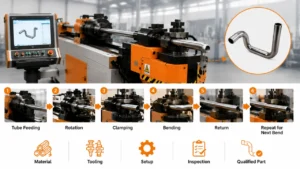
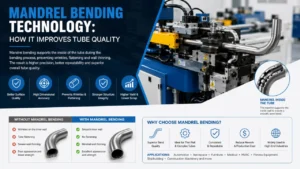
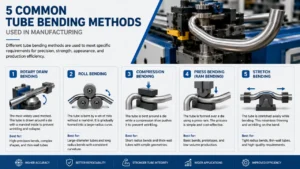
Do not select a process from the alloy name alone. Ask the supplier to identify the proposed bending method and tooling concept for the specific drawing, then explain what material and geometry assumptions drive that proposal. A method used on another part may be a useful starting point, but it is not evidence of suitability for your part.
The application review should connect the drawing to the machine and tooling proposal. Ask which tube dimensions and bend features are inside the reviewed scope, which are not, and what information remains unknown. If the supplier recommends a trial, agree on the test material and condition, the part features to be measured, the acceptance criteria, and who pays for material and setup before work begins.
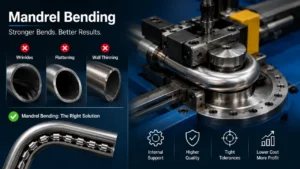
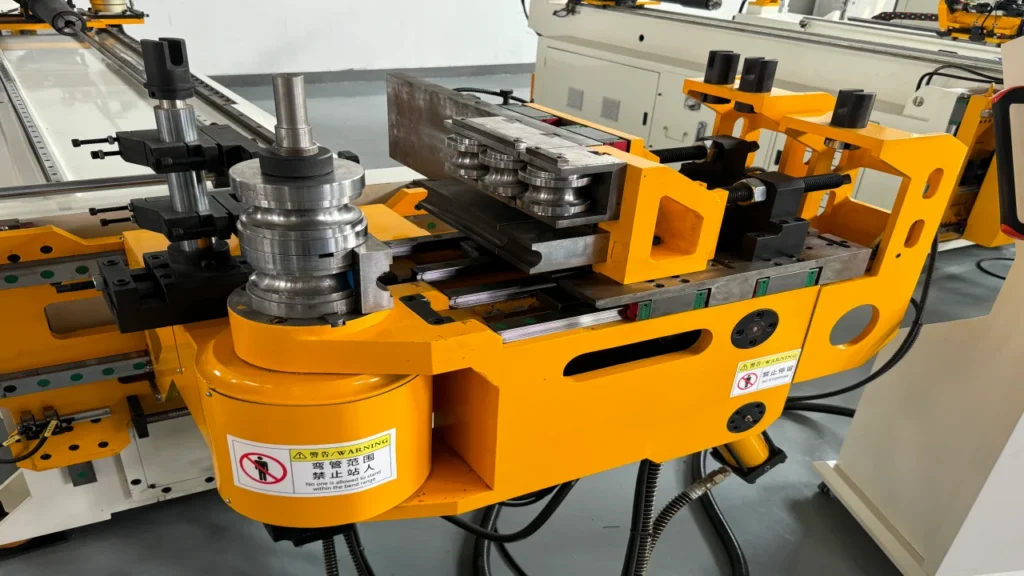
For equipment purchases, ask for the proposed machine configuration and tooling scope in writing. Clarify whether the quote includes the required dies, mandrel or other supports if applicable, controls, setup assistance, training, and commissioning. The right configuration depends on an application-specific engineering review and confirmed machine data. The linked service describes Zhuoran’s general design and engineering scope; it does not confirm Inconel suitability.
Compare a proposal against a common checklist:
| Review item | What to request |
|---|---|
| Workpiece scope | Exact grade, condition, OD, wall, cross-section, radius, angles, and drawing revision |
| Machine scope | Model and configuration, stated capacity basis, and any exclusions |
| Tooling scope | Tooling included, tooling still required, and how it will be selected |
| Evidence | Similarity of any cited trial to your material and geometry; records available for review |
| Trial plan | Test material, planned part, measurement method, acceptance criteria, and responsibilities |
| Production assumptions | Target quantity, cycle expectations if supported, operator/setup assumptions, and changeover needs |
| Commercial scope | Price basis, delivery assumptions, installation, training, service, and warranty terms |
The table is a buyer’s question list, not a claim that any supplier has supplied these records. Ask each bidder to mark items “included,” “excluded,” or “to be confirmed.” That makes gaps visible before a purchase order or design freeze.
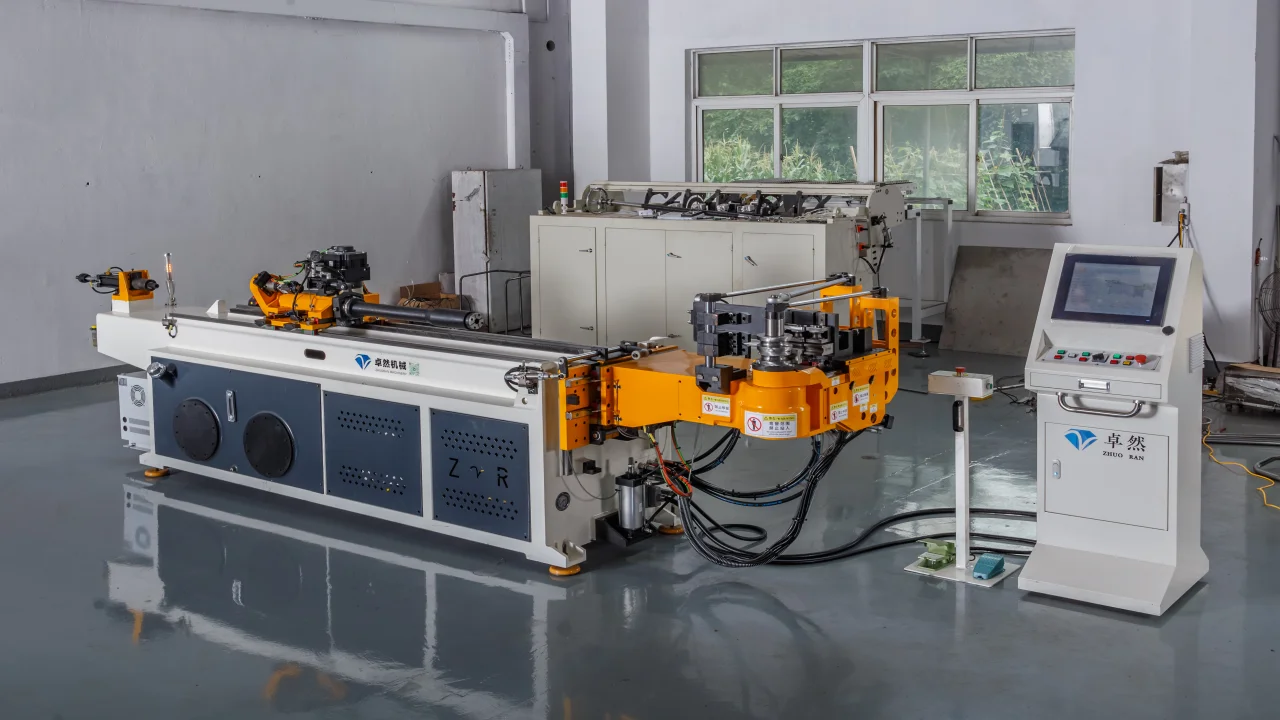
What quality risks and acceptance criteria should be discussed before a trial?
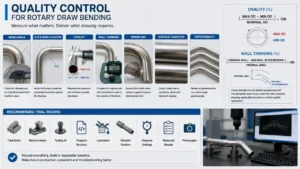
Agree on what the trial must prove before it starts. The study by Jeong and colleagues describes tube-bending deformation topics including wrinkling, inside-wall thickening, outside-wall thinning and flattening, and springback for the problem they analyzed. Those are useful inspection questions to consider, but the paper does not establish that every defect will occur in your part or provide your acceptance limits.
Ask your engineering and quality teams which characteristics matter to the end use. Depending on the drawing and service requirements, the review may include final angle and radius, cross-sectional dimensions, wall condition, surface condition, end location, repeatability, or material traceability. The applicable drawing, customer specification, code, or approved inspection plan must define limits and methods.
Write down how measurements will be made. Identify the datum, instrument or inspection method, sampling plan, and report format. If a visual criterion matters, define how the part will be examined. If material identity or traceability matters, specify the records that must accompany the trial or production lot.
Avoid vague acceptance language such as “good quality,” “no deformation,” or “tight tolerance” without a measurable definition. A supplier cannot reliably quote or demonstrate compliance against criteria that have not been stated. If your design authority has not yet set the limits, list the open decision and assign an owner before the trial.
How can you compare Inconel-bending quotes or equipment proposals?
Do not compare totals until you align scope. One quote may include material, tooling, setup, inspection, and a documented trial; another may cover only a machine or a preliminary review. A lower figure can reflect fewer deliverables rather than a better price for the same outcome.
Build a side-by-side comparison using the same drawing revision, alloy and condition, quantity, acceptance criteria, and delivery assumptions. Record whether each supplier’s response is based on confirmed data or assumptions. Separate one-time tooling and qualification costs from recurring unit costs. For equipment proposals, separate machine, tooling, installation, training, and service scope.
Ask each supplier to identify the evidence behind any capability statement. A published alloy list, a general machine rating, a competitor’s case study, or a research paper does not prove that the quoted setup can meet your requirement. Stronger evidence is specific to the relevant material, tube geometry, process, and acceptance scope, and the supplier should state its limits.
Price and lead time should come from a current written quote. They vary with scope, material availability, tooling, trial requirements, and commercial terms. This article does not provide a market price or delivery estimate because no verified, comparable quote data is available here.
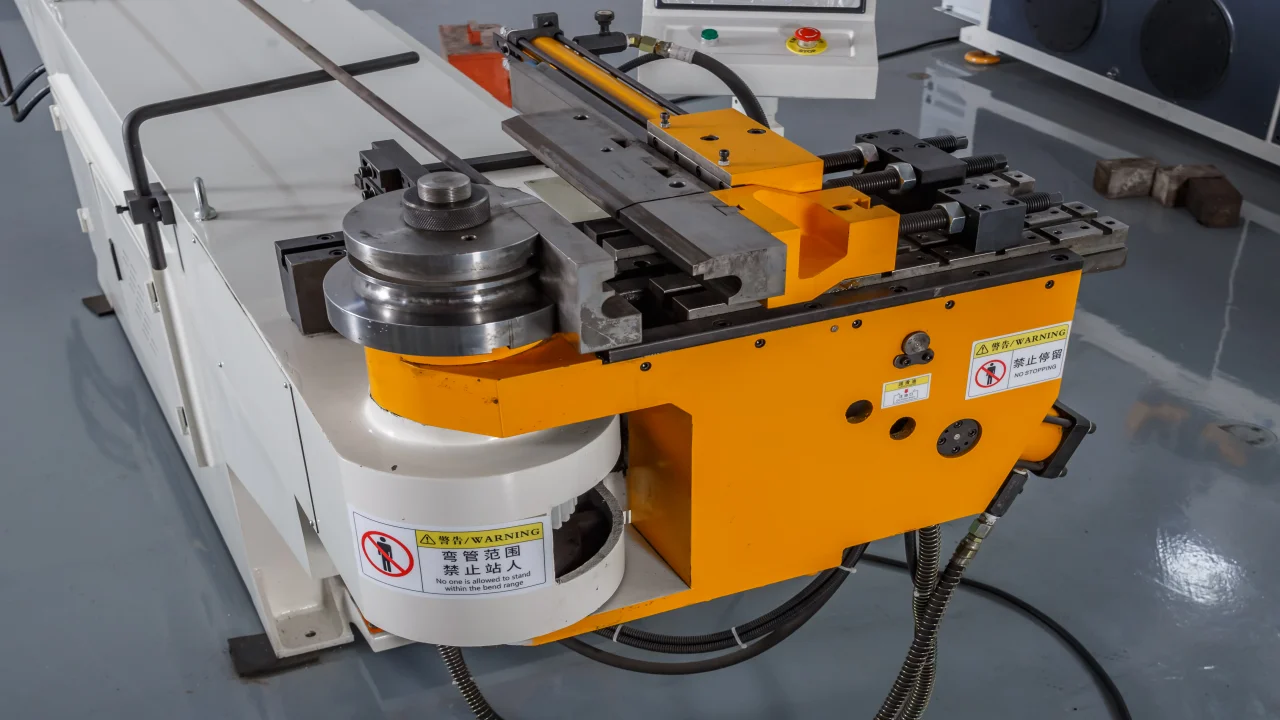
What should you include in an Inconel tube-bending RFQ?
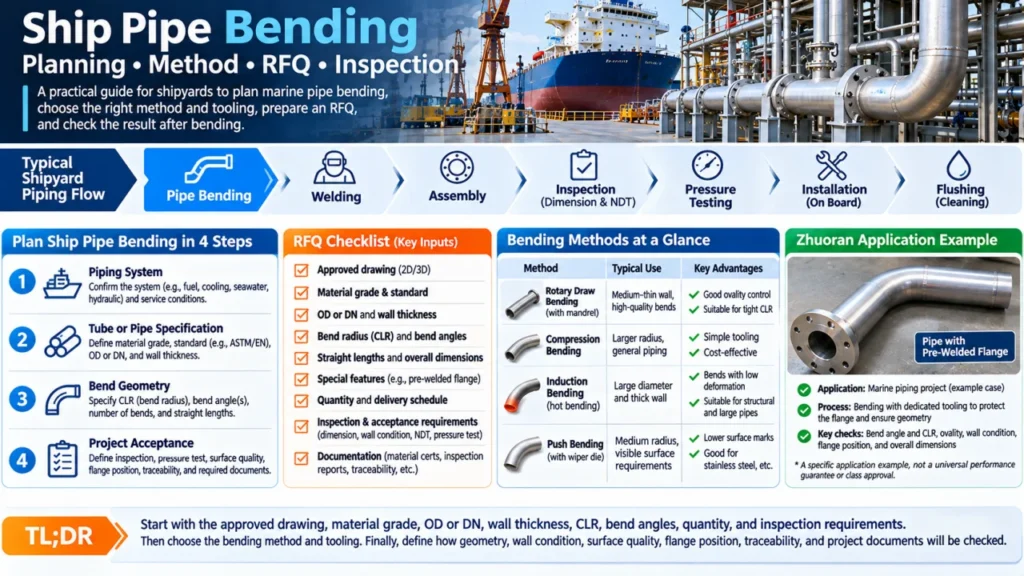
Use this checklist to help a supplier decide what it can assess and what it still needs:
- Buying path: finished bent part, contract bending, or bending equipment.
- Material: exact grade, product form, specification, condition, and certificate status.
- Drawing: revision-controlled 2D drawing and, where useful, 3D model; units and datums identified.
- Tube geometry: OD, wall thickness, cross-section, length, radius convention, angles, bend sequence, and end features.
- Requirements: applicable specifications, acceptance dimensions, inspection method, traceability, and required reports.
- Production: prototype or production, quantity per lot, estimated annual demand, and expected schedule.
- Scope: who supplies material, tooling or setup responsibilities, trial responsibilities, and deliverables.
- Open questions: unconfirmed material details, undecided tolerances, design changes, or restrictions on sharing drawings.
Ask the supplier to respond with assumptions, exclusions, missing information, and the next decision needed. For a machine evaluation, request a preliminary equipment-fit discussion and ask whether a representative application review or trial is available. Treat that discussion as an initial assessment, not as confirmation of Inconel capability or a performance guarantee.
Frequently asked questions about Inconel tube bending
What is the minimum radius required for tubing bends?
There is no single radius that applies to every tube. The answer depends on the specified material, tube dimensions, geometry, process, and acceptance requirements. Ask for a radius assessment tied to your drawing and the exact tube condition; do not treat an unrelated published value as a universal limit.
How do you determine a minimum bend radius?
Define the radius convention, grade and material condition, OD, wall thickness, bend angle, and required quality limits. Then obtain a supplier or engineering assessment that states its assumptions and evidence. A representative trial may be needed; the result should be documented against agreed inspection criteria.
How do you calculate bends in tubing?
The calculation depends on the drawing geometry and the radius reference being used. For a simple circular arc, the design team can calculate arc length from radius and angle, but that geometric calculation does not predict whether a material and process will produce an acceptable bend. Confirm the drawing interpretation with the supplier.
What is the minimum radius for a 90-degree tubing bend?
A 90-degree angle alone is not enough to set a minimum radius. The material, OD, wall, tooling, process, and acceptance limits still matter. Ask the supplier to assess the exact 90-degree geometry and state whether its response is a preliminary opinion, a trial result, or a production commitment.
Request an initial equipment-fit discussion
If you are evaluating bending equipment, prepare the drawing, material designation and condition, tube dimensions, bend geometry, quantity, and acceptance requirements. You can ask a machine supplier to review whether the information is sufficient for an initial equipment-fit discussion and to identify what must be confirmed next.
If you contact Zhuoran, submit the drawing, material designation and condition, tube dimensions, bend geometry, quantity, and acceptance requirements. Ask the technical team to confirm whether it can assess that specific application and what evidence or trial would be needed. The company information reviewed for this draft documents a general RFQ and equipment-selection process; it does not document Inconel-specific machine suitability, a completed Inconel trial, or a project case. Treat the inquiry as a request for confirmation, not as evidence that the application is supported.
References & Sources
- Special Metals, INCONEL alloy technical bulletins — official alloy-document index; use the bulletin for the specified grade and product form.
- Jeong et al. (2012), “Finite Element Analysis for Inconel 625 Fine Tube Bending to Predict Deformation Characteristics” — study record and abstract for a specific fine-tube analysis.
- Feng et al. (2026), “Optimization of Small Bending Radius Rotary Draw Bending Process for IN625 Nickel-based Superalloy Thin-walled Tubes” — study of a specified IN625 tube and process setup; results are not universal design limits.