Tube bending wrinkles are one of the most frustrating defects in production. You see them on the inner radius of the bend, and every wrinkled part is scrap. The good news is that wrinkles are preventable. They follow clear causes, and each cause has a solution. This guide explains why tube bending wrinkles happen, walks you through the eight most common causes, and shows you how to prevent them with the right tooling, parameters, and equipment. By the end, you will have a practical checklist to fix wrinkles on your own parts. Whether you run a small shop or a full production line, this tube bending wrinkles guide will help you stop the scrap and get back to good parts.
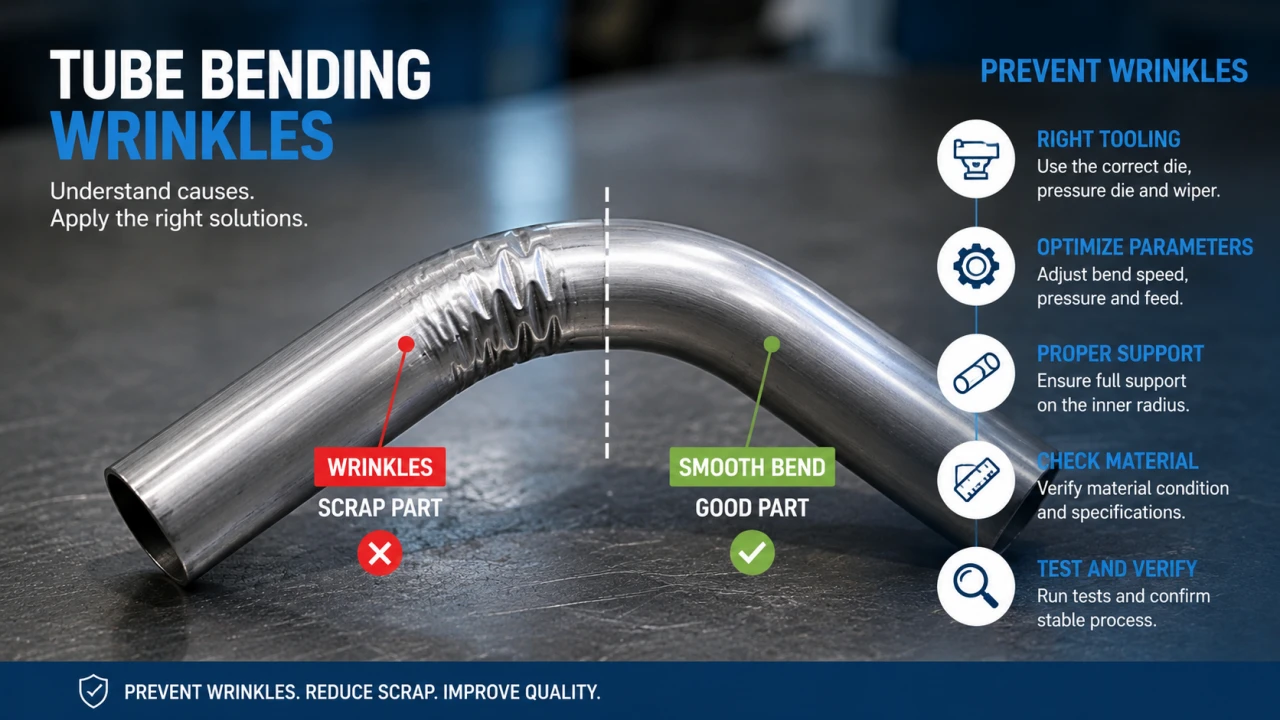
Why Do Tube Bending Wrinkles Happen?
Wrinkles are a compression problem. Understanding the mechanics behind them is the first step to eliminating them. Once you see why tube bending wrinkles form, the fixes become obvious. Every tube bending wrinkle you have ever seen traces back to the same physical forces.
Compression on the Inner Radius
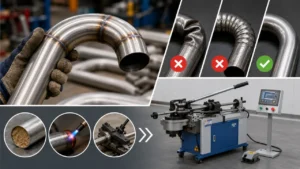
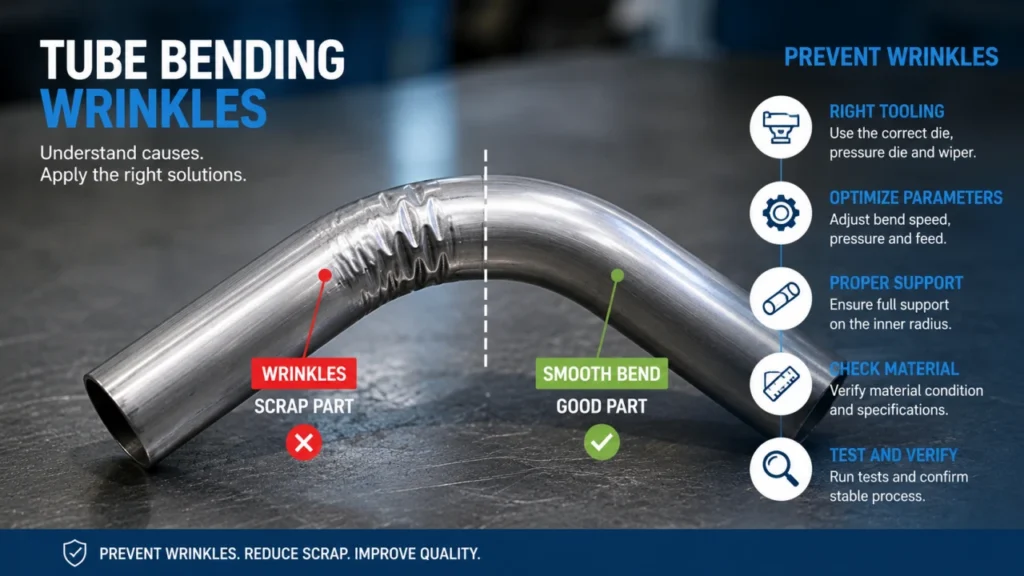
When a tube bends, the outer wall stretches and the inner wall compresses. The inner wall has nowhere to go, so it buckles into wrinkles when it loses support. This is why tube bending wrinkles always appear on the inside of the bend. Tight radii make the compression worse. Thin walls offer less resistance to buckling. The root cause is always the same: the inner wall is compressing without enough support. When you see wrinkles, you know the inner wall lost its support.
The Role of Tooling and Support
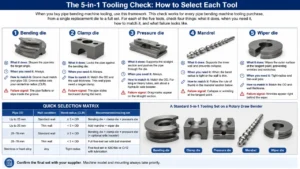
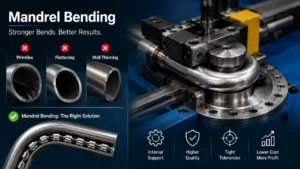
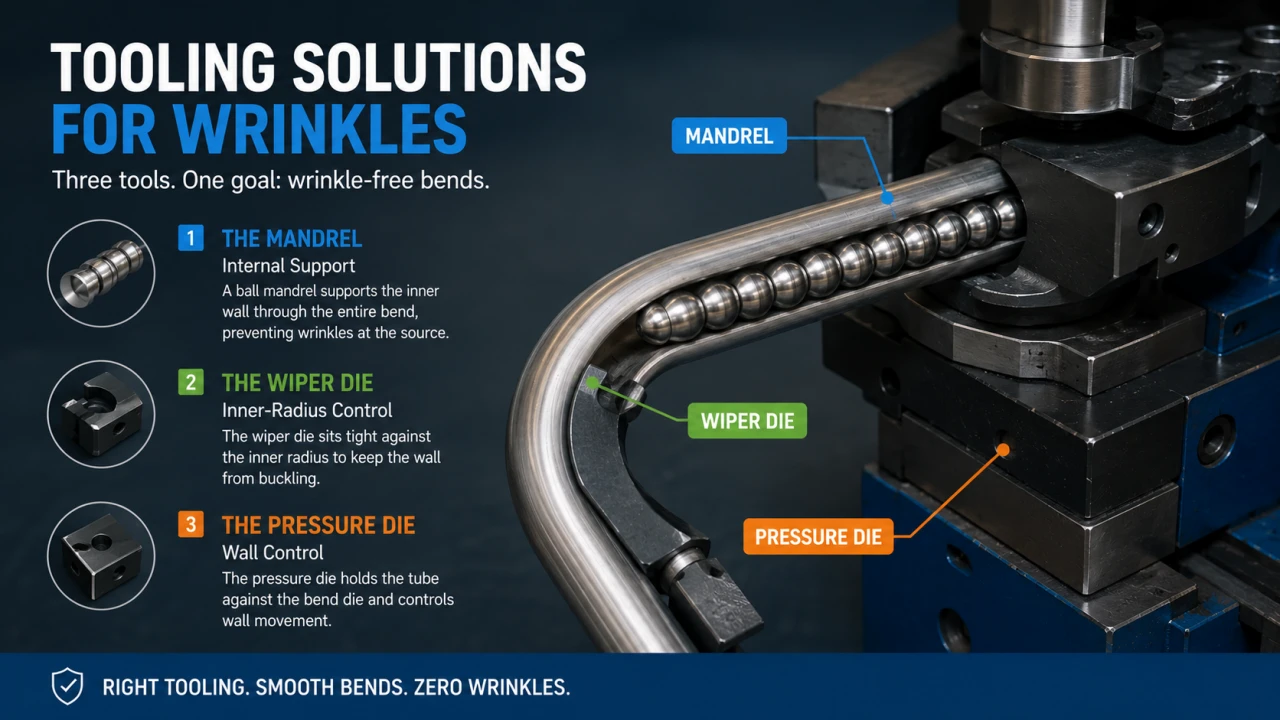
Tooling provides the support that stops wrinkles. A mandrel sits inside the tube and holds the inner wall in place. A wiper die sits against the inner radius and prevents buckling. A pressure die controls the tube wall. When this tooling is matched to your tube and set correctly, wrinkles disappear. When any part is missing, worn, or misaligned, wrinkles come back. This is why tooling is the heart of wrinkle prevention. Your tooling setup decides whether you get clean bends or scrap parts.
8 Causes of Tube Bending Wrinkles
Wrinkles almost always come from one of these eight causes. Check each one when you troubleshoot a wrinkle problem. This checklist is the fastest way to find the reason behind your tube bending wrinkles. Work through all eight, and you will find the culprit on almost every job.
Cause 1: No Mandrel or Wrong Mandrel
The inner wall needs internal support. Without a mandrel, thin-wall and tight-radius bends wrinkle. Even with a mandrel, the wrong type or size lets the wall buckle. Use the correct mandrel for your tube diameter and wall thickness. A properly fitted mandrel eliminates a large share of tube bending wrinkles at the source.
Cause 2: Wiper Die Clearance Too Large
The wiper die must sit close to the inner radius. If the clearance is too large, the wall has room to buckle. As a rule of thumb, keep the wiper die clearance as tight as practical without binding. A loose wiper die is a common hidden cause of wrinkles. You can often fix persistent tube bending wrinkles just by closing up this clearance.
Cause 3: Bend Radius Too Small
Tight radii concentrate compression on the inner wall. Below a minimum bend radius, wrinkles are almost certain. A minimum bend radius of 1.5D, where D is the tube diameter, is a practical lower limit. When your design goes below this, expect trouble unless the process is carefully managed. Your bend radius is often the first thing to check.
Cause 4: Bending Speed Too Fast
Fast bending gives the material less time to flow. The inner wall buckles instead of forming smoothly. Slowing the bend down often reduces wrinkles, especially for stainless steel and thin-wall tubes. Based on our machine specifications, larger tube diameters run at slower bending speeds for this exact reason. If your tube bending wrinkles appear suddenly, try slowing the bend.
Cause 5: Pressure Die Force Incorrect
The pressure die holds the tube against the bend die. Too little force lets the tube slip. Too much force deforms the wall. The correct force keeps the tube stable without crushing it. Pressure die adjustment is a frequent fix for wrinkle problems. Getting this force right removes a hidden cause of tube bending wrinkles.
Cause 6: Thin-Wall Tube Without Support
Thin-wall tubes cannot support themselves during compression. They need a mandrel and a properly set wiper die. Skipping either one on thin-wall material will produce wrinkles. Thin-wall tubes are the most common wrinkle cases in production. If your parts have a thin wall, plan for full internal support from the start.
Cause 7: Worn or Mismatched Mandrel Balls
Mandrel balls follow the bend curve and support the inner wall. When they wear, the gap grows and the support is lost. When the ball size does not match the tube, the same problem appears. Inspect mandrel balls regularly and replace them when they wear. Worn balls are a quiet cause of tube bending wrinkles that grows worse over time.
Cause 8: Material and Process Mismatch
Different materials behave differently. Stainless steel work-hardens and needs careful support. Carbon steel is more forgiving. Aluminum needs gentle handling. When the process does not match the material, wrinkles appear. This is covered in detail later in this guide. Your material choice sets the difficulty of wrinkle prevention.
Tooling Solutions for Wrinkles
Three tools work together to prevent tube bending wrinkles. Each one plays a specific role, and all three must be correct. When you get the tooling right, the wrinkles go away. Tooling is where most tube bending wrinkles are won or lost.
The Mandrel: Internal Support
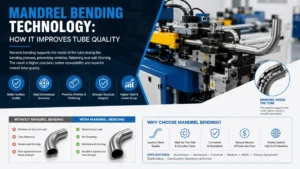
The mandrel is the primary defense against wrinkles. It sits inside the tube and holds the inner wall in place during the bend. For thin-wall and tight-radius work, a ball mandrel follows the bend curve and supports the wall through the entire arc. Machines with slow mandrel retraction control the support smoothly through the bend. This internal support is what separates a clean bend from a wrinkled one. It is the single most effective tool against tube bending wrinkles. For more on the common causes, read Tube Form Solutions’ 8 reasons for wrinkling.
The Wiper Die: Inner-Radius Control
The wiper die sits against the inner radius and prevents the wall from buckling. It works together with the mandrel to stabilize the compression zone. The clearance between the wiper die and the tube is critical. Too much clearance lets wrinkles form; too little causes binding. Tooling that is matched to your tube dimensions gives the correct clearance automatically. You want your wiper die to sit tight without fighting the tube.
The Pressure Die: Wall Control
The pressure die holds the tube against the bend die and controls wall movement. Correct pressure keeps the tube stable without crushing it. When the pressure die is set right, the tube follows the bend die smoothly. Tooling built to your product size ensures the pressure die, wiper die, and mandrel all work together. Suppliers who manufacture their own tooling can match every piece to your tube. Matched tooling is the difference between fighting wrinkles and preventing them. Our design and engineering service supports custom tooling.
Parameter Solutions: Radius, Speed, and Compensation
Tooling is only half the answer. Parameters decide how the process runs, and they are often the easiest thing to change. When tooling is correct but wrinkles persist, your parameters are the next place to look. Adjusting parameters is the fastest fix for many tube bending wrinkles.
Bend Radius: Keep It Above 1.5D
The bend radius drives compression on the inner wall. A larger radius reduces compression and wrinkle risk. As a practical minimum, keep the bend radius at or above 1.5D, where D is the tube diameter. Our machines achieve bend radii down to 1.5D, and this is the safe lower limit for most materials. If your design can use a larger radius, do it. A larger radius is the cheapest way to avoid tube bending wrinkles.
Bending Speed: Slower for Larger Tubes
Speed affects how the material flows during the bend. Slower speeds give the wall time to form without buckling. This is especially important for stainless steel and thin-wall tubes. Based on our machine specifications, larger tube diameters run at slower bending speeds. The pattern is clear: as tube size increases, bending speed decreases. Slower bends produce cleaner inner walls. When in doubt, slow the bend down and watch the wrinkles disappear.
Springback Compensation
Springback is a separate but related issue. After bending, the tube recovers elastically and the angle changes. Our machines include springback compensation programs that correct the final angle automatically. This keeps the angle accurate while the tooling and speed handle the wrinkles. You solve wrinkles with support and speed, and you solve springback with compensation. See The Fabricator’s guide to wiping out wrinkles for more.
Material Matters: Stainless vs. Carbon Steel
Material is one of the biggest factors in wrinkle prevention, and it is often overlooked. Based on our production experience, here is how the decision works. Your material choice changes the whole approach.
Stainless Steel Needs a Mandrel
Stainless steel work-hardens and resists bending. Its inner wall needs constant internal support. Based on our production experience, stainless steel generally requires a mandrel regardless of tube size. Skipping the mandrel on stainless steel is asking for wrinkles. This is a rule we follow on every stainless job. If you bend stainless, plan for a mandrel from the start.
Carbon Steel Depends on Requirements
Carbon steel is more forgiving than stainless. The decision to use a mandrel depends on the product requirements. When quality demands are high, use a mandrel. When quality demands are low, the bend radius is above about 2D, and the wall is relatively thick, bending without a mandrel can work. For example, a 20 mm tube with 2 mm wall, or a 50 mm tube with 5 mm wall, can often bend without a mandrel when requirements are modest. Your requirements decide whether carbon steel needs a mandrel.
Thin-Wall Tubes Always Need Support
Regardless of material, thin-wall tubes need a mandrel in all cases. The wall simply cannot support itself under compression. Thin-wall tubes are the most wrinkle-prone parts in production, and they get the full tooling treatment every time. If your tube has a thin wall, do not risk it. Use a mandrel.
Preventing Wrinkles with the Right Equipment
The right equipment makes wrinkle prevention automatic instead of manual. Here is what to look for. The right machine removes the guesswork from the whole process.
Mandrel-Equipped CNC Bending
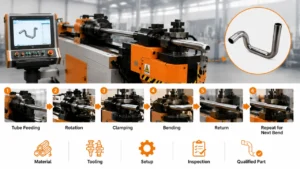
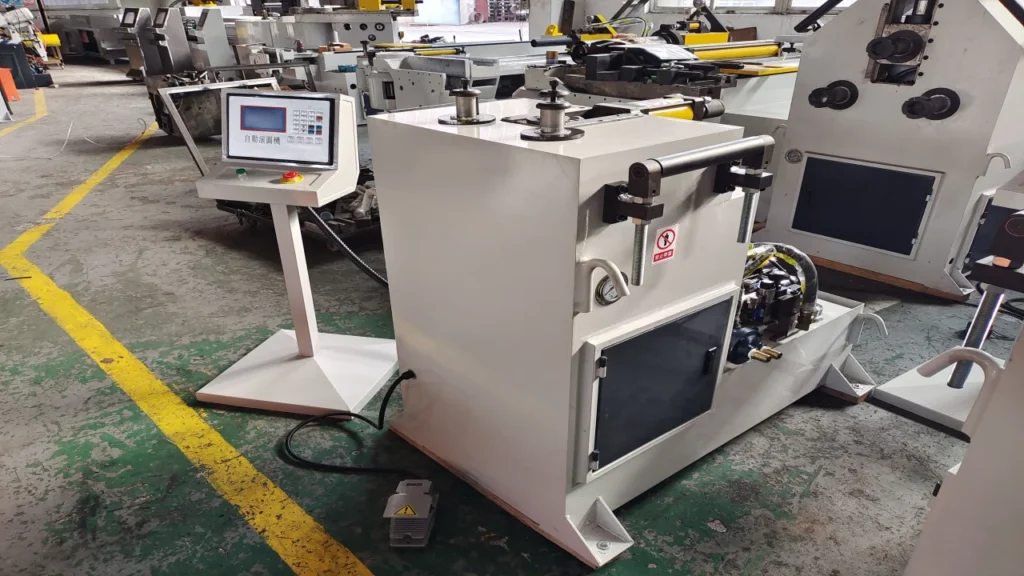
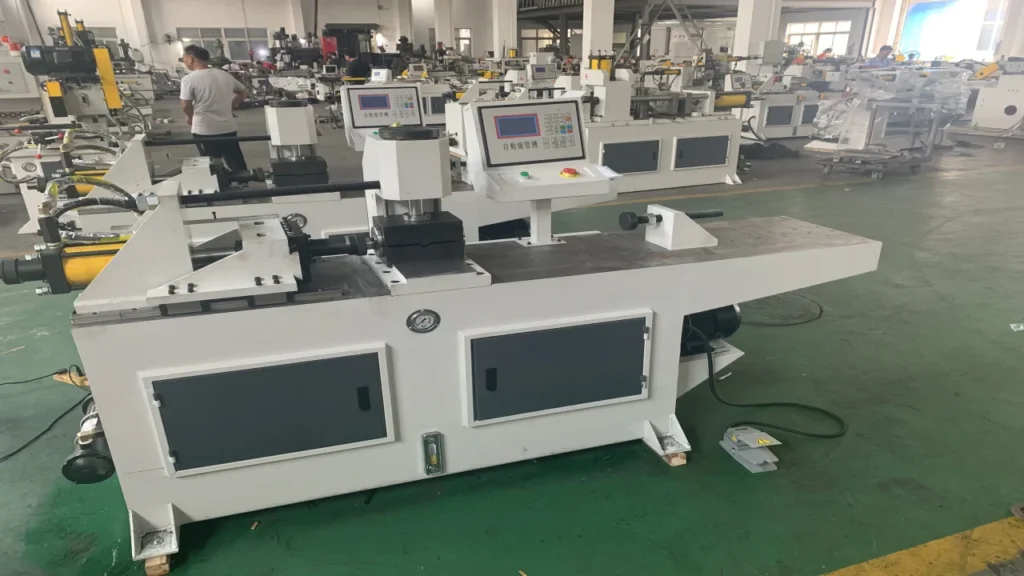
A CNC bending machine with mandrel as standard takes the guesswork out of wrinkle control. The mandrel supports the inner wall, the wiper die stabilizes the radius, and the pressure die controls the wall. Servo control holds the bend angle within ±0.1 degrees for repeatability. Features like slow mandrel retraction and springback compensation are built in. This is the reliable way to produce wrinkle-free parts batch after batch. If you bend tubes regularly, a mandrel-equipped CNC machine is the foundation. Explore the CNC pipe bending machine collection.
Verify with Samples Before Production
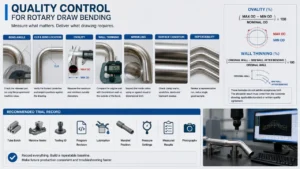
Wrinkles are easy to prevent but also easy to get wrong. Before committing to full production, verify with a sample bend using your own tube. Check the inner radius for wrinkles, measure the angle and wall thickness, and confirm the result meets your drawing. A supplier who confirms parameters, builds tooling, produces a sample, and only ships after acceptance protects your production from the start. A sample is your proof that the wrinkles are gone. Our sample service lets you verify your parts first.
Frequently Asked Questions About Tube Bending Wrinkles
Why does my tube wrinkle when bending?
Your tube wrinkles because the inner wall compresses during the bend and loses support. Without a mandrel or proper tooling, the inner wall buckles into wrinkles. Tight radii and thin walls make the problem worse. The fix is to add internal support and correct the tooling.
How do I prevent wrinkles in tube bending?
Prevent wrinkles by using the right tooling and parameters. Add a mandrel for internal support, set the wiper die clearance correctly, keep the bend radius above 1.5D, and slow the bend for large or thin-wall tubes. Verify with a sample before production.
What causes wrinkling on the inside of a bend?
Wrinkling on the inside of a bend comes from compression. The inner wall shortens during bending and buckles when it has no support. A wiper die and mandrel stabilize this zone and prevent the wrinkles.
How does a wiper die prevent wrinkling?
The wiper die sits against the inner radius and stops the wall from buckling during compression. It works with the mandrel to support the compression zone. The clearance between the wiper die and tube must be tight enough to prevent wrinkles without binding.
Why does tube wrinkle even with a mandrel?
A tube can still wrinkle with a mandrel if the setup is wrong. Common causes are a wiper die clearance that is too large, worn mandrel balls, incorrect pressure die force, or bending speed too fast. Check each of these when wrinkles persist.
Does bending speed affect wrinkling?
Yes, bending speed affects wrinkling. Faster bends give the material less time to flow, which increases buckling. Slower speeds reduce wrinkles, especially for stainless steel and thin-wall tubes. Larger tube diameters generally run at slower speeds for this reason.
When do I need a mandrel to prevent wrinkles?
Stainless steel generally needs a mandrel regardless of size. Thin-wall tubes need one in all cases. Carbon steel with high quality demands also needs a mandrel. When quality demands are low, the radius is above 2D, and the wall is thick, a mandrel may be optional. You can also review our general FAQ for more guidance.
Conclusion
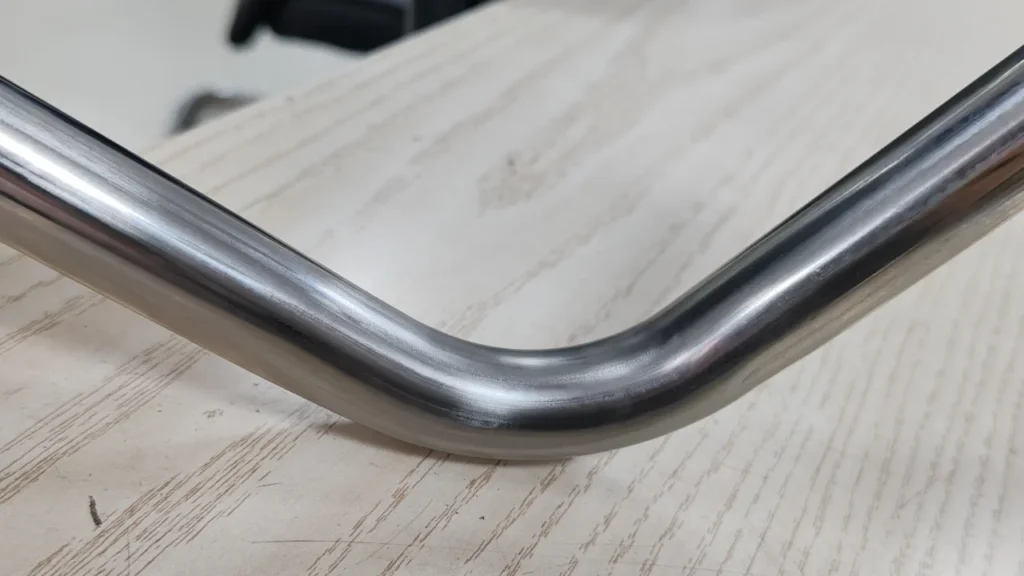
Tube bending wrinkles are preventable when you understand the causes. You now know why wrinkles happen, the eight common causes, and how to fix each one. You also know the tooling, parameters, and material rules that keep wrinkles away. Apply the checklist on your next wrinkle problem, and you will find the cause faster. Most wrinkles trace back to a missing mandrel, a loose wiper die, or a radius that is too tight. With these causes in hand, you can turn tube bending wrinkles from a mystery into a solvable problem.
At Zhangjiagang Zhuoran Machinery, we build CNC pipe bending machines with mandrel as standard. Our machines feature slow mandrel retraction, springback compensation, and bending accuracy around ±0.1 degrees. We manufacture our own mandrel, wiper die, and pressure die tooling, matched to your product dimensions. Our machines achieve bend radii down to 1.5D. We are built to ISO 9001 quality standards and CE compliance requirements, and our equipment is exported to more than 80 countries. Explore how our equipment serves different applications.
Ready to eliminate wrinkles on your parts? Send us your tube OD, wall thickness, bend radius, and material. Our engineers will recommend the right tooling and process for wrinkle-free bending. Whatever your tube bending wrinkles challenge, the solution starts with the right setup.