Tube bending technology has moved far beyond the manual machines of the past. If your production line still relies on older equipment, you may be losing precision, throughput, and profit. You have probably seen claims about CNC control, 3D simulation, and automation, but it is hard to know what matters for your shop.
This guide breaks down the latest tube bending technologies for industrial production. You will learn what each technology does, how it improves quality and efficiency, and how to choose the right level for your parts. By the end, you will have a clear roadmap for your next equipment decision.
What Is Tube Bending Technology Today?
Tube bending technology today is a combination of machine design, control software, and automation. It determines how accurately you bend tubes, how fast you produce parts, and how consistent the results are. In modern tube processing, technology separates a profitable line from one that scrapes by. When you evaluate new equipment, think of tube bending technology as the complete system, not just the machine frame. Every tube bending technology decision affects your production quality for years to come.
From Manual Bending to CNC Control
The industry has moved from manual dies to NC panels, then to CNC control with touchscreens and 3D simulation. Each step added precision and removed guesswork. Today, CNC tube bending technology lets operators store hundreds of programs, import 3D files, and simulate bends before cutting a single tube. This evolution means you can now produce complex parts that were impossible on older machines.
Why Modern Tube Bending Technology Matters
Modern technology directly affects production quality. It controls wall thinning, ovality, springback, and repeatability. It also shortens setup time and reduces operator dependence. For industrial manufacturing, these improvements translate into lower scrap rates, higher throughput, and more consistent parts. In short, the right tube bending technology pays for itself through better output and fewer rejected parts.
5 Latest Tube Bending Technologies for Industrial Production
Five technologies define the current state of tube bending. Each one solves a specific problem that older equipment cannot handle. As you read, compare each one against your own production challenges. Together, these five areas represent the full scope of modern tube bending technology.
CNC Multi-Axis Control and Multi-Layer Tooling
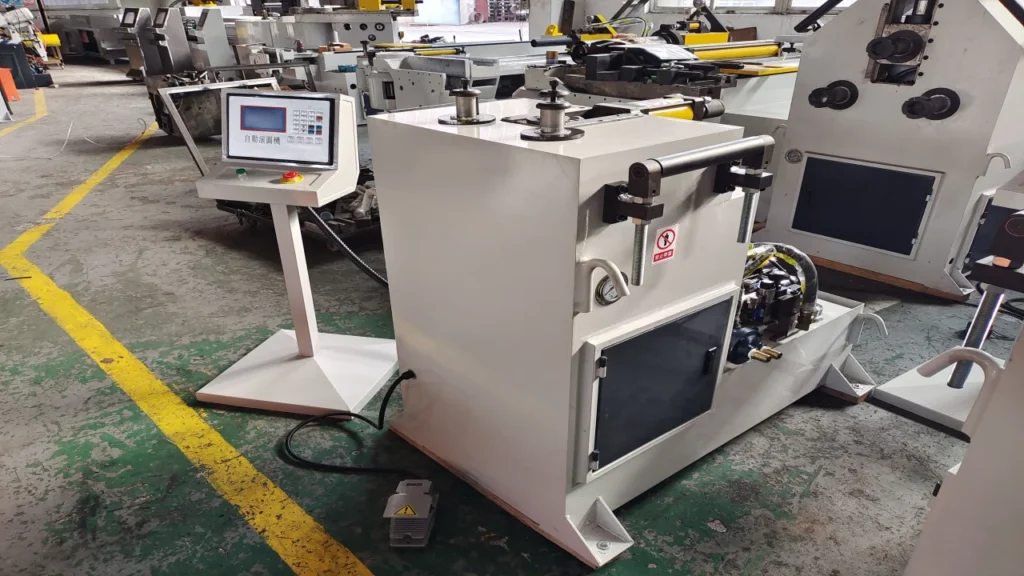
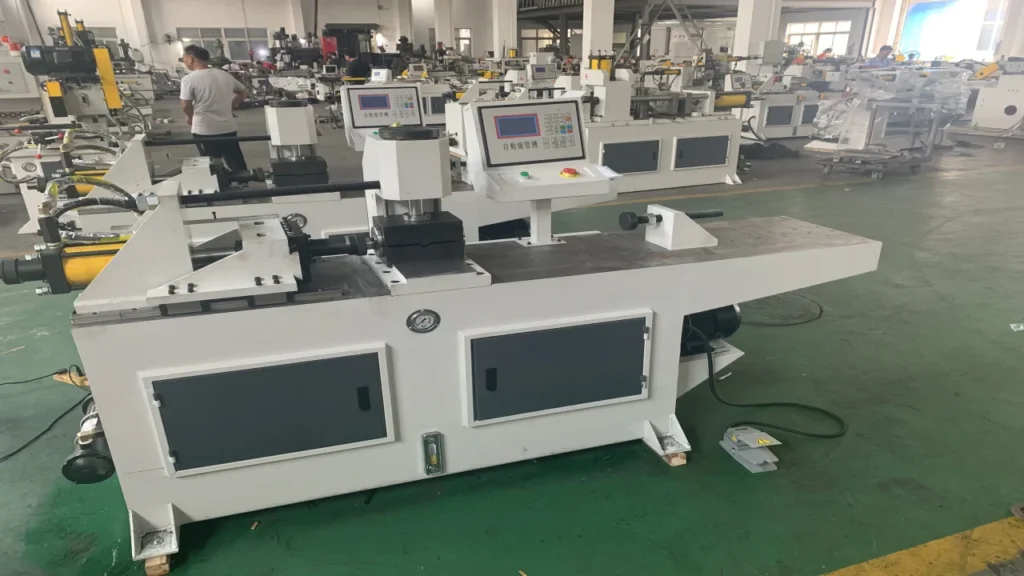
CNC multi-axis control is the backbone of modern tube bending. Machines range from 2-axis single-layer models to 6-axis multi-layer systems. More axes mean more control over feeding, rotation, and bending. Multi-layer tooling lets you switch bending radii without changing dies, so changeover time drops to nearly zero. This technology handles tube diameters from 5 mm to 168 mm, with wall thickness up to 12 mm and bend radii from 15 mm to 600 mm. It is the reason CNC machines dominate quality-critical production. If you produce multi-bend parts, this is the first technology you should examine. See the CNC pipe bending machine collection to compare configurations.
3D Simulation and Offline Programming
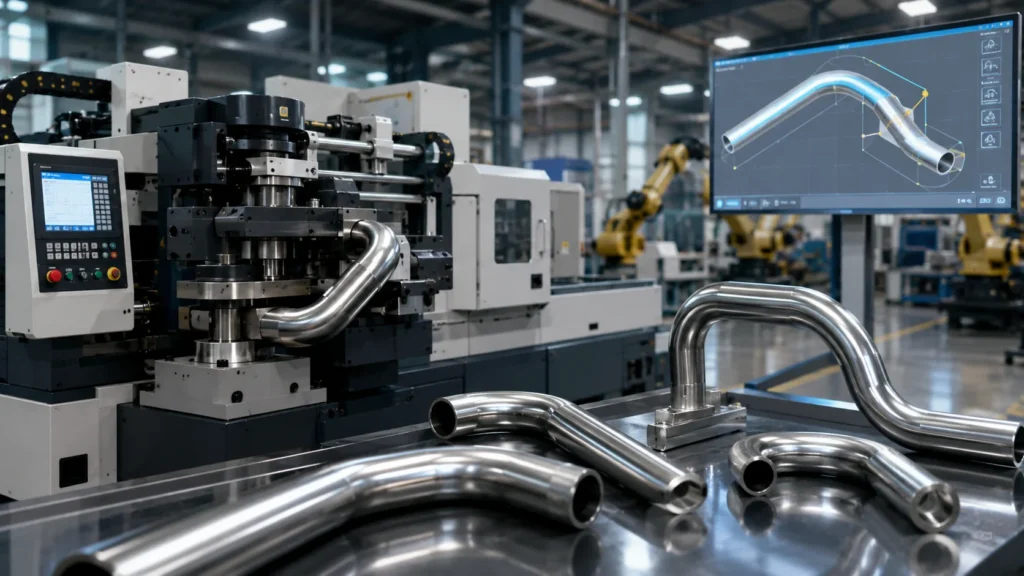
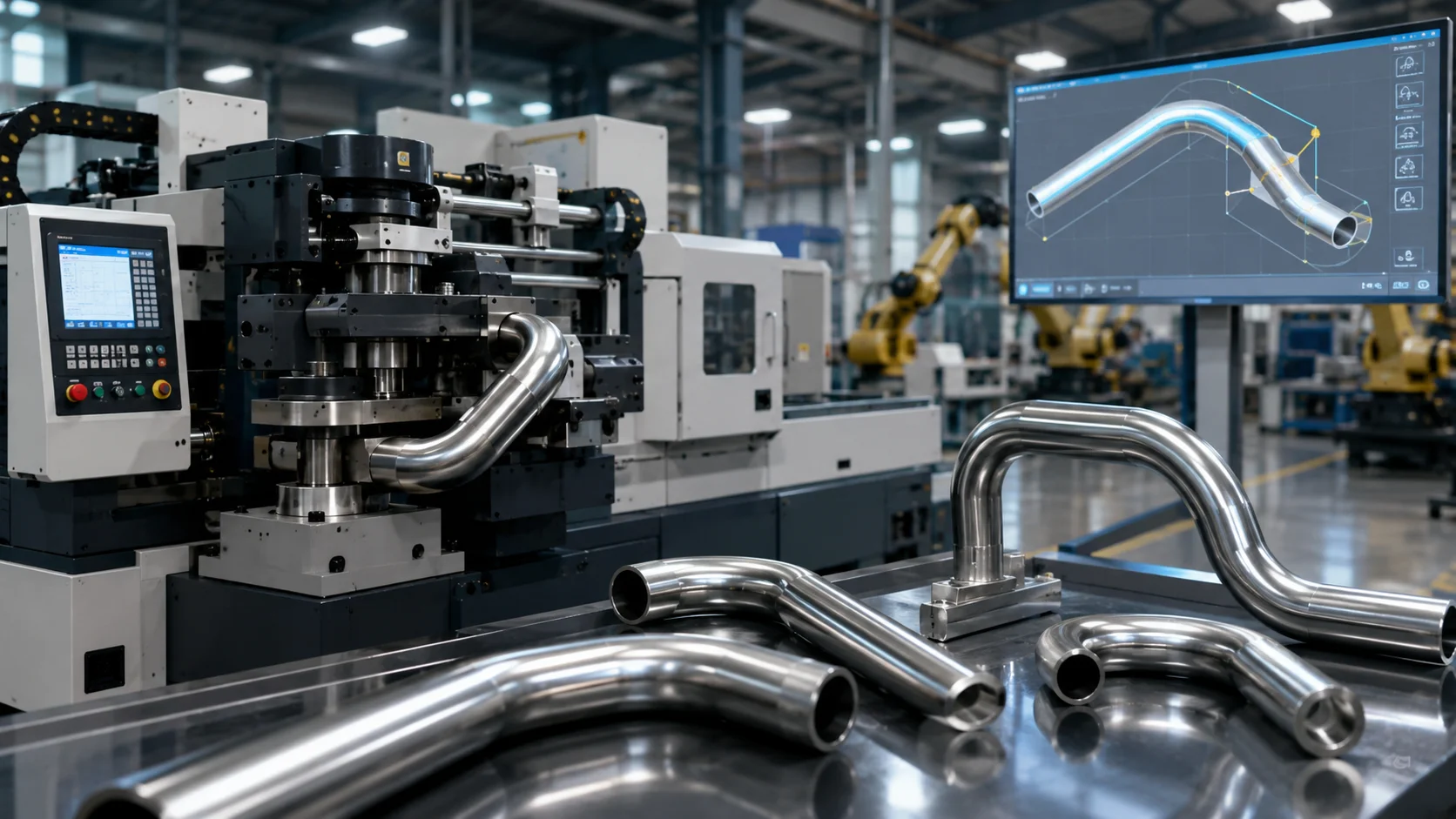
3D simulation removes the guesswork from setup. Operators import STEP files directly from CAD, and the machine converts the design into a bending program. A real-time 3D simulation shows the full bending sequence before any tube is cut. Automatic interference detection catches tooling and workpiece collisions in advance. This technology eliminates costly trial bends and shortens setup from days to minutes. For complex parts, offline programming is a game changer. You can verify your program on screen before you waste a single meter of tube.
Automation and Robotic Integration
Automation takes tube bending from a manual process to a continuous production step. Automatic tube bending production lines integrate loading, bending, and unloading into one workflow. Robots or automatic feeders move tubes in and out, so operators supervise instead of handle. This reduces labor dependence and keeps quality consistent across long runs. Automation suits mass production where volume justifies the investment. If your labor costs are rising, this technology deserves serious attention. You can explore it within the CNC pipe bending machine collection. For more on industry trends, read The Fabricator’s look at automated tube bending.
Fully Electric Bending Machines
Fully electric bending machines replace hydraulic drives with servo motors on all axes. They deliver precise, repeatable bending with lower energy consumption and no hydraulic oil. Electric machines excel at complex 3D bends and clean, quiet operation. The 6-axis fully electric systems represent the premium end of this technology. They suit demanding geometry and high automation potential. For shops chasing maximum precision, fully electric bending is the direction the industry is moving. You will also appreciate the lower maintenance costs over the life of the machine.
Intelligent Control Systems
Intelligent control systems are the brain of the modern bending machine. A CNC PLC with a 15-inch industrial touchscreen guides operators step by step. The system stores 500 programs with up to 30 bends each, so repeat orders recall instantly. XYZ and YBC coordinates convert automatically, and multi-language interfaces support global teams. Remote program editing lets supervisors adjust production parameters without stopping the machine. These features reduce training time, programming errors, and downtime. For a growing shop, an easy-to-use control system is as valuable as the bending axis itself. See TEC’s roundup of tube bending innovations for more context.
How Modern Technology Improves Production Quality and Efficiency
Technology earns its keep through measurable results. Here is what modern tube bending equipment typically delivers in production. These numbers give you a benchmark for your own upgrade business case. When you evaluate suppliers, ask how their tube bending technology performs on these metrics.
Cutting Scrap and Rework
Precision control directly attacks scrap. Simulation prevents trial bends, servo accuracy holds tolerances, and interference detection avoids collisions. Manufacturers typically report scrap rate reductions between 24% and 45% after upgrading to modern CNC bending technology. Those are typical improvements reported by manufacturers, and your results depend on your parts and process. Even the lower end of that range can save a significant amount of material each month.
Boosting Throughput and Efficiency
Automation and faster setup shorten cycle times. Multi-layer tooling removes die-change downtime, and program recall eliminates re-programming. Manufacturers typically report productivity gains of more than 40% with modern equipment. Faster setup and higher uptime mean more good parts per shift. When you calculate the value of those extra parts, the investment case becomes much clearer.
Consistency Across Batches
Servo-controlled feeding and rotation hold tight tolerances part after part. CNC bending machines achieve bending accuracy around ±0.1 degrees, so every batch matches the first one. Consistency reduces inspection time, rework, and customer complaints. For industrial manufacturing, repeatability is the quiet benefit that pays off every day. Your customers will notice the difference in fit and finish.
CNC vs NC vs Automatic: Which Level of Automation?
Not every shop needs full automation. The right level depends on your parts, batch sizes, and budget. Here is a practical comparison of the three levels. Use it as a starting point for your own evaluation.
| Comparison Item | NC Semi-Automatic | CNC Pipe Bending Machine | Automatic Production Line |
|---|---|---|---|
| Control Method | Manual NC panel input | PLC + touchscreen programming | Fully integrated PLC + robotic/auto-feed |
| Automation Level | Low, operator-assisted | Medium-High, automated cycle | Highest, feeding to unloading automated |
| Programming | Simple angle & speed input | 500 programs, STEP import, 3D simulation | Integrated line programming, MES compatible |
| Bending Accuracy | Good, operator dependent | High, servo-controlled repeatability | Highest, consistent across run |
| Setup Time | Short | Medium | Longer initial, minimal per-batch |
| Die Change | Manual | Manual or multi-layer auto-switch | Automated or semi-automated |
| Batch Size | Small to medium | Medium to large | Large to mass production |
| Product Complexity | Simple single-plane bends | Complex multi-plane, multi-radius | Standardized complex parts at volume |
| Capital Cost | Lowest | Medium | Highest |
NC machines suit small workshops with varied jobs. CNC machines balance precision, flexibility, and cost for most production shops. Automatic lines pay off when volume justifies the investment. Your part complexity and batch size should drive the decision. Start with your drawings, and the right level will become obvious. Review the NC pipe bending machine collection for semi-automatic options.
Electric vs Hydraulic Drive: Understanding the Options
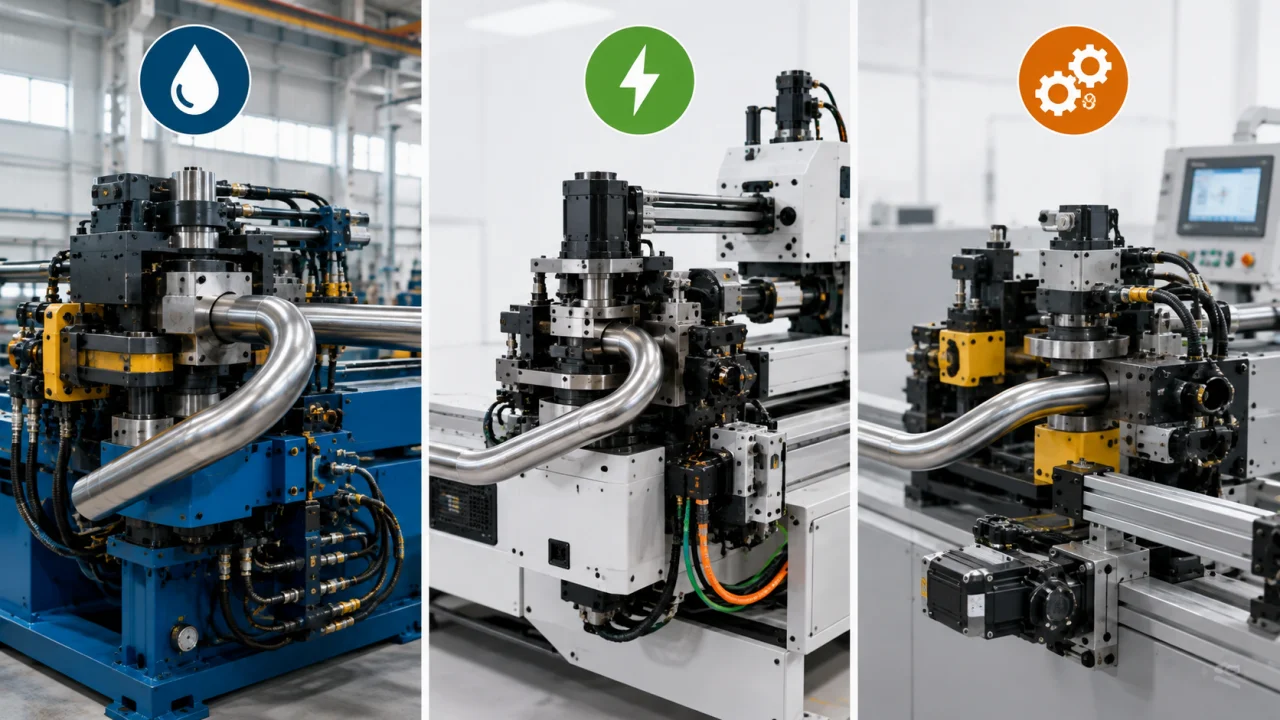
Drive technology shapes machine performance, energy use, and capability. Three approaches dominate the market. Each one has a place, and your tube size points you to the right one.
Hydraulic Drive
Hydraulic systems deliver high bending force, which makes them ideal for large-diameter, thick-wall pipes. A hydraulic drive can bend tubes that servo motors cannot move directly. The trade-off is higher energy consumption and more maintenance. Hydraulic machines remain the standard for heavy pipe work. If you bend large thick-wall tubes every day, this is a proven route.
Fully Electric Drive
Fully electric machines use servo motors on every axis. They offer precise positioning, lower energy use, and no hydraulic oil to manage. Electric drives excel at complex 3D bends and clean production environments. The main limit is bending force for very large tubes. For precision work, electric drive is the premium choice. You get cleaner operation and lower running costs over time.
Hybrid: Servo Feed with Hydraulic Bending
A hybrid design combines the strengths of both systems. Servo motors control feeding and tube rotation for precision, while hydraulics deliver bending force for thick walls. This approach suits medium to large pipes where accuracy and power both matter. For example, machines in the 75 mm to 130 mm range use servo feeding with hydraulic bending, achieving accuracy around ±0.1 degrees on rotation and feeding. It is a practical engineering answer to the force-versus-precision trade-off. If your parts sit in that range, a hybrid machine may be your best fit.
How to Choose the Right Tube Bending Technology
Choose the technology that matches your parts, not the most impressive spec sheet. Work through your requirements step by step. The decision becomes manageable once you break it into clear questions.
Match the Technology to Your Part Complexity
Part complexity is the first filter. Single-plane bends with one radius suit a 2-axis machine. Spatial multi-plane bending in automotive exhaust or HVAC systems needs 3 axes. Parts with multiple radii benefit from 4-axis or 5-axis machines with multi-layer tooling. The most complex 3D geometry demands 6-axis control. Define your drawings, and the axis count becomes clear. Your bending radius and wall thickness also narrow the machine options.
Consider Batch Size and Changeover Needs
Batch size decides whether automation pays off. Small, varied jobs suit NC machines. Medium and large batches justify CNC. Mass production calls for an automatic line. Changeover frequency matters too. If you switch radii often, multi-layer tooling eliminates die changes and keeps the line running. Think about your mix of products, not just your biggest order.
A Practical Selection Checklist
Use this checklist when you evaluate equipment:
- Map your part complexity and bend sequence.
- Confirm tube diameter, wall thickness, and bend radius.
- Define accuracy and surface finish requirements.
- Estimate batch size and changeover frequency.
- Compare automation levels against your labor situation.
- Match the drive type to your tube size and energy goals.
This sequence points you to the right technology level. When you are unsure, share your drawings with a supplier and let engineers recommend a configuration. A good supplier will ask about your material and production quality requirements before quoting.
Frequently Asked Questions About Tube Bending Technology
What is tube bending technology?
Tube bending technology combines machine design, control software, and automation to shape metal tubes accurately and efficiently. Modern systems include CNC control, 3D simulation, multi-axis configurations, and automation. These technologies improve precision, reduce scrap, and increase production consistency.
What is CNC tube bending?
CNC tube bending uses computer numerical control to automate the bending process. The machine follows programmed sequences for feeding, rotation, and bending. Operators can store hundreds of programs, import 3D files, and simulate bends before production. This delivers high repeatability and complex geometry control.
What are the latest tube bending technologies?
The latest tube bending technologies include CNC multi-axis control, 3D simulation and offline programming, automation and robotic integration, fully electric bending machines, and intelligent control systems. These five areas define the current state of the industry.
How does 3D simulation improve tube bending?
3D simulation lets you preview the full bending sequence before cutting any tube. Operators import STEP files from CAD, and the system converts them into programs. Automatic interference detection catches collisions in advance. This eliminates trial bends and shortens setup time.
What is the difference between electric and hydraulic tube bending?
Hydraulic bending delivers high force for large thick-wall pipes but uses more energy. Electric bending uses servo motors for precision and efficiency, ideal for complex 3D bends. Hybrid machines combine servo feeding with hydraulic bending for medium to large pipes. Your tube size decides the best fit.
How has tube bending technology improved production quality?
Modern tube bending technology reduces scrap and improves consistency. Manufacturers typically report scrap rate reductions between 24% and 45% and productivity gains of more than 40% after upgrading. Precision control, simulation, and automation drive these improvements.
How do I choose the right tube bending machine?
Match the machine to your part complexity, batch size, and budget. Simple parts suit 2-axis machines, while complex 3D geometry needs 6-axis control. Small batches fit NC machines, medium and large batches suit CNC, and mass production justifies automation. You can also review our general FAQ for more guidance.
Conclusion
Tube bending technology is evolving fast, and the choices can feel overwhelming. You now know the five key technologies: CNC multi-axis control, 3D simulation, automation, fully electric drives, and intelligent control systems. You also know the measurable benefits, including scrap reduction and productivity gains. Match the technology to your part complexity, batch size, and production goals, and you will invest in the right direction. Keep this guide handy when you compare quotes from different suppliers.
At Zhangjiagang Zhuoran Machinery, we build CNC pipe bending machines from 2-axis to 6-axis, with single to multi-layer tooling. Our machines handle tube diameters from 5 mm to 168 mm, wall thickness up to 12 mm, and bend radii from 15 mm to 600 mm. They feature 15-inch touchscreen control, 3D simulation, STEP file import, automatic interference detection, and 500-program storage. Our fully electric 6-axis series represents the premium end of bending technology. We manufacture our own tooling, and our machines are built to ISO 9001 quality standards and CE compliance requirements. Our equipment is exported to more than 80 countries. Explore how our equipment serves different applications.
Ready to upgrade your tube bending technology? Send us your tube OD, wall thickness, bend radius, material, and drawings. Our engineers will recommend the right machine configuration for your production needs. Whatever your tube processing challenge, the right technology is within reach.