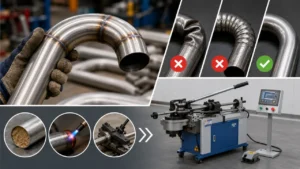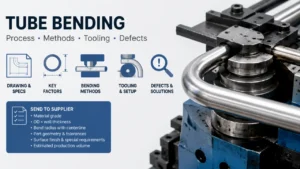
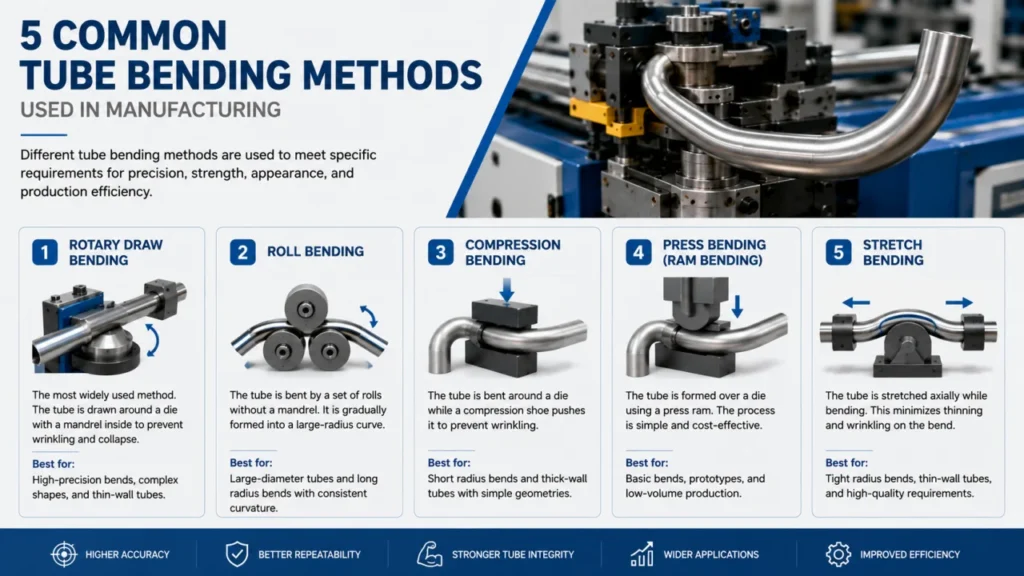
Choosing the wrong tube bending method hurts your production quality and your budget. You may have seen wrinkled inner walls, oval cross-sections, or cracked tubes that failed inspection. Every tube bending method has limits, and knowing them saves you scrap and rework. This guide walks you through the five common tube bending methods used in manufacturing. You will learn how each tube bending method works, where it shines, and how to pick the right one for your tube processing needs.
Why Tube Bending Method Selection Matters
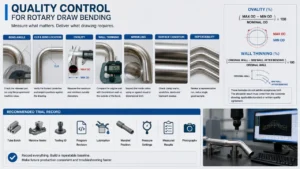
Your choice of tube bending method shapes every part that leaves your line. Method selection affects ovality, wall thinning, surface finish, and repeatability. In industrial manufacturing, these factors decide whether your parts pass inspection or end up in the scrap bin. A well-matched tube bending method keeps production quality high without driving up cost. Before we compare methods, it helps to see why the choice carries so much weight.
How the Right Method Protects Production Quality
Each tube bending method controls the tube wall differently during the bend. Some tube bending methods support the inner wall well. Others leave it to compress on its own. When the wall has no support, wrinkles and flattening appear. The right method matches your tube’s material and geometry, so quality stays consistent from the first part to the last. In metal tube processing, consistency is what customers notice first. That is why the choice between tube bending methods deserves careful thought.
The Three Inputs That Decide Your Method
Three inputs drive every method decision: bending radius, wall thickness, and material. A tight radius asks more from the process. A thin wall needs internal support. Soft materials bend easily, while hard alloys resist. Start with these three numbers, and the method choice becomes much clearer. Bending radius alone eliminates several methods before you even look at a machine. Wall thickness and material then separate the remaining tube bending methods from each other.
The 5 Common Tube Bending Methods
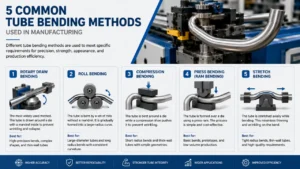
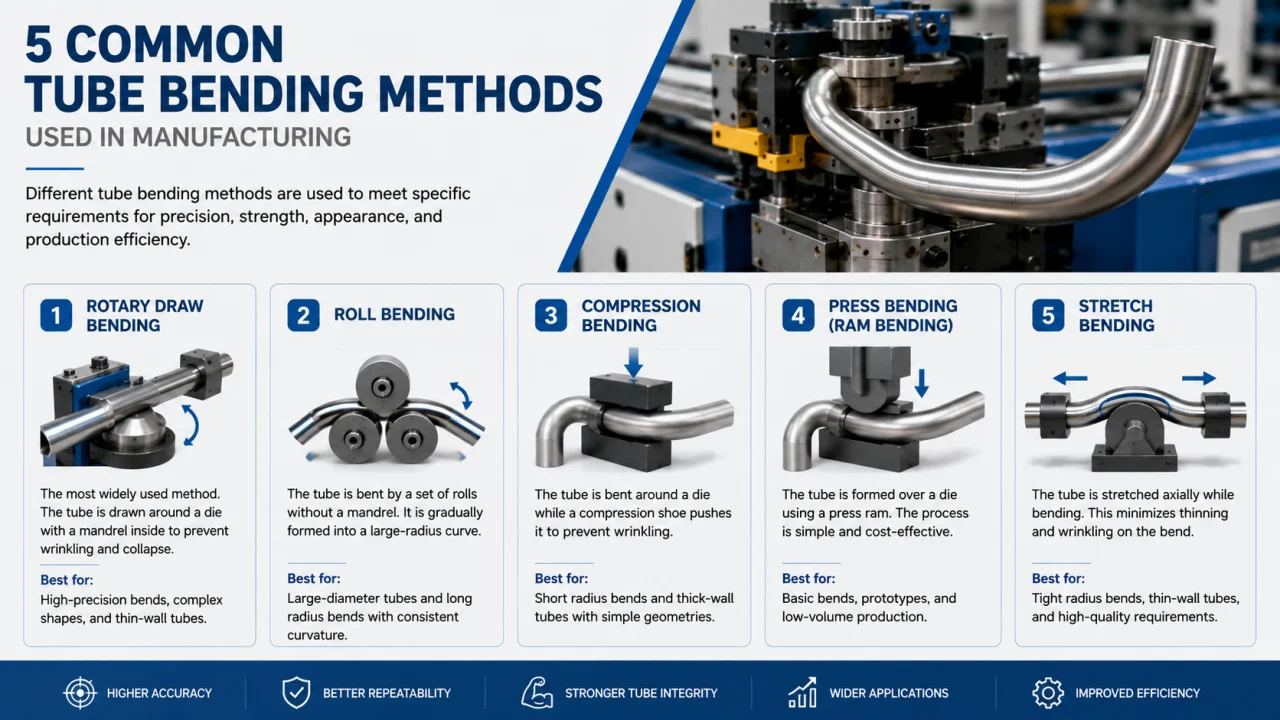
Five methods cover the vast majority of tube bending work in manufacturing. Each tube bending method has a different principle, cost profile, and quality ceiling. Here is a closer look at each common tube bending method, starting with the simplest.
Press Bending
Press bending is the simplest tube bending method. A hydraulic or pneumatic ram pushes the tube against a fixed die. The tube bends around the die without any internal support. Setup is fast and the tooling is inexpensive. However, the inner wall can wrinkle and the cross-section can flatten. Press bending suits simple parts with generous radii, where minor distortion is acceptable. It is a good entry-level choice among tube bending methods for low-cost production.
Rotary Draw Bending
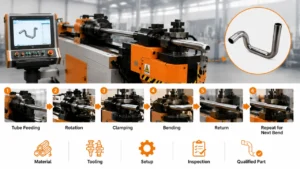
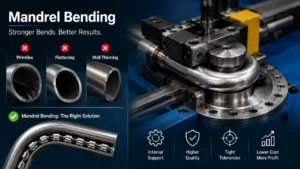
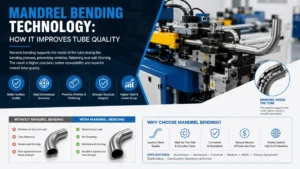
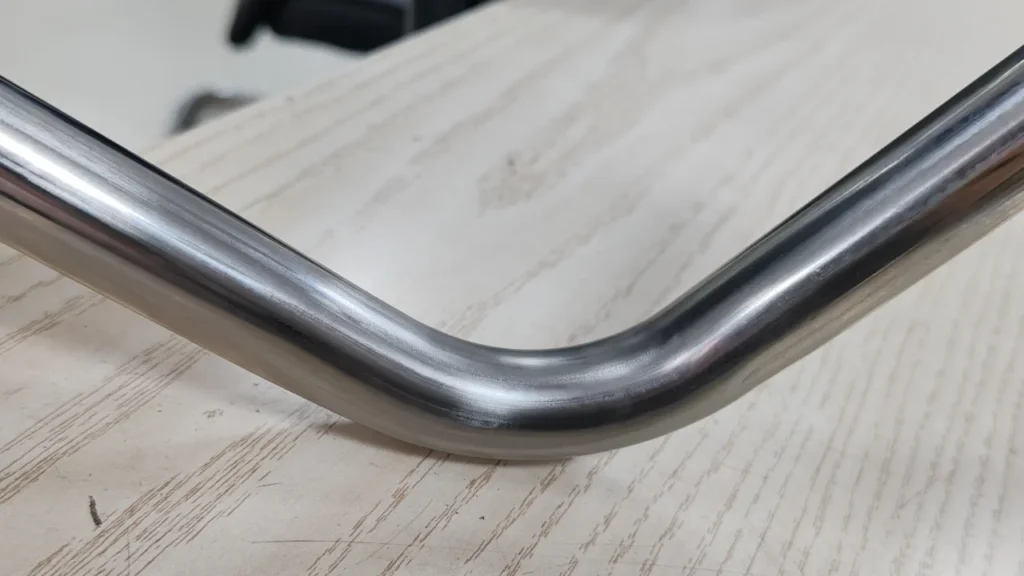
Rotary draw bending is the most widely used method for quality-critical parts. A clamp holds the tube against a rotating bend die. As the die turns, the tube is drawn around it, following the die groove precisely. This method controls wall movement far better than press bending. You can achieve tight radii with clean inner walls and round cross-sections. For thin-wall tubes, a mandrel is inserted inside the tube to support the wall during the bend. The mandrel, together with a wiper die and pressure die, prevents wrinkling and collapse. With CNC control, positioning is precise and repeatable. Tube bending machines of this type hold tolerances around ±0.1 mm, which makes them the standard for automotive and aerospace work. For many shops, rotary draw bending is the primary tube bending method on the floor, and it anchors most high-precision tube bending methods used today. See the CNC pipe bending machine collection to compare configurations.
Compression Bending
Compression bending forms the tube with a moving pressure die that pushes along the tube surface. The tube is held at one end, and the die compresses it around a fixed bend die. This method is faster than rotary draw bending for simple bends. However, the inner wall tends to wrinkle because it receives no support. Compression bending works well for large-radius bends on medium-wall tubes, where appearance is less critical. It is a practical tube bending method when speed matters more than surface finish.
Roll Bending
Roll bending uses three rollers to form large-radius curves and arcs. The tube passes between the rollers, and each pass increases the bend angle. You can produce circular rings, spiral shapes, and long sweeping curves. Roll bending is ideal for handrails, structural frames, and large-diameter tube work. Precision depends on roller control, and the process suits round, square, and rectangular tube profiles. As a tube bending method, it fills a niche that draw-based methods cannot reach. Browse the tube rolling machine collection for roll bending equipment.
Heat Induction Bending
Heat induction bending uses an induction coil to heat a narrow band of the tube before bending. The heated zone becomes plastic, and the machine bends the tube smoothly around a die. This method handles large-diameter, thick-wall pipes that cold bending cannot manage. Induction bending leaves minimal ovality and wall thinning. Equipment cost is high, so it is reserved for heavy industrial applications such as pipelines and structural steel. Among the five tube bending methods, it has the highest entry cost.
Tube Bending Methods Compared: A Five-Way Overview
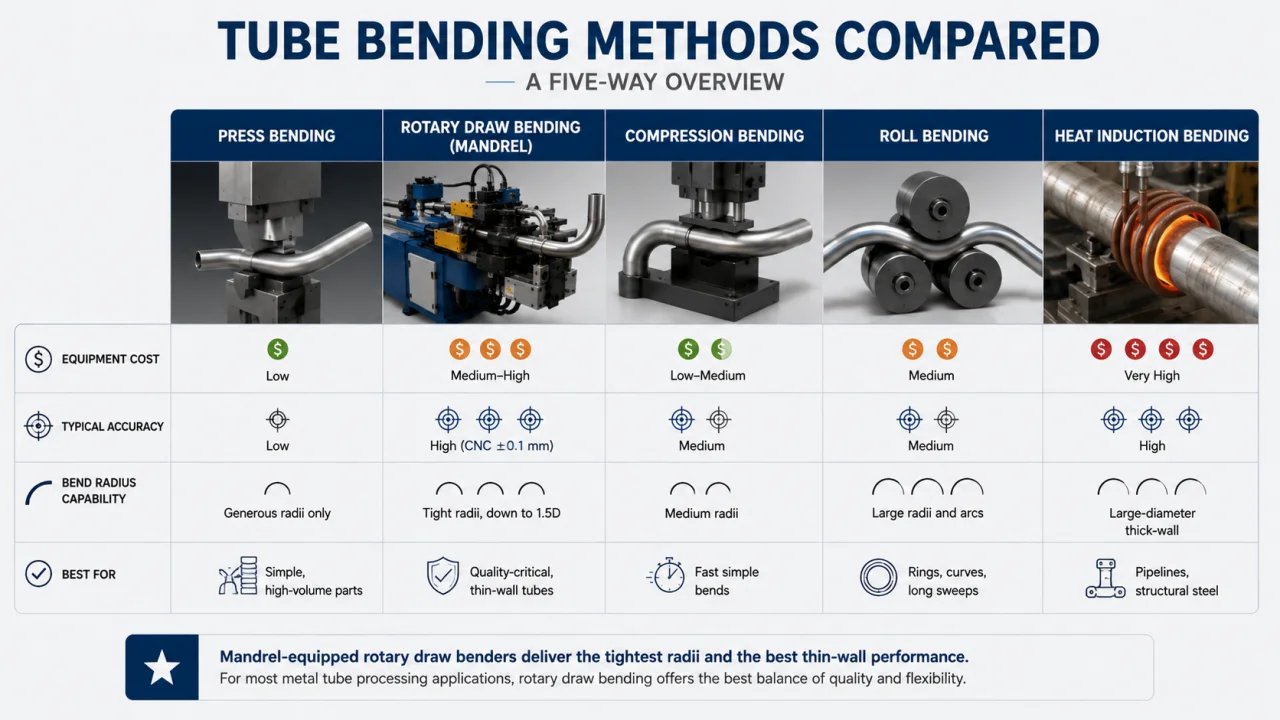
Here is a practical comparison of the five common tube bending methods. The table uses relative levels instead of exact figures, because real numbers depend on your specific tube size and material.
| Method | Equipment Cost | Typical Accuracy | Bend Radius Capability | Best For |
|---|---|---|---|---|
| Press Bending | Low | Low | Generous radii only | Simple, high-volume parts |
| Rotary Draw Bending | Medium–High | High (CNC ±0.1 mm) | Tight radii, down to 1.5D | Quality-critical, thin-wall tubes |
| Compression Bending | Low–Medium | Medium | Medium radii | Fast simple bends |
| Roll Bending | Medium | Medium | Large radii and arcs | Rings, curves, long sweeps |
| Heat Induction Bending | Very High | High | Large-diameter thick-wall | Pipelines, structural steel |
Note that a mandrel-equipped rotary draw bender delivers the tightest radii and the best thin-wall performance. For most metal tube processing applications, rotary draw bending offers the best balance of quality and flexibility. This tube bending method comparison is a useful starting point for any new project. Keep it next to your drawing board when you compare tube bending methods for a new part. For a deeper look at bending fundamentals, read The Fabricator’s guide to essential modes of tube bending.
How to Choose the Right Tube Bending Method
Pick the method that fits your part, not the one that sounds impressive. Work through your own requirements step by step. The right tube bending method for your shop depends on three things you already know about your parts. Most engineers shortlist two or three tube bending methods before they look at any machinery.
Start With Bending Radius and Wall Thickness
Bending radius and wall thickness narrow the field quickly. If your bend radius is large relative to the tube diameter, press or roll bending may be enough. If the radius is tight, you need a draw-based method. A good benchmark is a minimum bend radius of 1.5D, where D is the tube outside diameter. When your part approaches that limit, rotary draw bending with a mandrel is the reliable route. Thin-wall tubes also demand internal support, which points to the same method. Bending radius is often the first filter in any method selection.
Match the Method to Your Material
Material behavior decides what the process must handle. Stainless steel work-hardens and resists bending. Aluminum is soft and can crack at tight radii. Copper and brass bend easily but mark easily. Hard alloys and thick walls may require heat induction bending. Ask yourself how your material responds to compression and stretching. That answer eliminates several methods immediately. Material choice and method choice go hand in hand in industrial manufacturing. See Unison’s overview of bending types for more on process differences.
A Practical Selection Guide
Follow this five-step guide when you evaluate a new part:
- Measure the bend radius and tube diameter.
- Check the wall thickness against the diameter.
- Confirm the material grade and its ductility.
- Estimate batch size and accuracy requirements.
- Match those needs to the method table above.
This simple sequence removes guesswork. You will see that most quality-critical parts settle on rotary draw bending, while simple parts can use press or roll bending. Keep this tube bending methods guide handy for your next project review. It works for any tube processing shop, whatever your batch size.
From Method to Machine: What to Look For
Once you know the method, the machine selection becomes the next step. The machine must deliver the accuracy and consistency your parts require. The right equipment turns a good tube bending method into reliable daily output. Different tube bending methods need different machines, so match the equipment to the process.
CNC vs. NC Bending Machines
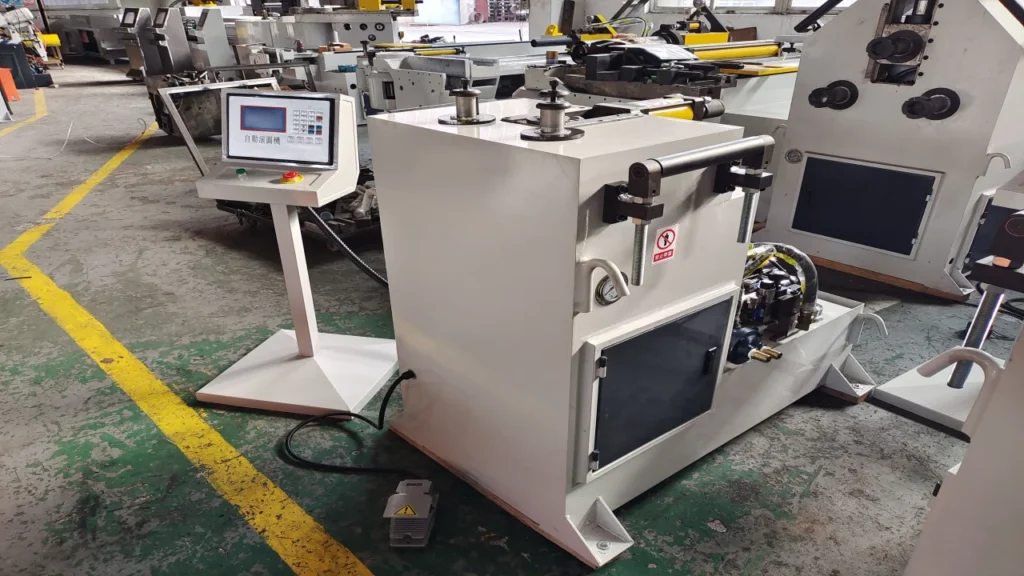
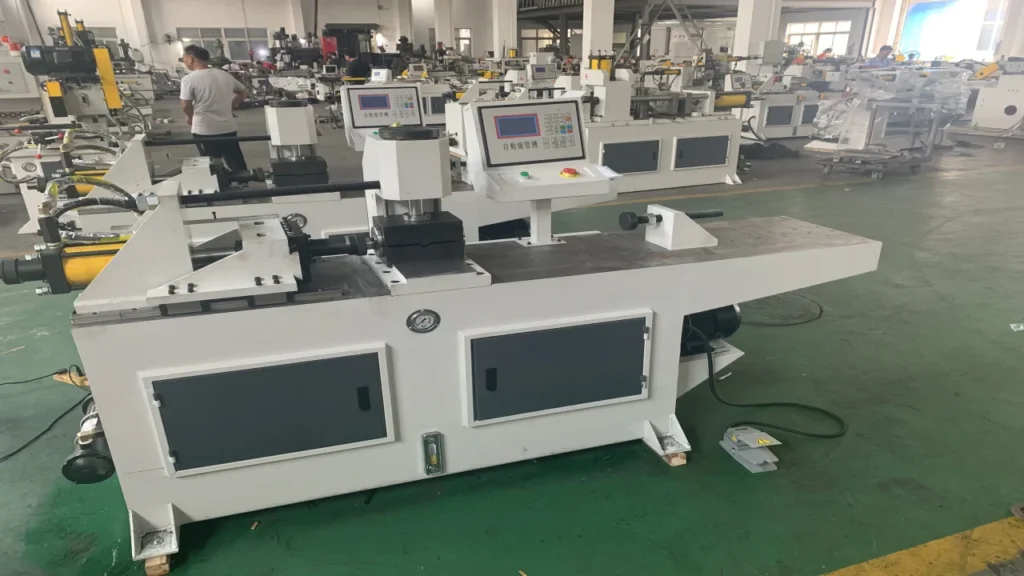
CNC machines give you the highest repeatability. They store hundreds of programs and reproduce bend sequences exactly. Positioning accuracy is around ±0.1 mm. NC machines offer reliable semi-automatic operation at a lower cost, with accuracy around ±0.5 mm. Review the NC pipe bending machine collection for semi-automatic options. For complex parts or long production runs, a CNC rotary draw bender pays off through consistent quality and faster setup. You can compare configurations in the DW18CNC / DW38CNC / DW50CNC series.
Tooling: The Hidden Half of Bend Quality
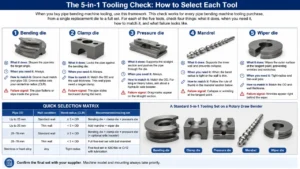
Tooling determines more of the final quality than many buyers expect. The bend die, clamp die, pressure die, wiper die, and mandrel all work together. If tooling is matched to the tube, the bend comes out clean. If not, even a good machine produces bad parts. Mandrel tooling matters most for thin-wall and tight-radius work. In-house tooling production shortens lead times and keeps the whole system consistent. A complete tooling package from one supplier simplifies maintenance and spare parts. Good tooling is the difference between a capable machine and a profitable one.
Verify Quality Before You Buy
Never commit to a machine on specifications alone. A serious supplier confirms your parameters, builds the tooling, and produces a sample for acceptance before shipping. Confirm your parameters. Build the tooling. Produce a sample. Accept it. Then ship. This process removes most of the risk from a bending machine purchase. Ask your supplier to demonstrate the machine with your own tube before you pay. A sample-based approach protects your production quality from day one. Our sample service lets you test your parts before purchase.
Frequently Asked Questions About Tube Bending Methods
What are the different tube bending methods?
The five common tube bending methods are press bending, rotary draw bending, compression bending, roll bending, and heat induction bending. Rotary draw bending is the most widely used of all tube bending methods for quality-critical parts, while press and roll bending suit simpler applications.
Which tube bending method is best for thin-wall tubes?
Rotary draw bending with a mandrel is the best method for thin-wall tubes. The mandrel supports the inner wall during the bend and prevents wrinkling and collapse. This method delivers clean, round cross-sections even at tight radii.
What is the difference between press bending and rotary draw bending?
Press bending pushes a tube against a fixed die with a ram. It is simple and cheap but allows wrinkling. Rotary draw bending clamps the tube to a rotating die and draws it around the die. It controls the wall better and achieves tighter, cleaner bends.
What is the minimum bend radius for a tube?
The practical minimum bend radius is often about 1.5 times the tube outside diameter, written as 1.5D. Below this ratio, wrinkling and wall thinning increase quickly. A mandrel-supported rotary draw bender is the right tool when you work near this limit.
What is roll bending used for?
Roll bending forms large-radius curves, arcs, rings, and spiral shapes. It passes the tube through three rollers and increases the bend angle with each pass. Handrails, structural frames, and large-diameter tube work are typical applications.
What is heat induction bending?
Heat induction bending heats a narrow band of the tube with an induction coil, then bends the plastic zone around a die. It handles large-diameter, thick-wall pipes with minimal ovality. Equipment cost is high, so it suits pipelines and heavy structural work.
How do I choose a tube bending method?
Check your bend radius, wall thickness, and material first. Tight radii and thin walls point to rotary draw bending with a mandrel. Large radii suit roll bending. Simple parts with generous radii can use press bending. Estimate your batch size and accuracy needs before you decide. You can also review our general FAQ for more guidance.
Conclusion
Tube bending method selection is a quality decision, not a cost shortcut. You now know the five common tube bending methods: press, rotary draw, compression, roll, and heat induction. You also know the key benchmarks, including the 1.5D minimum radius and the accuracy difference between CNC and NC machines. Match the method to your bending radius, wall thickness, and material, and your parts will pass inspection more often. When you compare tube bending methods side by side, the best fit for your parts usually becomes obvious.
At Zhangjiagang Zhuoran Machinery, we build CNC and NC tube bending machines with mandrel as standard, along with rolling machines and double-head tube benders. Our machines are built to ISO 9001 quality standards and CE compliance requirements. We verify every machine with a sample before delivery, and our equipment is exported to more than 80 countries. Whatever tube bending method your parts need, we can match it with the right machine. Explore how our equipment serves different applications.
Ready to choose the right method for your parts? Send us your tube OD, wall thickness, bend radius, and material. Our engineers will recommend the right bending method and machine for your application. Whatever your tube processing challenge, the right tube bending methods are within reach.