A used tube bender can be the best value in a shop or the most expensive mistake in it. The difference rarely comes down to condition. It comes down to whether the machine can make the parts the shop actually sells, whether the machine can be kept running for the next five years, and whether the arithmetic still works once tooling and support are counted.
Most buying guides start with the inspection. This one starts earlier, because a machine in excellent condition that cannot bend the part is still the wrong machine. Three questions settle that, and they take less time than the test bend.
Why Used Tube Benders Fail Buyers
In practice, used equipment fails buyers for reasons that have nothing to do with wear, and all of them are checkable before money changes hands.
Trap one: condition
An inspection tells a buyer whether a machine is healthy. It does not tell a buyer whether it is suitable. A well-maintained bender with a 38 mm capacity limit is a perfectly good machine that cannot make a 50 mm part, and no amount of hydraulic testing changes that.
Buyers who lead with condition end up negotiating price on a machine they should have walked away from.
Trap two: tooling
Bending machines are sold with whatever dies the seller happens to have, and those dies fit the seller’s part family rather than yours. A machine priced attractively because it is “complete” may need a full tooling set before it makes a single saleable part, and a full set can cost more than the gap between used and new.
Trap three: support
Mechanical condition is visible. Control support is not. A 15-year-old CNC with a discontinued control board is one failure away from being scrap, whatever its frame looks like.
Question One: Can This Machine Make Your Part
Suitability is a four-number question, and every number can be verified from the machine’s documentation or by measurement.
| Number | What it decides | How to verify |
|---|---|---|
| Maximum outside diameter | Whether the largest part fits at all | Rating plate, then measure the die space |
| Minimum centreline radius | Whether the tightest bend is achievable | Die inventory and machine geometry |
| Maximum bend length | Whether long parts can be clamped | Bed length and carriage travel |
| Mandrel length available | Whether a supported bend is possible on the wall | Mandrel stock and machine stroke |
A capacity envelope nobody checks
Manufacturers publish a capacity table, and sellers often quote the largest figure in it. That figure usually applies to the thinnest wall at the most generous radius, which is the least demanding case.
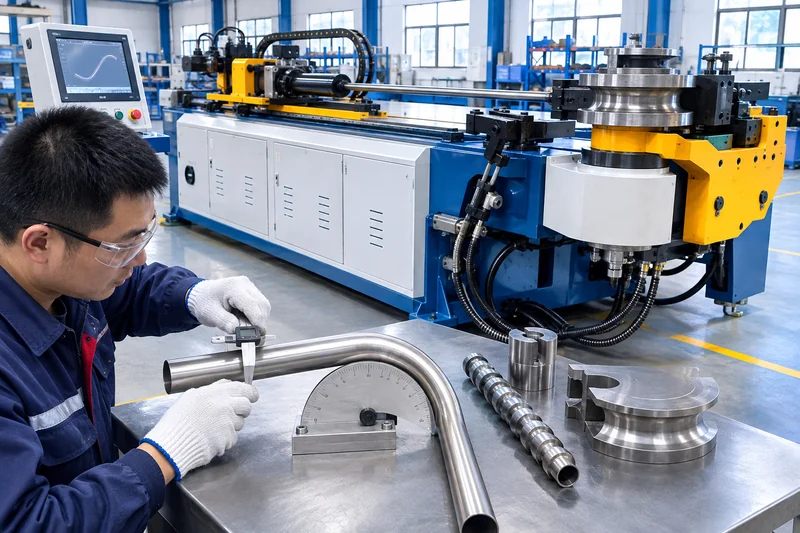
A machine rated to 50 mm outside diameter may hold that capacity only on mild steel at a 3D radius. On stainless at 1.5D, the real limit may be 38 mm. The number that matters is the capacity at the shop’s material and radius, and that number is rarely on the plate.
Ask for the case, not the capability
A supplier who has run a similar part can answer the suitability question directly. A seller who has only run their own part family cannot.
The machine’s last job matters more than its rating plate: ask what it ran, at what radius, in what material and at what wall, then compare with the intended part. A machine whose recent history is close to the work is a far lower risk than one whose rating plate happens to be large enough.
The Capacity Envelope Nobody Checks
Four limits constrain a bending job, and a used machine can fail on any one of them.
Diameter is the easy one
Outside diameter capacity is the number sellers know, and the easiest to verify. Check the rating plate, then confirm the die space and the clamp geometry will accept the section.
Radius is the one that surprises
Centreline radius depends on the die, not on the machine, and a set of dies that came with the machine may not include the radius. A machine that “does 1.5D” only does 1.5D for the sizes and radii present in its die inventory.
Length and stroke catch long parts
Long parts need bed length, carriage travel and, on some machines, a support that follows the part. A used machine bought for short assemblies may physically not accept the long parts that make up half the order book.
Mandrel availability decides thin wall
Thin-wall parts need internal support, and support needs a mandrel matched to the bore plus enough stroke to position it. If the machine’s mandrel stock does not cover the bore, new mandrels belong in the budget before the machine does.
What the service file should contain
A used tube bender with documents is worth more than one without, because documents are the only way to know what happened to it.
- The maintenance log, with dates and the parts replaced
- The wiring diagrams and the parameters backup for the control
- The manufacturer’s service record, obtainable from the serial number
- The original specification sheet, so the capacity claims can be checked
A seller who cannot produce any of those is selling a machine with an unknown history, and the price should reflect that.
Question Two: Can You Keep It Running
Condition describes what the machine is today. Support describes what it will be in three years.
Spares availability, asked plainly
The question is not whether spares exist but whether they are obtainable in a useful time. Ask for the lead time on the highest-risk parts: the control board, the servo drive, the pump, and any proprietary sensor.
A machine that needs eight weeks for a control board has an effective capacity of zero during those eight weeks. That risk belongs in the price.
Control system support
Older CNC benders fail in the electronics more often than in the frame. Three facts decide whether a control is still viable:
- Whether the control manufacturer still supports the model
- Whether the software can still be edited or reloaded
- Whether the machine builder can still service it, or has the drawings
Trade guidance makes the same point from the other direction: an evaluation is best carried out by the manufacturer, because the manufacturer can look up the serial number and confirm the delivery condition, the age and whether the machine received regular service.
Documentation is part of the machine
Complete operating instructions, maintenance documentation and wiring diagrams matter more on a used machine than on a new one, because there is no one to call for the missing page. Ask whether the documents exist, and whether they are in a language the operators and maintenance staff read.
A serial number is a research tool
A serial number lets the manufacturer confirm what the machine was built as, how old it is and whether it has been serviced. It also exposes repainted machines whose advertised capability has been exaggerated, a practice trade sources warn about directly.
Four numbers, written down
Write these four figures on one line before looking at any used tube bender, because they turn a vague sense of suitability into a comparison.
- The largest outside diameter in the part family
- The tightest centreline radius, in diameters
- The longest bend length, clamp to end
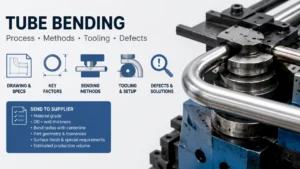
- The bore range needing a mandrel
A machine that fails any one of the four is unsuitable, and the condition report becomes irrelevant.
Tooling lead times worth pricing
Tooling is not only a cost; it is a delay, and both belong in the comparison.
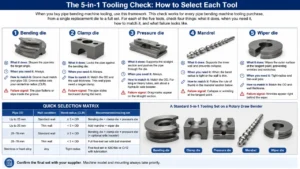
- A die set for a new radius typically has to be made, not bought off a shelf
- Mandrels are sized per bore, so a bore change adds tooling to any used tube bender purchase
- Wipers are the cheapest item and the one most often missing from a used package
Price the lead time as lost production, not as a line on an invoice.
A worked illustration, with figures chosen for the arithmetic: a die set that takes 8 weeks to make, on a machine that would have contributed 500 a day, represents 20,000 of lost contribution before the first saleable part. Against a used tube bender bought for 32,000, that delay is two-thirds of the purchase price again.
That is why tooling availability often decides a used purchase more than machine condition does. The machine is visible and inspectable; the missing die is invisible until it is ordered.
So ask for the tooling list first, then the machine photographs. A used tube bender with the right dies and a tired paint job is worth more than a repainted machine with none, and the difference is 6 to 12 weeks of lead time rather than a cosmetic judgement.
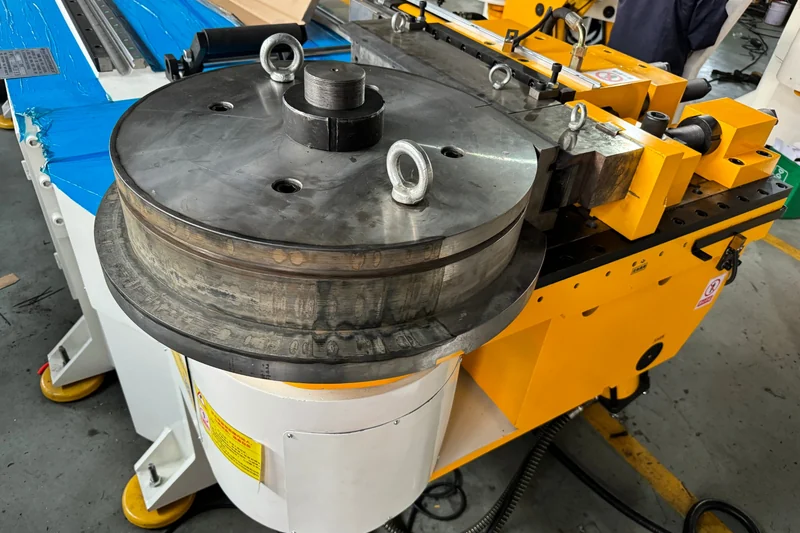
Tooling: The Cost That Decides the Deal
Tooling is where used-machine arithmetic usually breaks, and it is the most commonly omitted line.
| Cost line | Used machine | New machine |
|---|---|---|
| Machine | Lower upfront | Higher, often 3 to 6 months lead time |
| Dies and mandrels for the part | Frequently absent, and must be bought | Often quoted with the machine |
| Fixtures and setup | Same either way | Same either way |
| Commissioning | Same either way | Included or quoted |
Why a used die set rarely fits
Dies are made for a radius and a section. A seller’s die inventory reflects the seller’s part family, which is why a machine can arrive “with tooling” and still need three new dies for the work.
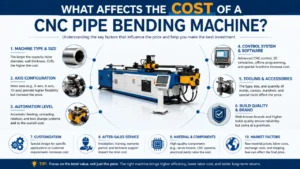
Dies belong in the budget before an offer, not after one. On a used machine, tooling can be a five-figure line, and it is the line that turns an apparent bargain into a worse deal than new.
Lead time is a cost too
New dies take time to make. A used machine bought at a good price that waits ten weeks for tooling has not started earning, and the saving shrinks against the delay.
Arithmetic behind the percentages
Published figures put first-year depreciation on a new machine at 25 to 35 percent. On a machine bought for 85,000, that is roughly 21,000 to 29,750 of value gone before the warranty ends.
A used machine is reported to depreciate at 5 to 10 percent a year, which on a 32,000 purchase is about 1,600 to 3,200 annually. Over the same three years the used machine loses perhaps 5,000 to 10,000 in value, while the new one has lost far more.
That gap is the real argument, and it survives most of the risk adjustments a careful buyer makes.
Where used beats new, and where it never does
- Used wins when the capacity envelope fits, the tooling is largely available, and the control is still supported
- Used wins when capital is constrained and the machine is needed within weeks rather than months
- New wins when the required capacity sits at the edge of what the used market offers
- New wins when multi-shift reliability and a warranty are worth more than the capital saving
- New wins when the control generation is one the builder no longer services
Question Three: Does the Money Work
Total cost of ownership, done honestly, is what turns three questions into a decision.
TCO = purchase price + transport and setup + tooling + maintenance + downtime risk − resale value
One published comparison
One used-equipment specialist publishes a worked comparison: a used machine at about 32,000 against a new machine at about 85,000, with tooling, transport, maintenance and downtime risk added and resale subtracted. Over three years the used machine nets out at roughly 19,500 against 34,000 for the new one, about 43 percent lower.
That is one company’s example with its own assumptions, not a universal result. Treat the structure as the useful part and replace every figure with the shop’s own. The structure is what most buyers are missing.
Depreciation does most of the work
The same source reports that a new bender can lose 25 to 35 percent of its value in the first year, while a well-maintained used machine depreciates at roughly 5 to 10 percent a year. Used machines are also reported to retain roughly 35 to 70 percent of original value, depending on condition and control system.
Depreciation is the quiet argument for used equipment, and it is strongest when the machine is a mainstream model that a future buyer will recognise.
When the arithmetic fails
The maths rarely fails because the price was high. It fails on the lines people leave out: a full tooling set, a control retrofit, a long lead time on a critical spare, or a capacity mismatch that forces the machine to run below its rated envelope and lose cycle time.
Questions to send the seller before travelling
A few questions by email eliminate most wasted site visits.
- What was the machine’s last production job, in what material and at what radius
- Is the full die inventory listed, with diameters and radii
- Is the control still supported, and by whom
- Can a test bend be run in the buyer’s material on the day of inspection
Answers that avoid the last question are answers about a machine that will not be demonstrated.
A 30-Minute Condition Inspection
As a result, condition still matters, but it comes after suitability. A published buying guide splits the check into three ten-minute blocks, which is a workable structure for a shop visit.
| Block | Focus | Red flags | Bring |
|---|---|---|---|
| Mechanical, 10 minutes | Frame, ram travel, tooling, lubrication | Cracks at pivot pins, hesitation in ram travel, dried grease, play in the backstop | Flashlight, feeler gauge |
| Hydraulic, 10 minutes | Pressure, hoses, oil condition | Leaks, dark or burnt-smelling oil, cavitation, pressure below the plate | Pressure gauge, white rag |
| Electrical, 10 minutes | Controls, sensors, wiring | Faulty switches, brittle insulation, burnt connectors, DIY wiring | Clamp meter, screwdriver |
Checks that find the expensive faults
- Run the ram through its full motion. Hesitation points at a bent shaft or misalignment
- Wipe a suspect hydraulic line with a white rag. Metallic flakes point at pump wear
- Compare pressure against the rating plate. Trade guidance treats a well-below-plate reading as internal leakage
- Test every safety switch, proximity sensor and emergency stop by hand
- Open the control cabinet and look for insulation that has gone brittle and connectors that have been re-terminated outside the original loom
What the test bend tells a buyer
A test bend should use the buyer’s material, not the seller’s. A test bend answers three questions the inspection cannot: whether the machine holds a radius, whether the control executes cleanly under load and whether the finished part meets the drawing tolerance.
A one-page evaluation sheet
A sheet that fits on one page gets filled in; a form that needs software does not.
- Machine identity: serial, model, year, and whether the manufacturer confirmed it
- Four capacity numbers: diameter, radius, length, mandrel coverage
- Condition summary: mechanical, hydraulic, electrical, each with a note
- Support summary: spares lead times, control support, documentation available
Four lines per machine makes two candidates comparable in a way that memory cannot, and it costs 3 minutes per machine.
For the connected decisions, see the tube bending machine RFQ checklist for specification items and the CNC vs NC tube bending machine comparison when the control generation is the open question.
Decision Matrix: Used, Refurbished or New
| Situation | Route to evaluate | Why |
|---|---|---|
| Capacity envelope fits, condition good, tooling available | Used | Lowest capital, immediate availability |
| Frame and drive sound, hydraulics or controls tired | Certified refurbishment | Rebuilt with tested performance and usually a short warranty |
| Capacity nearly fits but not at the radius | New, or a different used machine | A capacity mismatch does not fix itself with maintenance |
| Control unsupported and spares unobtainable | New, or a planned retrofit | Support risk otherwise sits in the price |
| Need the machine producing within weeks | Used | New often carries a three to six month lead time |
| Multi-shift production with tight tolerances | New or certified refurbishment | Reliability matters more than capital saving |
What refurbishment buys
A certified refurbishment sits between used and new: a machine rebuilt and tested, typically with hydraulic resealing, electrical testing and control calibration, and usually backed by a warranty measured in months rather than weeks.
It earns its premium when the frame and drive are strong and the hydraulics or controls need renewing, when tolerances are tight, or when the machine must run for more than five years.
Troubleshooting: Red Flags and What They Mean
Some signals are worth walking away from, and they are consistent across the trade guidance.
| Red flag | What it usually means | What to do |
|---|---|---|
| No test run offered | The seller knows, or suspects, a fault | Insist on a test bend in the material, or walk |
| Serial plate missing or mismatched | Identity cannot be verified, often after repainting | Ask the manufacturer to confirm the serial, or decline |
| Capability exaggerated beyond the rating plate | Repainted machine sold on a sales story | Verify against the manufacturer’s record |
| No CE marking or incomplete safety technology | Not lawful to operate in many markets | Do not operate; budget for compliance or decline |
| Structural alterations undocumented | Geometry or capacity may have changed | Have the alteration assessed before committing |
| Spares quoted with long or unknown lead times | Future downtime risk is unpriced | Price the risk, or choose a supported model |
What a warranty should cover
A used machine is often sold as seen, and that is acceptable if the price reflects it. Where a warranty exists, published practice describes three typical shapes: a short start-up warranty covering power-up and function, a limited parts-and-labor period measured in a few months, and a longer refurbishment warranty on machines rebuilt by the seller.
Which one applies should be confirmed in writing before the invoice.
Insurance and the used machine
An insurer looks at the same things a careful buyer should.
- Whether the machine carries the marking required in the market
- Whether guarding is present, functional and documented
- Whether the safety functions have a test record
- Whether an inspection body has seen the machine since any alteration
A machine that fails those four is not a cheap machine; it is an uninsurable one.
Compliance also has a cost, and it belongs in the comparison. Retrofitting guarding, interlocks and documentation on an older machine can consume a meaningful share of the saving, and the work has to be done before the machine runs rather than after an incident. A buyer who prices compliance at the offer stage rarely regrets it.
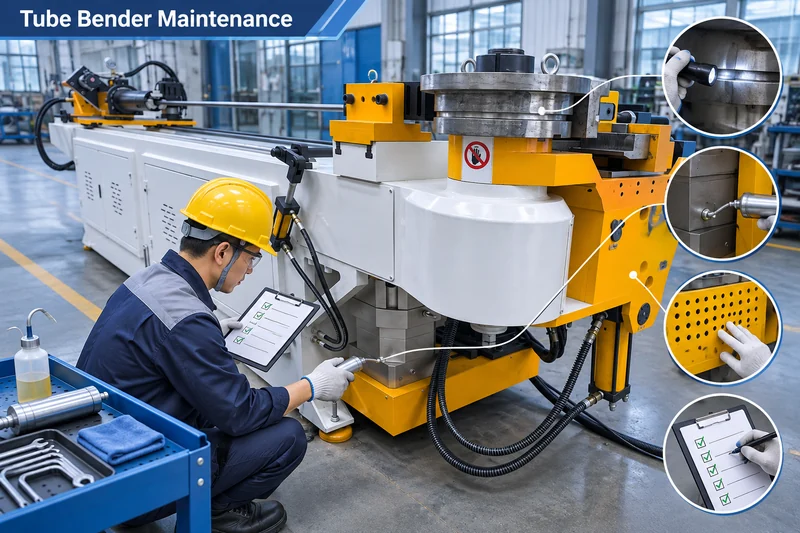
For the machine side of the same decision, the how to choose a tube bending machine guide covers what a new machine specification should contain, and the tube bending machine maintenance article shows what keeping either machine alive actually requires.
Safety and Compliance
Safety is the one area where a bargain is never a bargain.
A machine without a CE marking and with incomplete safety technology should not be operated. That is not a paperwork preference; it is the difference between a machine an insurer accepts and one it does not.
- Confirm guarding is present and functional
- Confirm emergency stops and interlocks work by test, not by appearance
- Confirm the rating plate matches the machine and the documentation
- Confirm the machine meets the safety regulations of the market
Negotiating With Inspection Data
A documented inspection is the strongest negotiating position available to a buyer.
- List each fault found and the repair it implies
- Attach a cost to each repair, from a supplier quote rather than a guess
- Subtract that total from the asking price to reach an offer
- Ask for tooling, manuals and spare parts as part of the deal, since they carry more long-term value than a small discount
- Time the approach to quarter-end or year-end, when sellers are more flexible
For a used tube bender, an offer built from inspection data reads differently from a lowball.
- List each fault with the repair it needs and a supplier quote for that repair
- Add the tooling the buyer must buy to run the intended part family
- Add the delay cost if a critical spare has a long lead time
- Subtract the total from the asking price, and present the arithmetic
A seller will argue with a number that arrives without evidence. Fewer argue with a page that shows where every deduction came from, and that is the practical value of inspecting before negotiating.
Prices for used bending machines vary widely by type and condition. One published guide puts manual machines in the hundreds to low thousands, hydraulic machines in the low thousands to low tens of thousands, and CNC machines from the mid teens upward, with new equivalents roughly double to triple. Those bands are one source’s view; recent auction results for the specific model are a better anchor.
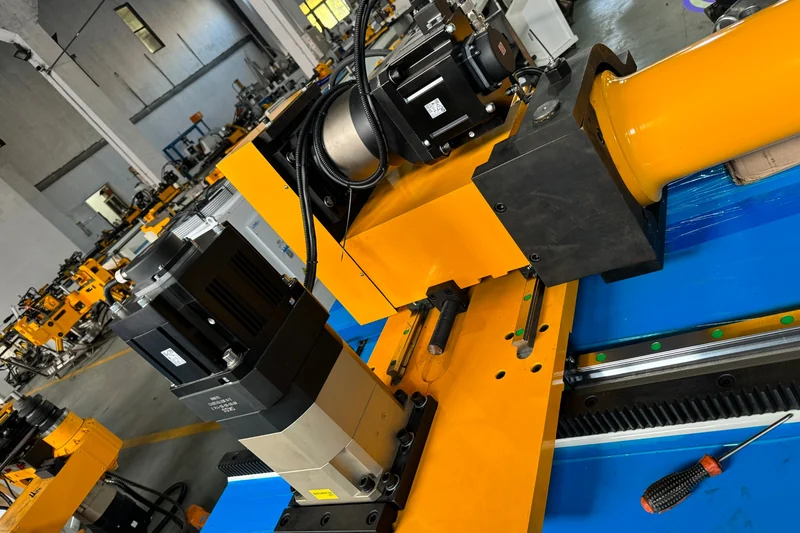
What to Check on a Used CNC Tube Bender
A used CNC tube bender adds a layer that manual and hydraulic machines do not have.
- Whether the control boots without errors in test mode
- Whether the program memory holds, and whether a backup exists
- Whether parameters can be reloaded from documentation if memory is lost
- Whether the axes move without lag between command and motion
- Whether the machine builder still services that control generation
That last item is the one that decides value. A CNC machine with an unsupported control is a mechanical press with extra steps.
The short version, in one place
A used tube bender decision reduces to 3 questions, 4 capacity numbers and a 30-minute inspection.
- Can the used tube bender make the part: diameter, radius, length, mandrel
- Can the used tube bender be kept running: spares, control support, documents
- Does the used tube bender pay: tooling, lead time, 3-year cost against resale
A used tube bender that answers yes to all 3 is worth 30 minutes on site. Two yes answers and one no is a project; a used tube bender with 1 yes is the wrong machine. One that fails the first question is not a used tube bender problem at all; it is the wrong machine, and the cheapest way to learn that is before the site visit.
Frequently Asked Questions
Is a used tube bender worth it compared with new?
Sometimes, and the deciding factor is rarely condition. A used tube bender is worth it when 3 things line up: the capacity envelope covers your parts, the tooling can be completed at a sensible cost, and the control is still supported. Miss any one and you are buying a project, not a machine.
How much cheaper is used than new?
Published figures suggest used machines retain roughly 35 to 70 percent of original value depending on condition, age and control system. That is one source’s range, and the real number depends on the specific model and market.
What is the biggest hidden cost?
Tooling, in most cases. A used tube bender sold “with tooling” usually carries dies for the seller’s parts, and a full set for a different part family can cost more than the saving on the machine. Price 4 lines before you bid: dies, mandrels, wipers and fixtures.
How do I know if the machine can make my part?
Check 4 numbers: maximum outside diameter at your wall and radius, minimum centreline radius in the die inventory, maximum bend length, and mandrel coverage for the bore. If any one fails, the used tube bender is unsuitable regardless of condition, and no inspection changes that.
Should I buy from a dealer or a manufacturer?
A manufacturer can look up the serial number and confirm the machine’s history, and can often assess the machine properly. A specialist dealer understands bending equipment better than a general surplus seller. Either is better than an anonymous auction listing with no test run.
What warranty should a used tube bender come with?
Published practice describes a start-up warranty of about one to two months, a limited parts-and-labor period of about three months, and six to twelve months on a certified refurbishment. Most used machines are sold as seen, so the inspection is what protects a buyer.
Can I run a machine without CE marking?
In markets that require it, no. Incomplete safety technology is a compliance and insurance problem, not a negotiating point.
Reference Sources
- The Tube & Pipe Journal / The FABRICATOR, Tips for buying a second-hand bending machine — source for the requirement that the control show no errors and every axis work, the warning about incorrect hydraulic filters damaging pumps, repainted machines with exaggerated capabilities, the manufacturer’s ability to look up a serial number for delivery condition and service history, the CE marking and safety-technology requirement, the rating plate, last-use and documentation questions, the suitability and output questions, easy availability of spares, and whether structural alterations were made. thefabricator.com
- Ultimate Tube Bender Parts, Used Tube/Pipe Bender Buyer’s Guide 2025 — source for the 30-minute three-block inspection structure, the red flags and tools listed, the pressure-shortfall, oil-colour and metallic-debris checks, the depreciation figures of 25 to 35 percent in the first year and 5 to 10 percent a year thereafter, the 35 to 70 percent retained-value range, the TCO formula and worked comparison, the warranty shapes, and the price bands. Quoted as one specialist’s figures, not as an industry standard. benderparts.com
- Tube Form Solutions, Tube Bender Buying Checklist — specification and option checklist for defining a machine purchase. tubeformsolutions.com
Related reading on buying a used tube bender: how to choose a tube bending machine, tube bending machine maintenance, bend die wear and tooling life, pipe bending machine tooling, tube bending machine RFQ checklist, CNC vs NC tube bending machine.