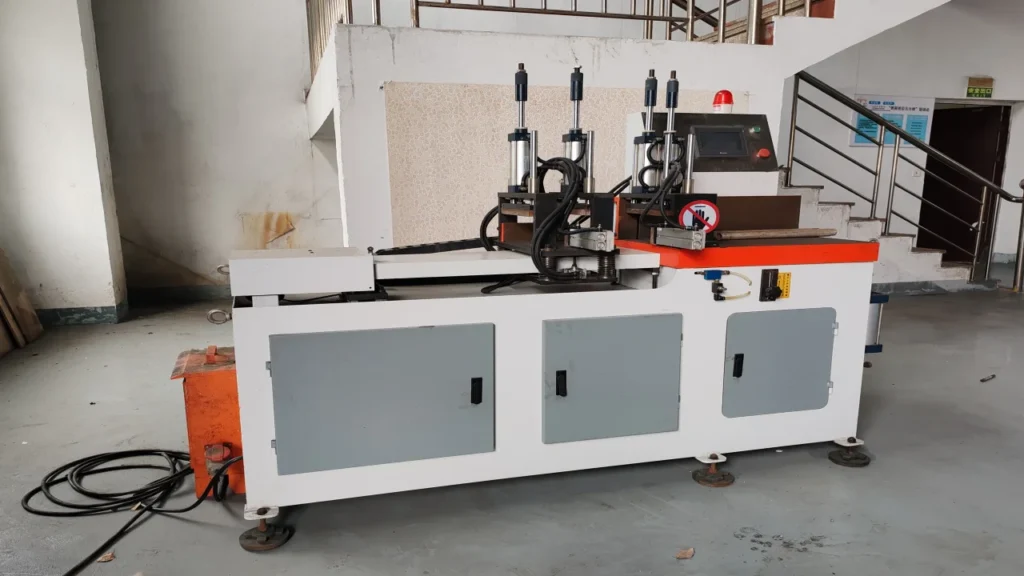
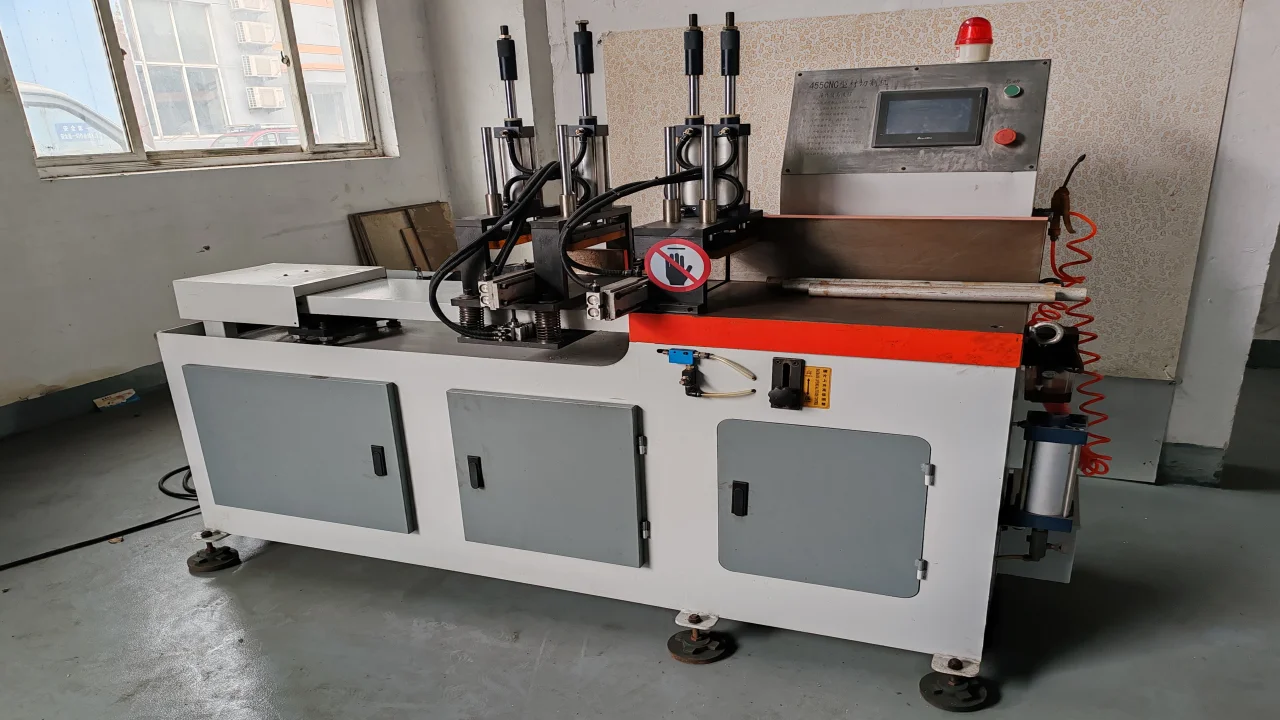
If you are researching how to choose a pipe cutting machine, start with the material, tube dimensions, cut quality, production volume, and downstream process—not only the maximum cutting diameter.
The right machine must match your material, outside diameter, wall thickness, cut length, end-quality requirements, production volume, and automation needs.
This guide explains how to evaluate pipe cutting equipment, compare semi-automatic and CNC configurations, estimate real production capacity, and prepare the information suppliers need before recommending a machine.
What Should You Evaluate Before Choosing a Pipe Cutting Machine?
Before contacting a supplier, prepare the following information:
- Material and material grade
- Outside diameter and wall thickness
- Inside diameter, when relevant
- Round, square, rectangular, or special profile
- Required cut length
- Straight or angled cut
- Required cut-length tolerance
- Burr and deformation limits
- Daily or monthly production volume
- Manual, semi-automatic, CNC, or automatic production requirements
- Downstream processes such as bending, welding, chamfering, or tube end forming
A pipe cutting machine should be selected around the complete production task rather than one isolated specification.
For example, a machine that can cut a certain outside diameter may still be unsuitable if the tube is thin-walled, difficult to clamp, highly abrasive, or required to meet a strict end-face tolerance.
For a project-specific evaluation, you can send these details through Zhuoran’s design and engineering service.
Which Pipe Cutting Method Fits Your Material and Cut Requirements?
Different cutting methods solve different production problems. The best method depends on the material, tube size, cut geometry, production volume, and required end quality.
When Is a Cold Saw or Circular Saw the Right Choice?
A circular cold saw is often suitable for repeatable metal tube and pipe cutting. It can be used for applications where the buyer needs:
- Consistent cut lengths
- Repeatable straight cuts
- Controlled burr formation
- Efficient batch cutting
- Integration with feeding or downstream equipment
However, the result depends on the blade, spindle speed, feed rate, clamping method, coolant, and material condition.
A cold saw should not be selected based only on the saw-blade diameter. The supplier should also confirm whether the machine can securely clamp your tube and maintain the required cut quality.
Zhuoran’s MC-series documentation includes semi-automatic and CNC pipe cutting configurations for different production requirements. The suitable model and blade arrangement should be confirmed against the actual tube specification.
When Should You Consider a Band Saw, Orbital, Laser, or Plasma Cutter?
A band saw may be useful for larger sections, irregular profiles, or applications where flexibility is more important than high-speed repetitive cutting.
Orbital cutting can be considered when the application requires controlled cutting around a tube, especially in selected installation or process-piping environments.
Laser and plasma cutting may be suitable when you require:
- Complex profiles
- Holes or notches
- Bevels
- High flexibility across different shapes
- A heat-based cutting process
Nevertheless, heat-affected zones, dross, material reflection, post-processing, and total equipment cost must be considered.
For additional industry background, see the selection guides from Wiromac, SPM, and Exact Tools.
How Do Material, Diameter, and Wall Thickness Affect Machine Selection?
Material and tube dimensions directly affect cutting force, blade selection, clamping stability, and cut quality.
How Should You Select a Machine for Carbon Steel, Stainless Steel, Aluminum, or Copper?
Different metals require different cutting conditions.
Carbon steel normally requires attention to cutting force, blade durability, clamping stability, and coolant management.
Stainless steel may require more careful control because of its strength, heat generation, and tendency to work-harden under unsuitable cutting conditions. The supplier should confirm the material grade, such as 304, 304L, 316, or 316L.
Aluminum is lighter and may require different chip-control and blade arrangements. Coolant, blade geometry, and material adhesion should still be evaluated. Zhuoran’s company documentation includes dedicated aluminum-cutting configurations, which should be evaluated separately from general steel pipe-cutting machines.
Copper and brass may require careful clamping because excessive force can deform the tube. The required cut quality and downstream forming process should be included in the evaluation.
The material description should include more than a general term such as “stainless steel.” A complete inquiry should identify:
- Material grade
- Temper or condition
- Hardness, when relevant
- Surface coating
- Tube supplier or material standard
- Whether the material is seamless, welded, or drawn
Why Is Pipe Diameter Alone Not Enough?
Outside diameter is only one part of the machine-selection decision.
Wall thickness affects:
- Cutting resistance
- Tube rigidity
- Clamping force
- Deformation risk
- Burr formation
- Support requirements
- Blade life
A thin-wall tube may require more careful support than a thicker tube with the same outside diameter. A large, thick-wall pipe may require higher machine rigidity and stronger clamping.
You should therefore provide the complete tube size in a format such as:
Material: AISI 304 stainless steel
Tube size: OD 38 mm × WT 1.5 mm
Cut length: 500 mm
Required cut: 90° straight cut
Target quantity: 1,000 pieces per day
Zhuoran’s MC350NC and MC425NC documentation includes application references for carbon steel, thick-wall stainless steel, solid bar, and selected irregular materials. These references are model-specific and should not be treated as a universal material matrix for every machine.
What Cut Quality and Tube Cutting Tolerance Should You Specify?
“High accuracy” is not a complete technical requirement. The supplier needs to know which dimensions must be measured and how they will be accepted.
Which Cut Dimensions Should Be Measured?
Depending on your part, the inspection plan may include:
- Cut length
- Cut angle
- Cut squareness
- Tube-end position
- End-face flatness
- Burr height
- Deformation
- Surface scratches and dents
- Repeatability
- Compatibility with the next process
For example, a tube used in a bending process may require a controlled cut length and undamaged surface. A tube used for welding may require a suitable end face, low burr, and an additional chamfering operation.
The actual acceptance value should come from the customer drawing, technical agreement, or approved sample. It should not be invented from a general machine brochure.
Does a Square Cut Mean the Tube Is Ready for Welding or Bending?
No. A square cut only describes one aspect of the cut geometry.
A downstream welding process may require:
- A specific bevel angle
- A root face
- A controlled end gap
- Removal of burrs
- A clean surface
- A defined preparation length
A downstream bending process may instead prioritize:
- Accurate cut length
- Stable tube ends
- Low deformation
- No deep scratches
- Consistent material orientation
If the tube requires additional preparation, consider a combined process involving cutting and pipe chamfering equipment.
Should You Choose an NC, CNC, or Servo-Feed Pipe Cutting Machine?
The choice between NC, CNC, and servo-feed equipment depends on production volume, product variety, operator involvement, and automation requirements.
When Is a Semi-Automatic NC Machine More Practical?
A semi-automatic NC machine may be practical when:
- The product range is relatively stable
- Operators can load and unload the material
- Production volume is moderate
- The buyer needs a simpler setup
- Changeovers are not extremely frequent
- The process does not require complete automatic integration
Zhuoran’s MC350NC and MC425NC documentation describes semi-automatic configurations for metal cutting applications. These machines may be suitable when the buyer needs controlled cutting and assisted clamping without a fully automated production line.
The final suitability still depends on the material, size, blade, clamping arrangement, and required cycle time.
When Does a CNC Pipe Cutting Machine Provide More Value?
A CNC pipe cutting machine can provide more value when the process requires repeatable production control and reduced operator intervention.
Depending on the selected configuration, CNC functions may include:
- Quantity setting
- Automatic counting
- No-material stop
- Automatic coolant
- Chip collection
- Programmed feeding
- Repeatable cutting cycles
- Integration with other production modules
Zhuoran’s MC315CNC, MC350CNC, and MC425CNC documentation includes configurations with automatic coolant, chip collection, counting, and no-material stop functions.
These functions should be described as configuration-dependent. They should not be assumed to be included in every machine model or every quotation.
When Should You Specify Servo Feeding?
Servo feeding becomes more valuable when you need:
- Multiple cut lengths from the same raw tube
- Reduced manual measuring
- Long-stock feeding
- Improved positioning repeatability
- More consistent high-volume production
- Integration with upstream or downstream automation
Zhuoran’s MC425CNC documentation includes servo-feed variants with different feed arrangements, including approximately 1.2 m and 2 m configurations.
The quotation should clearly state:
- Maximum feed length
- Feed accuracy
- Servo motor specification
- Control method
- Material support
- Remnant length
- Loading and unloading method
- Whether multiple lengths can be programmed in one production cycle
How Should You Configure Feeding, Clamping, Cooling, and Chip Collection?
The machine body is only one part of a reliable cutting system.
What Does the Clamping System Need to Match?
The clamping system should match the tube’s shape, wall thickness, and surface condition.
Round tubes, square tubes, rectangular tubes, and special profiles may require different clamping arrangements.
For thin-wall tube, excessive clamping pressure can cause deformation. For thick-wall pipe or solid bar, insufficient clamping can cause vibration, poor cut quality, and blade damage.
The supplier should review:
- Tube shape
- Clamping location
- Clamping pressure
- Support length
- Cut-off position
- Required surface protection
- Part transfer requirements
When Are Automatic Loading and Unloading Worthwhile?
Automatic loading and unloading may be worthwhile when:
- Production volume is high
- The raw material length is long
- The same product runs for extended periods
- Labor reduction is important
- The cutting machine is part of a larger line
- Consistent material handling is required
Automatic loading is not always necessary for smaller batches or frequent product changes. Manual or semi-automatic loading may provide better flexibility in those situations.
Automatic loading, automatic unloading, robotic handling, and stacking should be listed separately in the quotation. They should not be assumed to be standard features.
Why Do Coolant and Chip Collection Matter?
Coolant can help control cutting temperature and support blade performance. Chip collection improves housekeeping and may reduce interference with the clamping and feeding systems.
For production cutting, review:
- Coolant delivery
- Coolant tank capacity
- Chip collection method
- Cleaning frequency
- Blade replacement procedure
- Material cross-contamination risks
- Maintenance access
Zhuoran’s CNC cutting-machine documentation includes automatic coolant and chip-collection functions on selected configurations.
How Do You Estimate the Real Production Capacity of a Pipe Cutting Machine?
Advertised spindle speed does not equal finished good-part output.
Actual production capacity includes:
- Loading
- Positioning
- Clamping
- Feeding
- Cutting
- Blade return
- Unloading
- Inspection
- Scrap handling
- Operator movement
- Tool changes
- Unplanned stops
A simple theoretical calculation is:
Theoretical output per hour =
3,600 ÷ average cycle time in seconds
The more useful production figure is good-part output:
Good-part output per hour =
Actual output per hour × good-part rate
This calculation is meaningful only when the actual output and good-part rate come from the same test condition.
A proper capacity test should record:
- Continuous run duration
- Planned quantity
- Actual quantity
- Good quantity
- NG quantity
- Unplanned stops
- Total downtime
- Alarm count
- Safety stops
- Average cycle time
- Operator and loading method
The test should use the customer’s actual tube material, size, cut length, and required quality. A cycle time obtained from a small, easy-to-cut sample should not automatically be applied to a difficult production part.
What Should a Pipe Cutting Machine Quotation Include?
A complete quotation should separate the main machine from optional equipment and services.
| Quotation item | What should be confirmed? |
|---|---|
| Machine model | Exact model and configuration |
| Cutting capacity | Material- and size-specific capacity |
| Blade | Blade type, diameter, and quantity |
| Clamping | Standard or customized clamping system |
| Feeding | Manual, hydraulic, CNC, or servo feeding |
| Coolant | Included system and operating requirements |
| Chip collection | Included or optional |
| Automation | Loading, unloading, stacking, and robot options |
| Tooling | Fixtures, supports, and special tooling |
| Installation | Scope and location |
| Training | Operator and maintenance training |
| Sample cutting | Quantity, material, and inspection method |
| Packaging | Export packaging and protection |
| Transport | Shipping terms and responsibilities |
| Warranty | Period, coverage, and exclusions |
| Acceptance | FAT, SAT, sample approval, and cycle test |
A quotation should also identify what is not included. This is especially important for:
- Extra blades
- Special fixtures
- Automatic loading
- Automatic unloading
- Conveyors
- Robots
- Chamfering equipment
- Spare parts
- Installation travel
- Transport and customs costs
How Should You Validate a Pipe Cutting Machine Before Purchase?
A sample trial is one of the most useful ways to reduce selection risk.
What Material and Tube Data Should Be Used for a Sample Trial?
Use the actual production conditions whenever possible:
- Actual material grade
- Actual tube OD
- Actual wall thickness
- Actual raw-tube length
- Actual cut length
- Actual cutting angle
- Actual blade or proposed blade type
- Typical and difficult product samples
- Expected production quantity
If the machine will process several materials or sizes, test more than one representative condition.
A sample trial should not only demonstrate whether the machine can cut one part. It should also evaluate repeatability, handling, changeover, and output.
Which Inspection Items Should Be Included in Acceptance?
The inspection plan may include:
- Cut length
- Cut angle
- Cut squareness
- Burr height
- Tube deformation
- Surface condition
- End-face condition
- Repeatability
- Good-part rate
- Cycle time
- Safety functions
- Automation coordination
The measuring tools should also be defined. Depending on the requirement, this may include:
- Calipers
- Length gauges
- Angle measurement tools
- Special fixtures
- Coordinate measuring equipment
- Optical inspection
- Surface comparison
- Material-thickness measurement
Why Should the Results Be Written Into the Technical Agreement?
A written technical agreement helps prevent misunderstandings between brochure claims and acceptance requirements.
It should define:
- Sample material
- Sample quantity
- Machine configuration
- Tooling
- Measurement method
- Required tolerance
- Defect limits
- Cycle-test conditions
- Good-part acceptance rate
- FAT and SAT procedures
Zhuoran can evaluate a proposed configuration through its sample service. The final acceptance values should be confirmed by the customer drawing, approved sample, and technical agreement.
Which Zhuoran Pipe Cutting Machine Configuration Should You Request?
The following table can be used as an initial discussion framework.
| Production scenario | Zhuoran configuration direction |
|---|---|
| Flexible or lower-volume cutting | MC315A or another suitable semi-automatic configuration |
| Medium-volume metal tube cutting | MC350NC or MC425NC |
| Counting, coolant, and chip collection | MC315CNC, MC350CNC, or MC425CNC configuration |
| Long-stock or multiple-length cutting | MC425CNC servo-feed configuration |
| Aluminum cutting | Dedicated aluminum-cutting configuration evaluation |
| Cutting connected to chamfering | Pipe cutting plus chamfering solution |
| Cutting connected to bending or end forming | Integrated tube-processing evaluation |
This table is not a substitute for a technical recommendation. The final model depends on:
- Material
- Outside diameter
- Wall thickness
- Cut length
- Cutting angle
- Production volume
- Tooling
- Required automation
- Downstream process
Zhuoran’s pipe cutting machine product category can be used as the starting point for comparing available configurations.
What Questions Should You Ask Before Ordering a Pipe Cutting Machine?
- Is the quoted capacity based on my actual tube material and wall thickness?
- Which blade and clamping system are included?
- Is automatic feeding standard or optional?
- Does the machine include coolant and chip collection?
- Can the machine cut my actual tube size without excessive deformation?
- How will cut length and squareness be measured?
- Is sample cutting available?
- Are installation and operator training included?
- What are the warranty and spare-parts terms?
- Can the machine connect with chamfering, bending, or tube end-forming equipment?
A supplier that can answer these questions clearly is more likely to provide a solution that matches your actual production process.
What Questions Do Buyers Commonly Ask About Pipe Cutting Machines?
What Is the Most Important Factor When Choosing a Pipe Cutting Machine?
The most important factor is the complete combination of material, outside diameter, wall thickness, cut geometry, required quality, and production volume. Outside diameter alone is not enough to select a suitable machine.
Is a CNC Pipe Cutting Machine Always Better Than an NC Machine?
No. CNC equipment may provide more automation, counting, programmed feeding, coolant control, and integration options. An NC or semi-automatic machine may be more practical for stable products, moderate production, or lower investment requirements.
How Do I Choose a Pipe Cutting Machine for Stainless Steel?
Provide the exact stainless-steel grade, tube OD, wall thickness, cut length, and quality requirements. The supplier should confirm the blade, cutting conditions, clamping, coolant, and sample-cutting results.
What Is Tube Cutting Tolerance?
Tube cutting tolerance is the allowed variation from the specified cut dimension. It may refer to cut length, angle, squareness, tube-end position, or another drawing dimension. The required value should be defined by the customer drawing or technical agreement.
Is Automatic Feeding Necessary for High-Volume Pipe Cutting?
Automatic feeding is often useful for high-volume production, long raw tubes, and repetitive products. However, the correct configuration depends on material length, product variety, changeover frequency, and the required production rate.
Should I Test the Actual Tube Before Buying?
Yes. Testing the actual material, OD, wall thickness, cut length, and blade arrangement provides stronger evidence than relying only on general machine specifications.
Can Pipe Cutting Be Connected to Chamfering or Tube Forming?
Yes. A cutting process can be evaluated together with chamfering, tube bending, tube end forming, inspection, and material handling. The connection method depends on the product geometry and production sequence.
How Can You Request a Pipe Cutting Machine Recommendation?
To receive a more useful recommendation, send the following information:
- Material and grade
- Tube OD and wall thickness
- Raw-tube length
- Required cut length
- Cutting angle
- Daily or monthly quantity
- Required tolerance
- Burr or end-face requirements
- Loading and unloading method
- Downstream bending, welding, chamfering, or forming process
You can submit these details to Zhuoran for a machine configuration review and, when required, a sample cutting evaluation through the contact page.