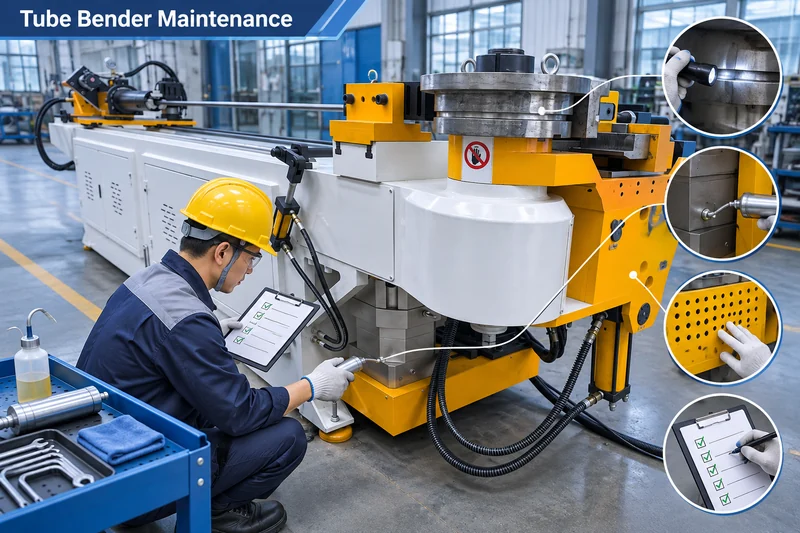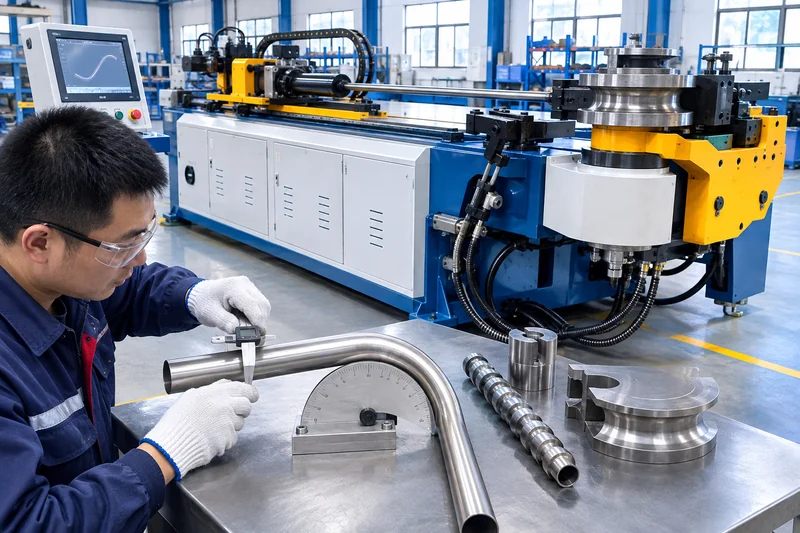
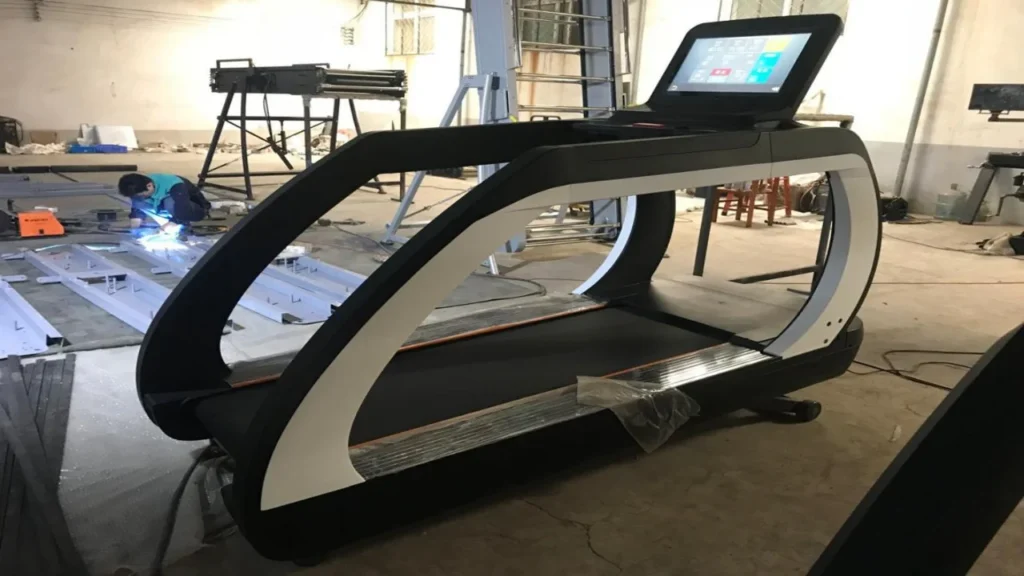
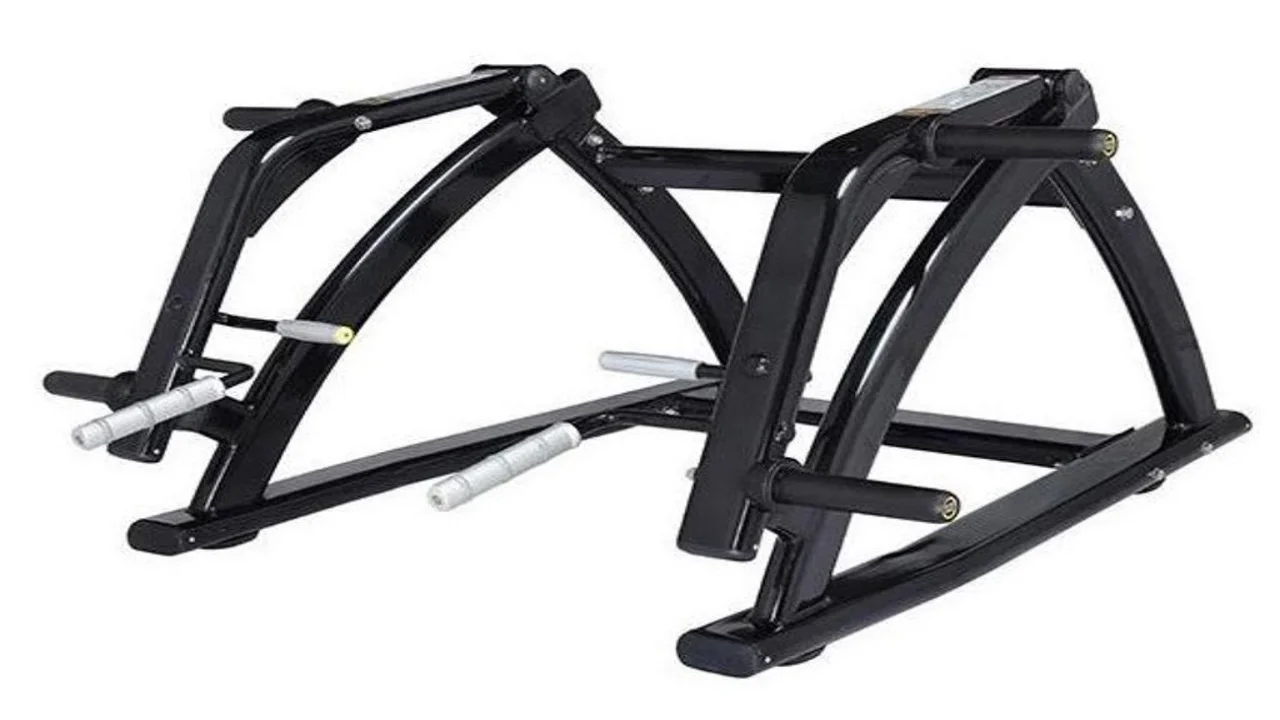
Fitness equipment manufacturing often depends on accurately formed tubes. Treadmills, exercise bikes, strength-training machines and elliptical trainers all use bent tubes for frames, handles, supports and connection structures.
For these parts, the right tube-processing equipment affects more than bending speed. It also affects appearance, assembly accuracy, production capacity and the repeatability of each batch.
Zhuoran Machinery supplies tube bending and tube-processing equipment for fitness equipment manufacturers. Its solutions can include CNC and NC tube benders, cutting machines, end-forming machines, tooling, sample bending and customized automation. Final equipment selection depends on the product drawing, material, tube size, bend geometry, production volume and agreed inspection requirements.
Fitness Equipment Manufacturing Starts with the Tube-Processing Route
A typical tube-processing route for gym equipment may include:
Raw Tube
→ Cutting
→ Automatic Feeding
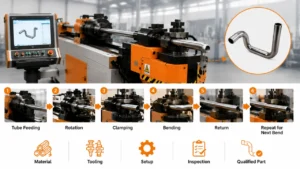
→ CNC Tube Bending
→ End Forming
→ Inspection
→ OK/NG Sorting
→ Welding and Assembly
However, the sequence is not fixed for every product. Some parts require end forming before bending. Others need cutting, chamfering, punching, welding or cleaning after the bending operation.
For example, a treadmill handle may need tube cutting, CNC bending, end forming or drilling, dimensional inspection, and welding or assembly. A structural frame may require several bends in different planes. In that case, tube rotation, bend sequence, tooling clearance and loading direction become important.
Zhuoran can evaluate a standalone tube bending machine, an automated bending cell or a complete tube-processing line. The final process route should be based on the actual part drawing rather than on the name of the fitness equipment.
See Zhuoran’s fitness equipment tube bending solutions and tube bending engineering service.
Which Fitness Equipment Parts Need Tube Bending?
Strength Training Equipment
Strength-training equipment commonly uses handrails, handles, support frames, U-shaped tubes and multi-plane structural tubes. These parts often require a clean appearance because scratches, clamp marks or uneven bends can remain visible after coating.
Treadmill Frames
Treadmill tube components may include handle tubes, upright supports, frame connectors, control-panel supports and base-frame structures. Long straight sections and stable bend positions are important because inaccurate parts may create problems during welding and final assembly.
Exercise Bike Frames
Exercise bike frames may use curved frame tubes, support tubes, handlebar structures, connecting brackets and foot-support tubes. Some parts use multiple bend planes, so the machine may need controlled feeding, tube rotation and repeatable angle positioning.
Elliptical Trainer Components
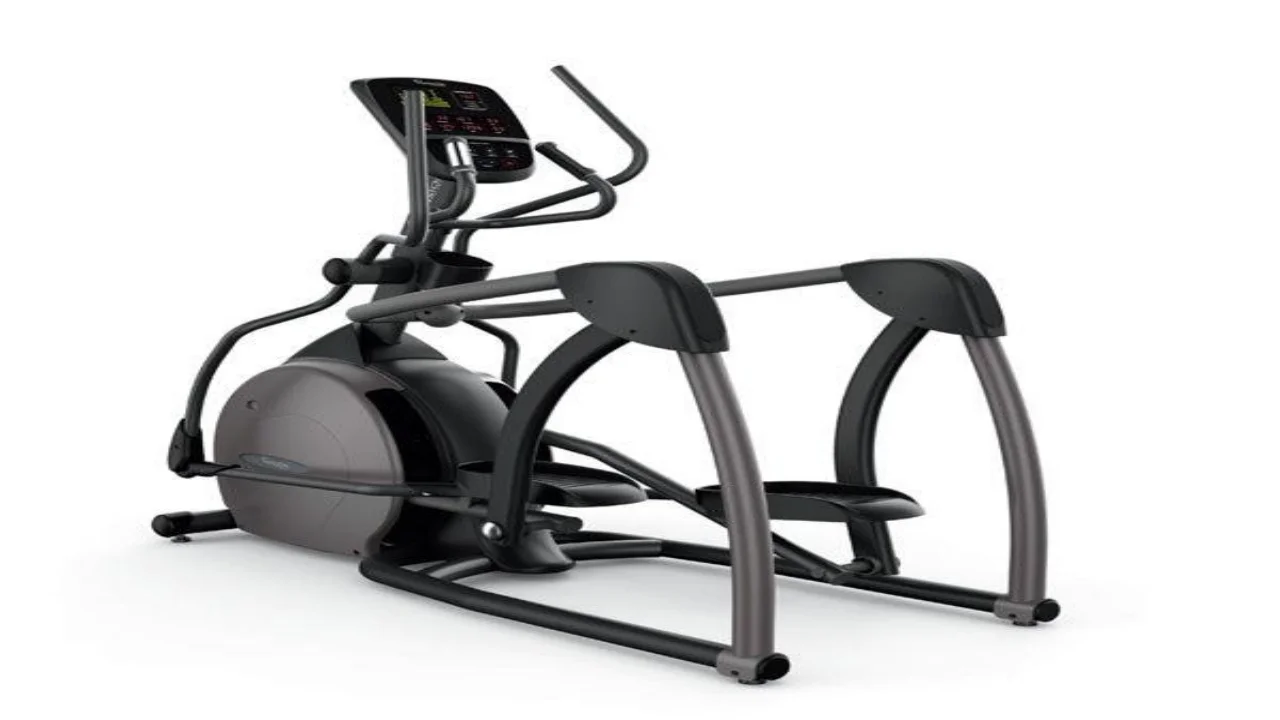
Elliptical trainers may include curved handles, support frames, linkage tubes and special-profile tubes. Oval, square and rectangular profiles may require special clamping and tooling design. A round-tube machine configuration should not be assumed to work with every special profile.
Zhuoran’s fitness equipment application page describes applications including treadmill components, exercise bike parts, strength equipment frames and elliptical trainer structures.
The Parameters That Determine Machine Selection
Material and Material Grade
Common candidate materials for fitness equipment tube parts include carbon steel, stainless steel, aluminum alloy, copper, brass and galvanized steel. Candidate grades may include Q235, Q345, S235, S355, 201, 304, 304L, 316, 316L, 6061, 6063, 5052, C11000, C12200, C26000 and C26800.
The material grade and temper can affect bending force, springback, surface protection, wall thinning, ovality and tooling selection. The same machine setting should not be transferred automatically from carbon steel to stainless steel or aluminum.
Tube Profile, Outside Diameter and Wall Thickness
For round tube, provide the outside diameter and wall thickness. For square or rectangular tube, provide the width, height, wall thickness and corner radius. For oval or special profiles, provide a complete cross-section or a 3D STEP file.
Special profiles may require additional evaluation for clamping deformation, profile twisting, flattening, surface marks, bending direction and tooling clearance.
CLR, Bend Angle and Bend Sequence
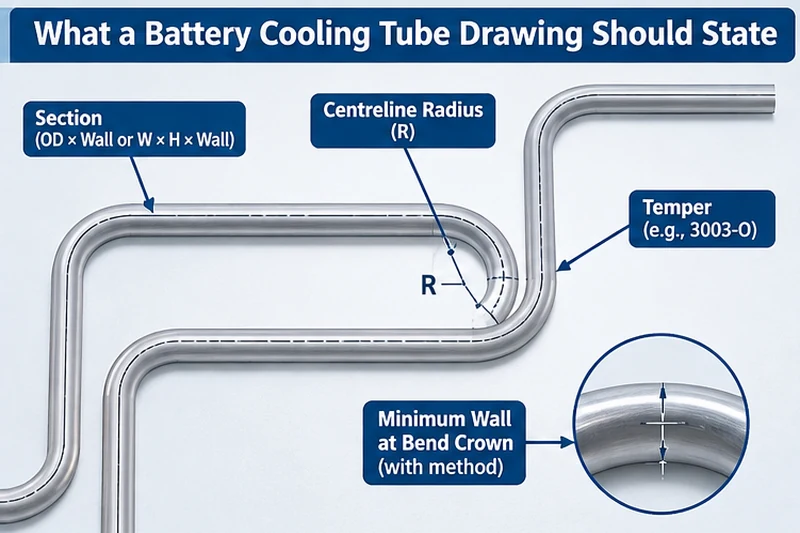
CLR means centerline radius. For example:
Tube OD = 38 mm
CLR = 57 mm
CLR / OD = 1.5D
A smaller CLR normally increases forming difficulty. It may also increase the need for a mandrel, wiper die, pressure die or other deformation-control tooling.
For multi-bend parts, also provide the bend angle for each bend, number of bends, straight length between bends, bend sequence, rotation angle, bend direction and end orientation.
Production Volume and Cycle Time
Production information should include parts per day, parts per month, working hours per shift, number of shifts, product variety, changeover frequency, target cycle time, and manual or automatic loading and unloading requirements.
How Should You Match Machine Type to Part Geometry and Output?
CNC Tube Bending for Repetitive and Multi-Axis Parts
CNC tube bending is generally suitable for multi-bend parts, three-dimensional tube structures, repetitive production, controlled feeding and rotation, multiple product programs and higher automation requirements.
Zhuoran model records show CNC configurations with servo-controlled feeding, tube rotation and bending on different models. The actual number of axes and available functions must be confirmed for the selected model.
NC or Semi-Automatic Machines for Simpler Production
NC or semi-automatic machines may be considered when the product geometry is relatively simple, production volume is moderate, operators will load and unload parts manually, and the customer does not need full line integration.
Hydraulic or Heavy-Duty Configurations
Hydraulic configurations may be evaluated for large-diameter tubes, thick-wall carbon steel tubes, heavy structural components and projects with higher bending-force requirements.
Model-Level CNC Reference Data
The following figures are model-level references from Zhuoran’s equipment records:
| Model | Listed tube reference | Listed maximum bend radius | Listed feed length |
|---|---|---|---|
| DW38CNC-3A-1S | Ø38 × 2 mm carbon steel | R200 mm | 2200 mm |
| DW50CNC-3A-1S | Ø50 × 2 mm carbon steel | R250 mm | 2200 mm |
| DW63CNC-3A-1S | Ø63 × 3 mm carbon steel | R300 mm | 2200 mm |
| DW75CNC-4A-2S | Ø75 × 6 mm carbon steel | R330 mm | 3200 mm |
| DW89CNC-3A-1S | Ø89 × 6 mm carbon steel | R400 mm | 2700 mm |
| DW130CNC-2A-1S | Ø130 × 12 mm carbon steel | R550 mm | 4500 mm |
The records list a minimum bend radius of approximately 1.5D for these specific configurations. Several models also list a maximum bending angle of 190°, while the DW130CNC-2A-1S record lists 180°.
These are model-level reference values, not a universal range for every CNC configuration. Parameters for DW100CNC, DW168CNC and other configurations should be confirmed in the final technical proposal.
Tooling and Automation Must Match the Part
What Tooling May Be Required?
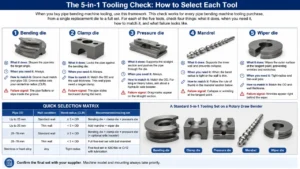
A tube bending tooling package may include a bend die, clamp die, pressure die, mandrel, mandrel balls, wiper die, collets, special fixtures or multi-stack tooling.
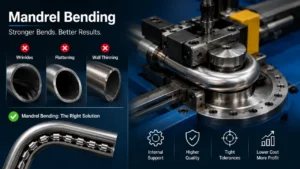
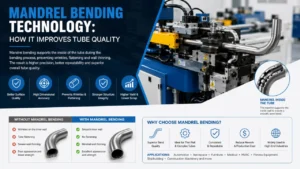
The tooling decision depends on material, tube diameter, wall thickness, CLR, number of bends, surface requirements, ovality limits, wrinkle risk and part geometry. A mandrel is not automatically required for every fitness equipment tube. However, thin-wall tubes, small CLR values and strict appearance requirements may require internal support.
How Should Automation Be Configured?
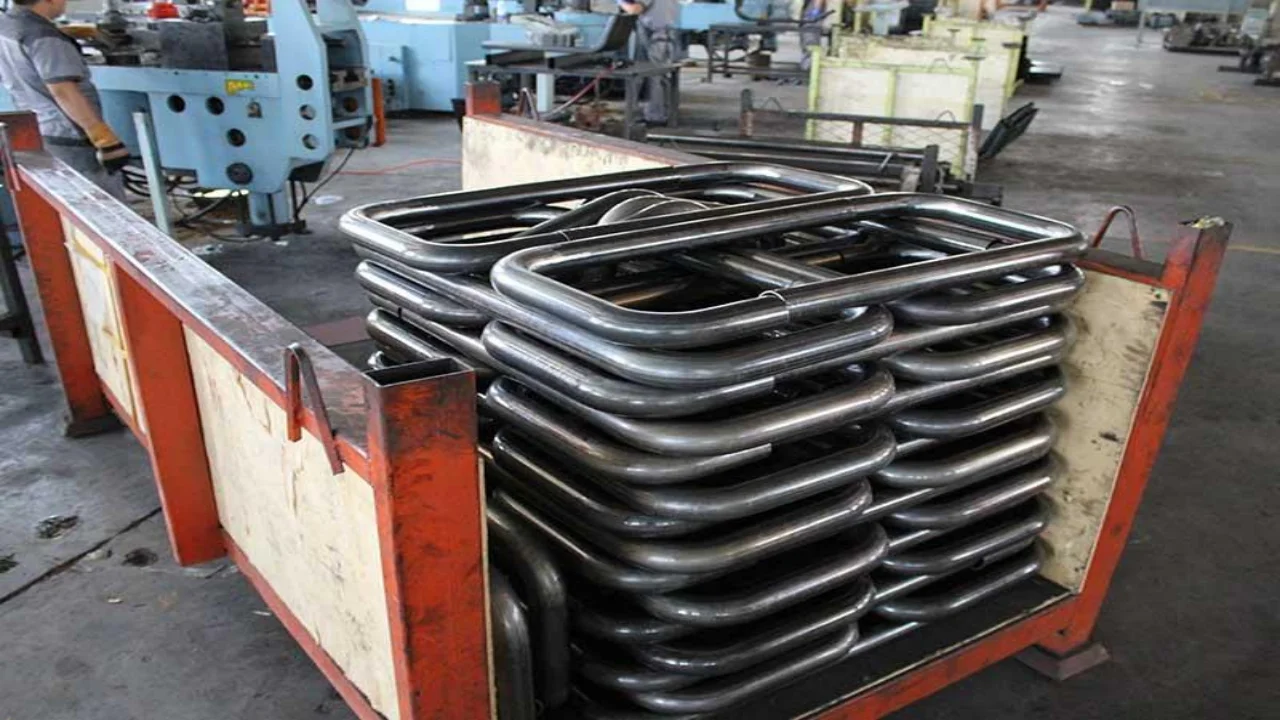
A typical automated tube-processing line may include raw tube storage, automatic loading, single-tube separation, CNC feeding, tube rotation, cutting, CNC bending, end forming, robotic transfer, automatic unloading, inspection, NG sorting and line PLC/HMI control.
CNC automatic feeding may be included in selected CNC machine configurations. Raw-material loading, automatic unloading, cutting, robotics, inspection and MES connection are project-specific functions.
For example, automatic unloading should be evaluated according to part shape, part weight, surface requirements, cycle time, collection method and downstream welding or inspection. Complex or appearance-sensitive parts may be better handled by a robot instead of free-fall unloading.
How Should You Validate Quality and Capacity?
Typical Quality Checks
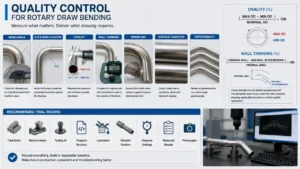
A fitness equipment tube-bending project may check cut length, bend angle, bend position, straight length, tube-end position, 3D centerline profile, ovality, wall thinning, wrinkles, cracks, burr height, scratches, dents and overall surface quality.
| Inspection item | Example requirement | Example result |
|---|---|---|
| Bend angle | 90 ±0.30° | 90.12° |
| Bend position | 150 ±0.30 mm | 150.11 mm |
| Tube-end position | Deviation ≤0.50 mm | 0.24 mm |
| 3D centerline profile | ≤1.00 mm | 0.46 mm |
| Ovality | ≤3.0% | 1.8% |
| Wall thinning | ≤10.0% | 6.2% |
| Burr height | ≤0.10 mm | 0.04 mm |
| Wrinkles | No visible wrinkles | None observed |
| Cracks | No cracks permitted | None observed |
These are example validation values, not universal limits for every material, tube size, bend radius or machine configuration. Your acceptance criteria should be agreed before sample testing or FAT.
How Do You Calculate Good Production Capacity?
A useful planning formula is:
Good Output = (3600 × A × Y) ÷ T- A = scheduled running-time ratio
- Y = first-pass yield
- T = average cycle time, including normal loading and unloading
For a 30-second cycle time, 95% running-time ratio and 99% good-part ratio:
Good output = 3600 × 0.95 × 0.99 ÷ 30
             = 112.86 good parts per hour
The estimated good capacity is approximately 112.9 good parts per hour. Actual capacity should be confirmed using the customer’s material, drawing, tooling, inspection criteria and agreed test conditions.
What Should You Send in a Fitness Equipment Tube Bending RFQ?
A complete RFQ helps the supplier recommend the correct machine, tooling and automation package.
| RFQ item | Information to provide |
|---|---|
| Product drawing | 2D drawing or 3D STEP file |
| Material | Grade, temper and supply condition |
| Tube profile | Round, square, rectangular, oval or special profile |
| Tube size | OD, width, height and wall thickness |
| Bend radius | CLR for each bend |
| Bend schedule | Angle, sequence, spacing and direction |
| Tube rotation | Rotation between bend planes |
| End requirements | Cutting, chamfering, flaring, reducing, threading or other forming |
| Surface requirements | Scratches, dents, clamp marks and appearance limits |
| Production target | Parts per day, month and shift |
| Cycle time | Target time per part |
| Loading method | Manual, automatic or robotic |
| Inspection | Gauge, CMM, laser, vision or other inspection |
| Acceptance | Sample approval, FAT, SAT and quality criteria |
You should also identify restricted areas where the part cannot have clamp marks, scratches, dents, visible wrinkles, excessive ovality or surface contamination.
Zhuoran’s Role in Fitness Equipment Manufacturing
Zhuoran provides equipment and engineering support for manufacturers that produce fitness equipment tube components.
Potential solutions include CNC and NC tube bending machines, heavy-duty bending configurations, pipe cutting machines, tube end-forming machines, tube rolling equipment, bending and forming tooling, sample bending, 3D process simulation, automatic feeding and unloading evaluation, customized tube-processing lines, and equipment OEM and ODM support.
The OEM and ODM scope here refers to machinery and tube-processing solutions. It does not mean that Zhuoran manufactures complete treadmills, exercise bikes or strength-training equipment as finished products.
To request a preliminary recommendation, send your product drawing, material grade, tube profile, OD, wall thickness, CLR, bend angles, bend sequence, production target, automation requirements and inspection criteria.
Explore the CNC pipe bending machine range, NC pipe bending machine range, pipe cutting machines and tube end-forming machines.
Upload your drawing and contact Zhuoran’s engineering team for a preliminary machine, tooling or tube-processing line recommendation.
Quick Answers for Equipment Buyers
Can Zhuoran manufacture complete fitness equipment?
No. Zhuoran’s role is to supply tube bending and tube-processing equipment, tooling, engineering services and customized machinery solutions for fitness equipment manufacturers.
Does every CNC machine include automatic loading and unloading?
No. CNC automatic feeding may be included in selected configurations, while raw-material loading, finished-part unloading, robotics and inspection are confirmed by project scope.
Can square, rectangular and oval tubes be processed?
They can be evaluated with the correct profile tooling and sample-bending process. Provide the complete cross-section, material, wall thickness and 3D part information before the machine is selected.
What is the most important information for a machine recommendation?
Provide the drawing, material grade, tube profile, OD, wall thickness, CLR, bend schedule, production target, surface requirements and inspection criteria.
Can the quoted capacity be guaranteed for every product?
No. Capacity depends on the actual material, geometry, tooling, cycle time, loading method, inspection requirements and agreed test conditions. Sample testing and production validation are required for a project-specific result.
Technical References and Industry Resources
The following resources provide additional background on tube bending, fitness equipment safety, quality management and machine guarding. They are reference materials only. The applicable requirements for a specific product should be confirmed with the customer, the responsible design team and the relevant standards body.
- EAA: How to Bend Tubing Successfully — Practical background on bending steel, aluminum and copper tubing, including flattening and small-radius bending risks.
- ASTM F2276-23: Standard Specification for Fitness Equipment — A finished-fitness-equipment specification covering areas such as stability, supports, tube ends, moving parts, guarding and documentation.
- ASTM F2571-15R20: Standard Test Methods for Evaluating Design and Performance Characteristics of Fitness Equipment — Test-method reference for evaluating fitness equipment design and performance characteristics.
- ISO 9001: Quality Management Systems — Official information about quality-management-system requirements, documented processes, performance evaluation and continual improvement.
- OSHA: Machine Guarding — Guidance on safeguarding moving machine parts and controlling operator exposure to machinery hazards.
Important: ASTM F2276 and ASTM F2571 address fitness equipment design and evaluation, not the complete specification of a tube bending machine. Use them together with the product drawing, material specification, inspection plan and customer acceptance criteria.